Conscious Parenting: How to Stop Passing Your Wounds to Your Children
There is a moment every parent knows. Your child does something that pushes a button you did not even know you had. Your voice goes sharp. Your body tenses. And somewhere deep in your chest, a familiar feeling arises that has nothing to do with the toy on the floor or the bedtime argument. It has everything to do with the child who still lives inside of you.
Conscious parenting is the practice of showing up for your children from your highest self rather than your most wounded self. It is not about being a perfect parent. It is about being a present one. And it is about recognizing that when you heal yourself, you are not just changing your own life. You are literally rewriting the biological and emotional inheritance you pass to your children.
In this article I am going to walk you through the science of why wounds travel through generations, what parenting and epigenetics research actually tells us, how trauma informed parenting practices can interrupt those cycles, and most importantly, how to begin the joyful and liberating work of this approach today.
The research that has emerged in 2025 and into early 2026 is stunning in what it confirms: the way we parent is not just a behavioral choice. It is an epigenetic signal. And the great news? Those signals can change. This is one of the most hopeful things science has ever told us about what it means to be human.
What Conscious Parenting Really Means
Let me be honest with you. The phrase “conscious parenting” can sound soft. Like something you encounter on a wellness account between matcha ads and journaling prompts. But the framework itself is anything but soft. It is one of the most rigorous, self demanding, and ultimately transformative practices a human being can undertake.
Conscious parenting, as articulated powerfully by Dr. Shefali Tsabary and built upon by teachers and researchers across the globe, is founded on a simple and radical premise: your child is not here for you to shape and control. Your child is here to help you become whole.
That shifts everything.
When you parent from a conscious framework, you stop projecting your unfinished emotional business onto your children. You stop using discipline as punishment for the anxiety your child's behavior triggers in you. You start seeing meltdowns as messages, defiance as invitations for deeper understanding, and your own reactivity as the real curriculum.
Dr. Tsabary has spent decades articulating what I have explored on the Wellness + Wisdom Podcast and in my own life as a father: the parent is always the student. The child is always the teacher. When you flip that frame, the whole experience of raising children transforms.
Beyond Gentle Parenting
Conscious parenting is not the same as gentle parenting, though they share real common ground. The conversation emerging in the wellness and parenting world right now in 2026 is moving beyond the “gentle parenting versus authoritative parenting” debate entirely. What families are discovering is that real conscious parenting requires something more than softening your tone or choosing natural consequences. It requires internal archeology. You have to dig into your own story.
Because if you do not examine your story, your children will live it. That is not a metaphor. That is biology.
The Paradigm Shift
Traditional parenting models place all the authority in the parent and all the growth expectations in the child. This model inverses that. It says: the child arrived whole. The parent is the one doing the growing. This is a paradigm shift that feels destabilizing at first and then, once you sit with it, feels like the most liberating reframe imaginable.
You are not responsible for producing a certain kind of person. You are responsible for becoming a certain kind of person. The rest follows from your presence. I have explored this on my solocast on eleven ways to be a more conscious parent, and every time I revisit the topic, I find something new waiting for me.
The Science Behind Why Wounds Travel Through Generations
Here is what I find endlessly fascinating about the moment we are in right now. We are the first generation of parents who can look at actual biological evidence that our unhealed trauma affects our children at a cellular level. Not metaphorically. Literally.
Epigenetics is the study of how behaviors, environments, and experiences influence the way genes are expressed without changing the underlying DNA sequence itself. Think of your DNA as the piano keys. Epigenetics is who plays them, how hard, and in what order. The same keys can produce very different music depending on the musician.
The Holocaust Study That Changed Everything
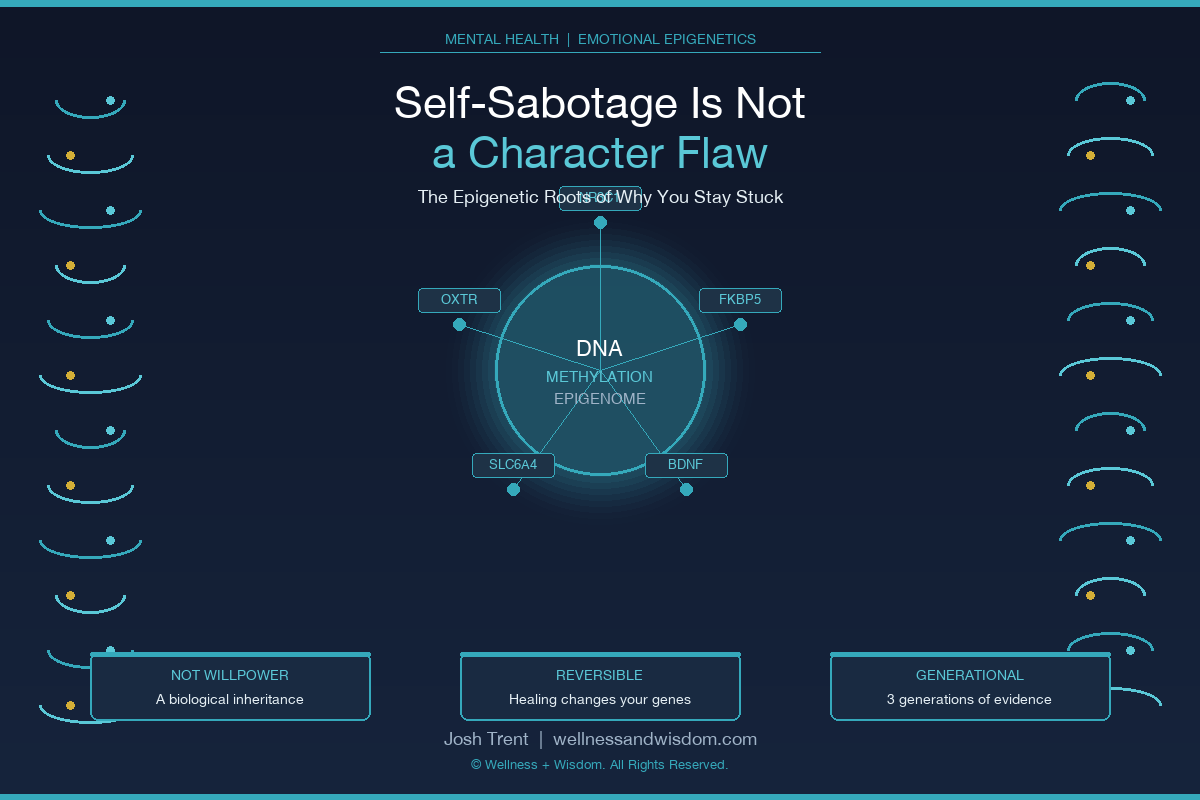
A landmark study by Rachel Yehuda and colleagues, published in Biological Psychiatry, examined Holocaust survivors and their adult children. The researchers found measurable changes in a gene called FKBP5, which regulates how the body responds to stress. Both the survivors and their offspring showed altered FKBP5 methylation patterns even though the children had never experienced the Holocaust directly. The stress response had been biologically inherited.
Read the full study here: Yehuda et al. (2016). Holocaust Exposure Induced Intergenerational Effects on FKBP5 Methylation. Biological Psychiatry. PubMed: 26410355.
This is not abstract theory. This is the biological reason why the daughter of an anxious mother who was raised by a frightened grandmother often struggles with anxiety herself, even in a stable and loving home. The signal was passed before words were ever spoken.
The Cherry Blossom Study: Fear Travels Through Generations
In 2014, Brian Dias and Kerry Ressler published their now famous study in Nature Neuroscience. They conditioned male mice to fear a specific scent by pairing it with a mild electric shock. The offspring of those mice, who had never experienced the shock, still showed heightened sensitivity and fear responses to that exact same scent. The biological signature of fear had traveled down the family line through epigenetic mechanisms.
Read the full study here: Dias, B.G., Ressler, K.J. (2014). Parental olfactory experience influences behavior and neural structure in subsequent generations. Nature Neuroscience. PubMed: 24292232.
Three Generations of Refugees: 2026 Research
A remarkable study published in Nature Scientific Reports in early 2026 documented epigenetic signatures of intergenerational trauma in three generations of Syrian refugee families. The research confirmed that war, displacement, and sustained threat leave measurable biological marks that appear in children and grandchildren who were never present for the original trauma.
Read the study: Nature Scientific Reports (2025). Epigenetic signatures of intergenerational exposure to violence in three generations of Syrian refugees.
Three generations. The grandchildren of people who fled violence are carrying the biological echo of something they never personally witnessed. If that does not make the case for doing your own healing work as a parent, I do not know what will.
Parenting and Epigenetics: The Two Transmission Pathways
Researchers studying parenting and epigenetics have identified two primary pathways through which emotional wounds and trauma travel across generations. Understanding both is essential for knowing where to intervene.
Pathway One: Social and Environmental Transmission
This is what most of us think of when we talk about “learned behavior.” You parent the way you were parented because that is the model installed in your neural pathways during your most formative years. If your father raged, you may find rage rising in you when you are overwhelmed. If your mother used silence as punishment, you may instinctively withdraw when you feel hurt. If criticism was the primary mode of feedback in your home, you may find yourself criticizing your children in ways that leave you confused and ashamed afterward.
These are not character flaws. They are programs running in the background. And programs can be rewritten.
Pathway Two: Biological and Epigenetic Transmission
This is where the science gets breathtaking. Stress hormones, methylation patterns, and the regulatory mechanisms that govern your neural system can be altered by traumatic experience, and those alterations can be passed through reproduction. The child arriving in the world is already carrying a biological legacy of the parents' emotional history.
A 2024 meta analytic study published in Child Abuse and Neglect and available through PubMed confirmed that trauma informed parenting programs are effective at interrupting both pathways simultaneously. When parents engage in evidence based healing practices, the improvements show up not just in their own mental health but in measurable changes in their children's behavior, neural system regulation, and emotional outcomes.
Read the meta analysis: The Effectiveness of Trauma Informed Parenting Programs for Traumatized Parents and Their Components: A Meta Analytic Study. PubMed: 39463198.
This is the science behind why your healing is the most powerful gift you can give your child. Not the perfect school. Not the right activities. Your own wholeness.
The Protective Signal Is Also Transmissible
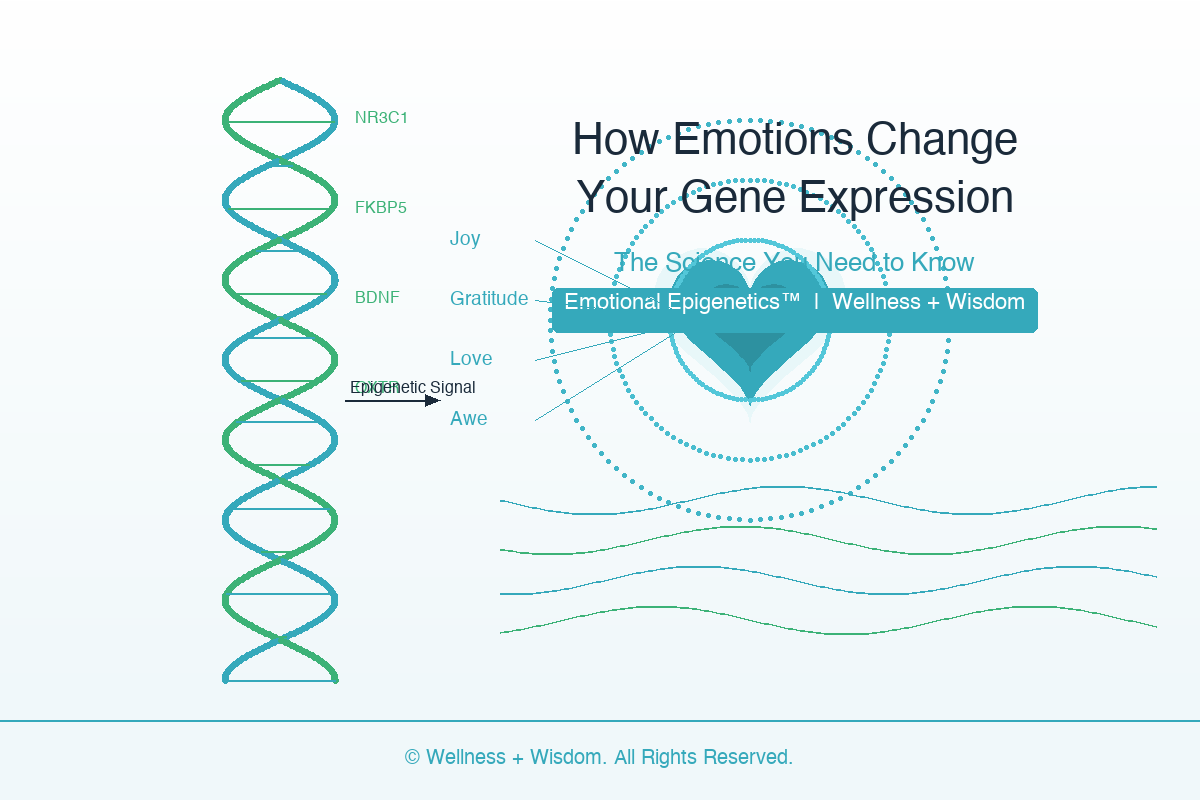
A key insight from 2026 research published in Frontiers in Psychiatry: the same two pathways that transmit trauma can also transmit resilience. Healing does not just stop the wound from passing forward. It can actively create protective epigenetic signatures that give your children and potentially their children a biological head start toward emotional wellness.
The cycle breaking, in other words, is both behavioral and biological. When you do the work, you are literally changing the code.
This is the heart of what I teach through the Emotional Epigenetics framework: you are not stuck with the inheritance you received. You are the editor of what gets passed forward. That is one of the most empowering truths in all of science.
How to Break Generational Cycles: The Awakening
Let me be unmistakably clear about something: breaking generational cycles is not about blaming your parents. This is where the conversation sometimes goes sideways, and it is worth addressing directly.
Your parents were doing what their wounds told them to do, just as their parents did before them, in a line that may stretch back further than you can trace. The work is not about blame. It is about awareness. And then it is about choice.
The Moment the Cycle Breaks
The generational cycle breaks the moment a parent chooses to pause, feel their own activation before acting on it, and respond to their child from a regulated state rather than a triggered one. That pause is not just a parenting technique. That pause is a biological event. It is the moment the inherited program runs into a conscious decision and the conscious decision wins.
I have explored this in depth on the Wellness + Wisdom Podcast and in my own healing journey as a father. The moment I stopped reacting to my daughter from my own childhood wounding and started responding to her from a grounded, present place, something shifted that I can only describe as structural. It was not just behavioral. It felt like something in my body changed. Because it had.
In the solocast on eleven practices for conscious parenting, I walked through specific ways to shift from reactive to responsive parenting. Every single one begins in the same place: the parent's own inner work.
What Awareness Actually Looks Like
Awareness in this work is not just intellectual understanding. It is somatic recognition. It is noticing that when your twelve year old rolls their eyes, your stomach clenches in the exact same way it did when your father criticized you at the dinner table. It is recognizing that your seven year old's tantrum does not make you angry so much as it makes you feel helpless, the same helplessness you felt as a child when your own emotions were too big for anyone around you to hold.
When you can name what is happening in your body during a parenting trigger, you step out of the automatic and into the intentional. That is the beginning of cycle breaking. And every parent can learn to do it, regardless of what they experienced growing up.
The Intergenerational Research on What Makes the Difference
A 2026 study on intergenerational trauma transmission published in the PMC literature reinforces what conscious parenting practitioners have observed for decades: the variable that most consistently protects children from inheriting their parents' trauma is not the absence of parental pain but the presence of parental awareness. Parents who have processed and integrated their own difficult history, even partially, transmit significantly less psychological distress to their children than parents who have not.
See the foundational research: PMC: Intergenerational transmission of trauma effects: putative role of epigenetic mechanisms.
You do not have to be fully healed to be a conscious parent. You have to be honest, willing, and moving in the direction of healing. That is enough to change the arc of your family's story.
Trauma Informed Parenting in Practice
Trauma informed parenting is not a soft approach. It does not mean giving your child everything they want or avoiding all conflict. It means understanding that your child's behavior is always a communication, and that beneath challenging behavior is almost always an unmet need or an activated response to something that feels threatening to them.
Here are the foundational practices that form the architecture of this approach, distilled from research, clinical practice, and years of work I have done alongside guests and community members through the L.I.F.E. Method programs at Wellness + Wisdom.
Regulation Before Response
The first principle is this: you cannot help your child regulate if you are not regulated yourself. When your child is melting down and your own body floods with stress hormones, your neural system reads the situation as a threat. You enter the same fight or flight state your child is in. Two dysregulated people cannot coregulate each other effectively.
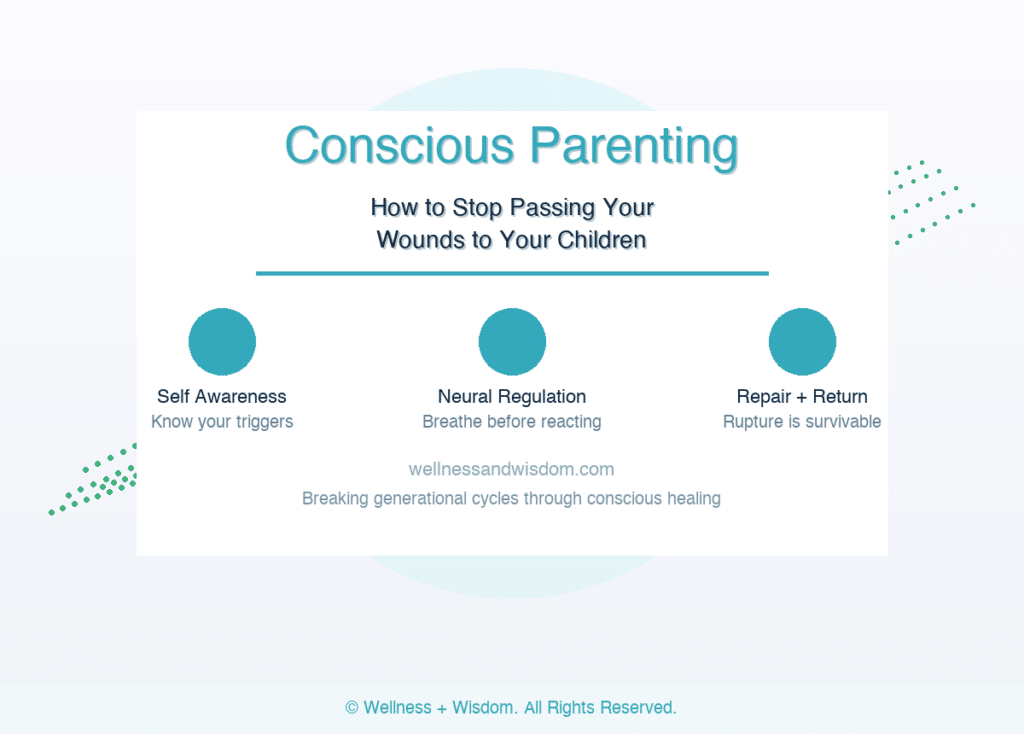
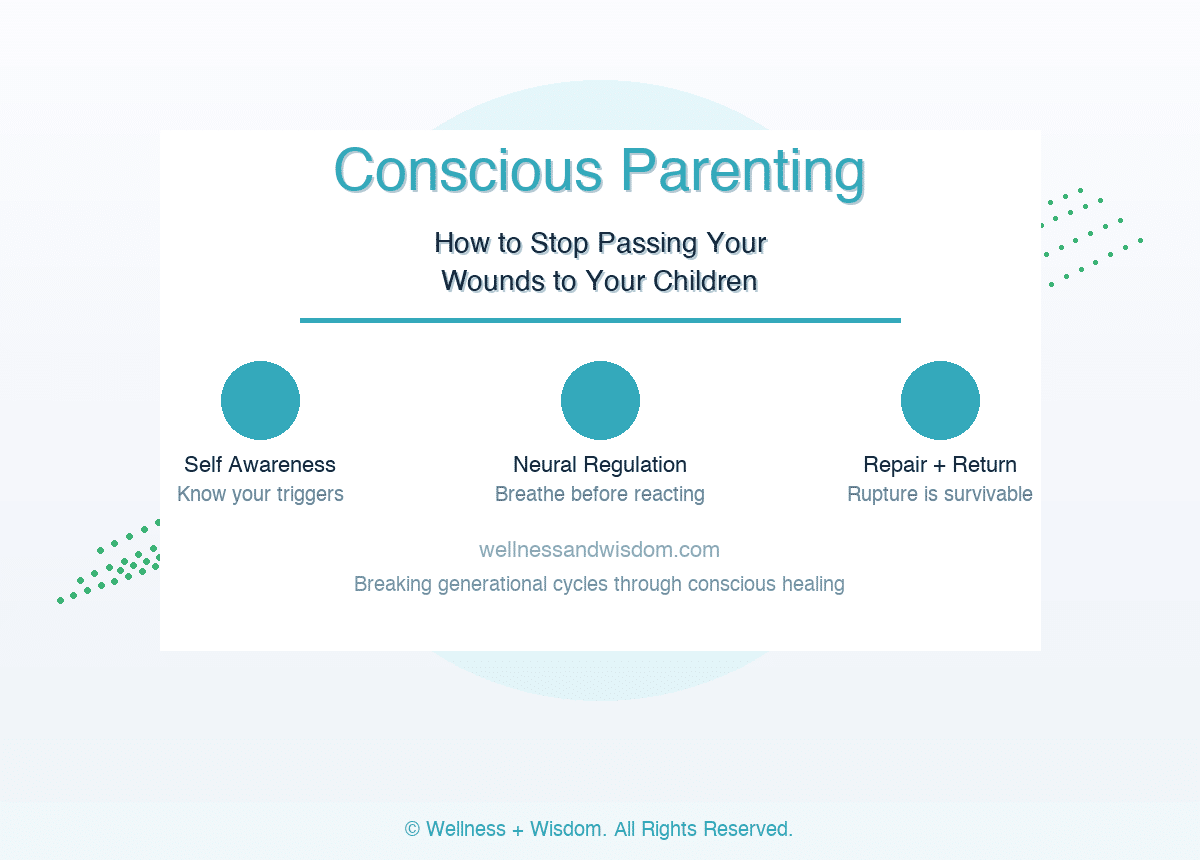
The practice is deceptively simple: before you speak, before you act, take three conscious breaths. Feel your feet on the floor. Give your neural system the five to ten seconds it needs to move from reactivity back toward capacity. That is not weakness. That is the most powerful thing a parent can do in that moment.
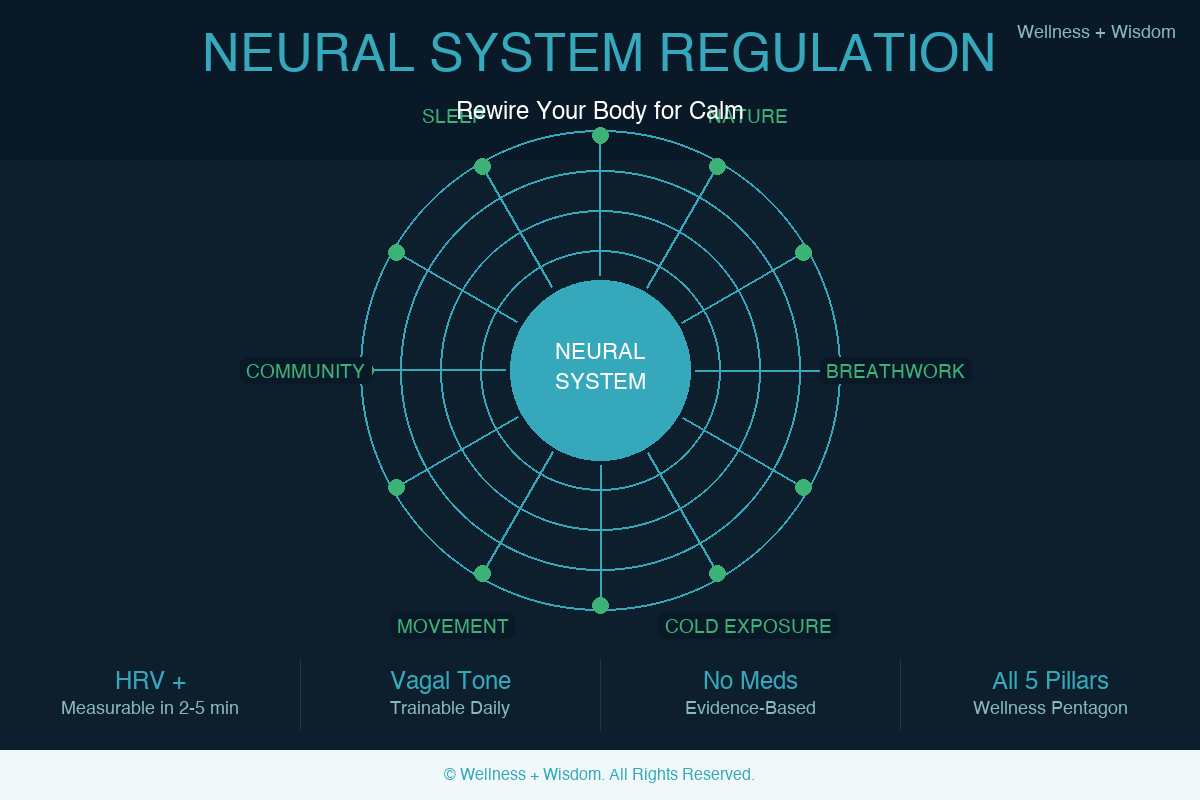
Breathwork practices that support this neural system regulation are at the core of what I teach. What we discover again and again is that the breath is the fastest and most accessible tool for moving from activated to available. And available is where your child needs you to be.
Repair After Rupture
One of the most liberating truths in this practice is this: you do not have to be perfect. You have to be willing to repair.
When you lose your temper. When you say something sharper than you intended. When you go into reactivity and respond from your wound instead of your wisdom. None of that is fatal to your child's development. What matters is what you do next.
Coming back to your child after a rupture, sitting with them, looking them in the eyes and saying clearly, “I lost my cool and that was not about you. I am sorry,” is one of the most profound teachings you can offer. You are modeling for them that relationships can break and be repaired. That adults acknowledge mistakes. That love is not conditional on perfect behavior.
That lesson alone breaks cycles that have run for generations. Because many of us never received a repair. We just received silence or escalation. And so our neural systems never learned that rupture is survivable. Repair teaches that it is.
The Pause Practice
Between stimulus and response, there is a space. In that space lives your freedom. Viktor Frankl understood this from the most harrowing conditions imaginable. This practice operationalizes it in the most ordinary moments of daily life.
The Pause Practice works like this: when you feel activated by your child's behavior, name what you are feeling internally before you respond externally. Not to your child. To yourself, silently. “I notice I am feeling anger right now. I notice my chest is tight. I notice this feeling is familiar.” That internal naming shifts the neural system from reactive to reflective. It is the beginning of conscious response rather than unconscious repetition.
It sounds almost too simple. And then you try it in the middle of a meltdown at seven in the morning before coffee, and you discover it is both simpler and harder than you expected. That is where the real growth is.
Curiosity Over Control
Trauma informed parenting replaces the control impulse with a curiosity impulse. Instead of asking “How do I make this behavior stop?” you ask “What is this behavior trying to tell me about what my child needs right now?”
This shift is not passive. It is profoundly active. It requires you to stay present when every instinct says to escalate or withdraw. It requires that you hold your child's emotional reality without making it mean something about you. And it requires that you trust your child's inherent wholeness even when their behavior looks nothing like wholeness in that moment.
This is the work. And every time you choose curiosity over control, you deposit something real into your child's emotional bank account that they will draw on for decades.
Your Neural System and the Wound Cycle
To understand why conscious parenting is both so challenging and so important, you need to understand what happens in your neural system when your child's behavior triggers something in you.
When a specific behavior activates an unhealed wound, your body responds as if the threat from your past is present right now. The amygdala fires. Cortisol and adrenaline flood the system. Your prefrontal cortex, the seat of logical reasoning and relational empathy, goes temporarily offline. You are no longer the adult in the room. You are the child who was frightened or shamed or abandoned, reacting from that place.
This is not a character flaw. This is physiology. The neural system that was wired during your most vulnerable years does not automatically update just because you became a parent. It needs intentional reconditioning.
The Wellness Pentagon framework I have developed makes clear that emotional wellness is inseparable from physical wellness. Your neural system state is a physical reality that directly affects your parenting behavior moment to moment. You cannot address one without addressing the other.
Window of Tolerance in the Parenting Context
Daniel Siegel's concept of the “window of tolerance” is enormously useful for conscious parents. When we are inside our window, we have full access to our relational capacities. We can respond with flexibility, empathy, and presence. When we are outside our window, either in hyperarousal (flooded, reactive, overwhelmed) or hypoarousal (shut down, disconnected, numb), we lose access to those capacities entirely.
The goal of this work is widening your window of tolerance so that more of life, including the full range of your child's emotional experience, falls inside your capacity to respond rather than react. Breathwork, somatic practice, therapy, community support, and the kind of integrated healing work we do through the L.I.F.E. Method all serve this purpose.
This is why breathwork, somatic practices, and embodiment work are not wellness luxuries. They are parenting tools. When you learn to move your neural system from threat response back to safety, you have a fundamentally different quality of presence available to your children every single day.
The Cortisol Conversation
A child who lives in a home where a parent's cortisol is chronically elevated due to unprocessed stress will have their own cortisol regulation system shaped accordingly. Their neural system learns to live in a state of alertness because that is the environment they are developing inside. This is not about blame. It is about understanding the mechanism so we can interrupt it.
Your regulation is their regulation. Your healing is their biology.
The Conscious Parenting Framework: Five Core Practices
In years of teaching through the Wellness + Wisdom Podcast and the L.I.F.E. Method programs, I have identified five core practices that distinguish this approach from the default patterns most of us inherited.
Practice One: Mirror Work
Your child is a mirror. Every quality in your child that activates intense emotion in you reflects something about you. The child who will not listen may be reflecting the parent who does not feel heard. The child who is a perfectionist may be reflecting the parent who is terrified of failure. The child who is defiant may be reflecting the parent who felt powerless.
This is not about guilt. It is about gold. The mirror shows you exactly where your work is. And when you do that work, the mirror often changes without you ever directly addressing your child's behavior. That is one of the most extraordinary things conscious parents report again and again.
Practice Two: Emotional Literacy First
Before your child can regulate their emotions, they need language for them. Conscious parenting prioritizes emotional vocabulary as foundational literacy, right alongside reading and math. “I can see you are frustrated. Can you tell me more about what you are feeling?” This is not just compassionate. It is neurologically supportive.
Research within the Emotional Epigenetics framework confirms that naming emotions activates the prefrontal cortex and supports neural system calming. The act of putting language to feeling literally reduces the intensity of the emotional experience at a neurological level. Affect labeling, researchers call it. I call it one of the most underrated parenting tools available to every family right now.
Practice Three: Repair as a Practice, Not an Exception
As discussed in the trauma informed parenting section, rupture followed by repair is one of the most powerful teaching sequences in childhood development. Research on attachment shows that it is not the absence of conflict in a family but the quality of repair that builds secure attachment. Make repair a routine feature of your family culture. Model that mistakes are survivable. Model that love does not require perfection.
Practice Four: Your Own Healing Is the Work
You cannot shortcut this. Reading parenting books, attending workshops, listening to podcasts, all of it is useful as information. But the real work is your own inner excavation. Therapy, breathwork, somatic healing, community accountability, the kind of embodied transformation offered through the L.I.F.E. Method, whatever helps you access and integrate your own unhealed material. Because your presence is the curriculum your child is learning from every single day.
If there is one thing I want you to take from this entire article, it is this: investing in your own healing is not selfish. It is the most generous thing you can do for your children. Every hour you spend healing yourself is an hour that ripples forward into their lives and potentially into the lives of their children.
Practice Five: The Seven Generation Vision
The Indigenous teaching of considering the impact of your decisions on seven generations forward is directly relevant here. When you do your inner work today, you are not just helping your children. You are potentially interrupting a cycle that has run for generations and creating the biological and emotional conditions for your grandchildren and great grandchildren to live with more freedom, more ease, and more capacity for joy.
Healing does not stop with you. It ripples forward. That is not a spiritual metaphor. That is epigenetics.
Conscious Parenting vs. Unconscious Parenting
Here is a simple and honest way to know whether you are showing up from awareness and presence or from unhealed pattern in a given moment.
| Unconscious Parenting Signals | Conscious Parenting Signals |
|---|---|
| Reaction is disproportionate to the situation | You notice your activation before acting on it |
| You hear your parent's voice coming out of your mouth | You are curious about what the behavior is communicating |
| You feel righteous rather than relational | You can hold space without needing to fix immediately |
| You need your child to agree to feel okay | You can acknowledge mistakes without shame spiraling |
| Your child's distress makes you anxious rather than compassionate | You feel present more often than you feel performed |
| Discipline is about control rather than teaching | Boundaries come from love and clarity, not fear |
The goal is not to live permanently in the right hand column. The goal is to notice when you are in the left hand column and to choose differently. That noticing, that returning, is the practice. And every single return teaches your child that we can always come back to ourselves and to each other. That is one of the greatest gifts you can give them.
If you want to see this work in action across dozens of conversations, explore the latest episodes of the Wellness + Wisdom Podcast and the Wellness + Wisdom blog for practical tools, guest conversations, and solocasts on exactly this work.
The Invitation: This Is the Most Joyful Work You Will Ever Do
I want to end the main content of this article with something I feel very deeply: this work is not a burden. It is an invitation. And the invitation is to joy.
The invitation is to become whole. To stop carrying wounds you did not create. To give your children what you perhaps did not receive. To be the ancestor that future generations look back to and say: that is where it changed.
There is no greater satisfaction I have encountered than the moment when I realize that the wound that once ran my life is no longer at the wheel. That I have choices my parents did not have because I have done work they did not know was possible. And that my daughter is being shaped by a version of her father who is showing up from his wholeness rather than his wounding, at least most of the time.
Your children are not asking you to be perfect. They are asking you to be present. And your presence, your regulated, loving, honest, imperfect, courageous, healing presence, is the most extraordinary thing you can offer them.
That is what conscious parenting makes possible. Not perfection. Liberation. For you and for them and for everyone who comes after.
To explore the tools that support this journey, visit the Wellness + Wisdom store for resources, or begin with the Wellness Pentagon framework to understand the full architecture of whole person healing. And if you are ready to go all in, the L.I.F.E. Method is designed to take you all the way through the integration work that makes conscious parenting not just an idea but a lived reality.
The most important podcast conversation I have done on this topic is available right now. Explore the best of my 2025 reflections on parenting and personal growth for a full picture of the ideas driving my work right now.
Frequently Asked Questions About Conscious Parenting
What is conscious parenting and how is it different from traditional parenting?
This practice is rooted in raising children from a place of self awareness, presence, and emotional regulation rather than from unconscious reactivity or inherited patterns. Developed primarily by clinical psychologist Dr. Shefali Tsabary and built upon by researchers and educators worldwide, it inverts the traditional parent as authority model. In this framework, the parent is both teacher and student. The child's behavior becomes an invitation for the parent's growth and healing. The foundational idea is that you can only meet your child where you have met yourself. Traditional parenting models place all the developmental expectation on the child. Conscious parenting places it, rightly and powerfully, on the parent.
How does conscious parenting help break generational cycles?
Conscious parenting breaks generational cycles by interrupting the automatic transmission of unhealed emotional patterns from parent to child. When a parent engages in inner work, develops self awareness, and learns to respond rather than react, they change the relational dynamic that would otherwise repeat across generations. The science of epigenetics supports this directly: parenting behaviors that create felt safety and emotional coregulation in children produce measurable changes in how stress response genes are expressed. Breaking the cycle is not just behavioral. According to the latest research in parenting and epigenetics, it is biological. Your healing creates protective epigenetic signals that travel forward into your children's biology.
What does parenting and epigenetics research actually show?
Research in parenting and epigenetics reveals that children can inherit biological signatures of their parents' unresolved trauma, not just behavioral patterns but actual changes in how stress regulating genes like FKBP5 are expressed. The Yehuda Holocaust study demonstrated this in human subjects. The Dias and Ressler study showed it in animal models. A 2026 study of Syrian refugee families confirmed it across three generations. The equally important finding: healing is just as transmissible as wounding. When parents reduce chronic stress, develop emotional regulation, and create secure attachment environments, these positive epigenetic signals also pass forward. The code works in both directions.
How is trauma informed parenting different from gentle parenting?
Trauma informed parenting and gentle parenting share real common ground but differ in their primary focus and depth. Gentle parenting tends to emphasize behavioral approaches such as calm responses, natural consequences, and collaborative problem solving between parent and child. Trauma informed parenting goes deeper by addressing the root causes of challenging behavior as often being driven by dysregulation, fear, or unmet developmental needs, and by explicitly examining the parent's own trauma history as a factor in their responses. Trauma informed parenting incorporates neural system regulation as foundational and often draws on therapeutic and somatic frameworks. It is the more comprehensive of the two approaches and the one with the strongest connection to the emerging epigenetics research.
How do I know if I am unconsciously passing my trauma to my children?
Common signs that you may be transmitting unprocessed wounds include reacting with disproportionate emotional intensity to your child's behavior, hearing your own parents' voice coming out of your mouth, feeling strong shame or rage when your child makes mistakes, needing your child to behave a certain way to feel okay in yourself, or feeling profoundly triggered by your child's emotions in a way that shuts you down rather than opening you up to connection. These are not failures. Every one of them is a precise map pointing to the inner work that, when addressed, creates freedom for both you and your children. The wound is the invitation.
Where do I start with conscious parenting if I had a difficult childhood?
Start exactly where you are. The most powerful first step is developing the capacity to notice what you feel in your body when your child's behavior activates you. From that noticing, space opens. From that space, choice becomes possible. Working with a therapist who understands attachment and trauma, engaging with breathwork practices, joining a supportive community like the Liberated Life Tribe, and exploring programs like the L.I.F.E. Method are all powerful entry points. You do not need to have had a good model to become one. Many of the most extraordinary conscious parents I know came from the most difficult starting places. The wound became the teacher. And the teaching became the gift.
About Josh Trent
Josh Trent is the founder of Wellness + Wisdom and host of the Wellness + Wisdom Podcast, one of the world's leading podcasts for personal development, emotional intelligence, and whole person healing. For over a decade, he has been at the intersection of science and soul, helping hundreds of thousands of people step out of self sabotage and inherited patterns so they can live from authentic joy. Josh is the creator of the Emotional Epigenetics framework, the Wellness Pentagon model, and the L.I.F.E. Method. He lives in Dripping Springs, Texas with his daughter, whose presence has been his greatest teacher. You can learn more about Josh's story on the Wellness + Wisdom website.
Ready to Begin Your Own Cycle Breaking Journey?
Join the Liberated Life Tribe and receive your free 10 day Self Liberation Blueprint. It is designed to walk you through the foundational practices of emotional liberation, including the conscious parenting work we explored together here.
Join the Liberated Life Tribe at liberatedlife.com
Free. Powerful. Life changing. And your family will thank you for it.
© 2026 Wellness + Wisdom. All Rights Reserved. Wellness + Wisdom is not a substitute for professional mental health or medical care. Always consult a qualified healthcare provider for personalized guidance.