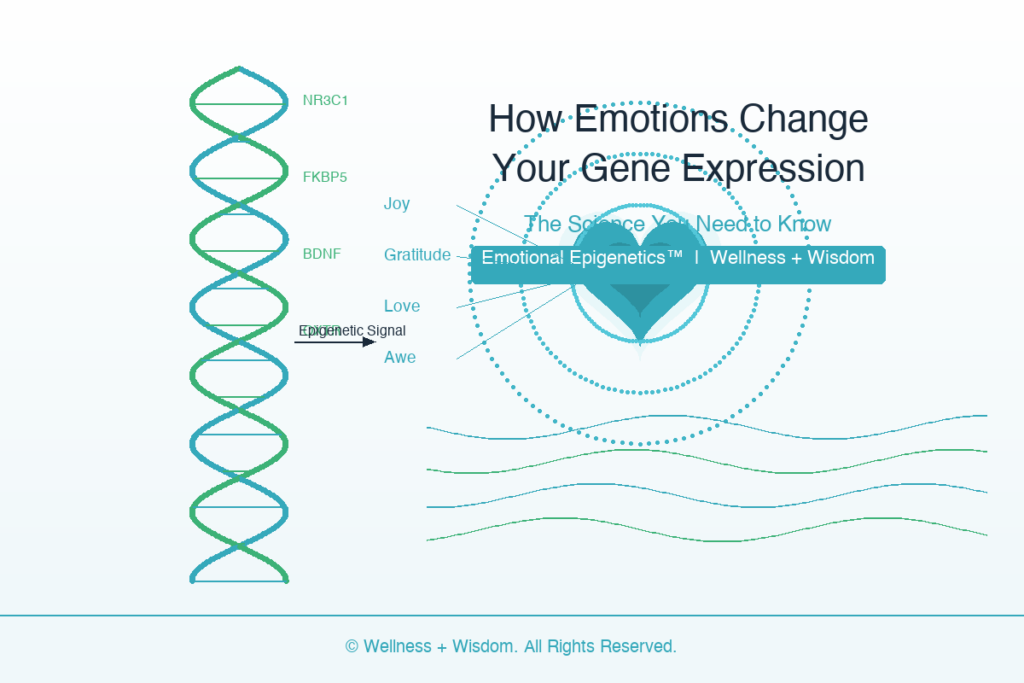
How Emotions Change Your Gene Expression: The Science You Need to Know
Here is what nobody told you in school: your DNA is not a static blueprint locked in a vault. It is a living, breathing, responsive system. And one of its primary response signals is the emotion you are feeling right now, today, in this moment as you read these words.
The science of emotions gene expression has moved from the fringes of molecular biology to the front pages of peer reviewed journals in 2025 and 2026. A landmark study published in Frontiers in Psychiatry this past February confirmed what researchers had been building toward for two decades: specific emotional environments produce measurable, documented changes in which of your genes get activated and which get silenced. These are not metaphorical changes. They are molecular. They are real. And they are reversible.
This is the most hopeful news in the history of human health, and most people have never heard it explained in plain language.
I have spent the better part of fifteen years studying the intersection of emotional intelligence and biological wellness through the Emotional Epigenetics framework I teach on the Wellness + Wisdom Podcast. What I have learned, and what this article will show you in detail, is that the quality of your emotional life is not just a psychological issue. It is a biological imperative. Your feelings are speaking directly to your genome every single day.
Let us talk about exactly how that works, which genes are listening, and what you can do to make sure they are hearing something worth expressing.
What Emotions Gene Expression Actually Means
Before we go deeper, I want to ground this in language that actually lands. The phrase emotions gene expression combines two concepts that are taught separately and almost never connected in the way they deserve to be.
Gene expression is the process by which the information encoded in your DNA gets read and translated into proteins that shape how your body functions. You have roughly 20,000 to 25,000 genes in every cell of your body. At any given moment, only a fraction of those genes are actively being read. The others are sitting quietly, waiting. Gene expression is the mechanism that determines which genes are active, to what degree, and for how long.
Your emotions are not just psychological states. They are a cascade of neurochemical events: hormones released, neurotransmitters activated, electrical signals fired through the neural system, physiological changes rippling from your heart rate to your gut to your immune response. Every emotional experience you have generates a biological signal that travels to the nucleus of your cells, where it interacts with the machinery that controls which genes get turned on.
The emerging science of emotional epigenetics sits at the meeting point of these two realities. It tells us that how you feel shapes what your genes do, and that the accumulated emotional landscape of your life leaves a lasting molecular fingerprint on your genome. You are not just experiencing your emotions. You are writing them into your biology.
This understanding has profound implications. It means that emotional wellness is not a luxury or a supplementary concern. It is a primary driver of genetic health. It means that the work you do to cultivate joy, process grief, regulate fear, and build loving connection is not just good for your mood. It is editing the operating code of your cells.
And it means that the Wellness Pentagon approach, which holds that no single dimension of health can be optimized in isolation, is not just a philosophical model. It is biologically required.
The Epigenetic Mechanism: How Feelings Become Biological Signals
To understand how emotions change gene expression, you need to understand the two primary molecular mechanisms through which this happens: DNA methylation and histone modification. Neither of these is as complicated as they sound, and both are far more relevant to your daily life than you might expect.
DNA Methylation: The Volume Knob on Your Genes
Imagine your DNA as a library of 25,000 books. Every book is a gene. Methylation is the process of placing a small chemical tag, called a methyl group, on the cover of specific books. When that tag is placed on a gene's promoter region, the cellular machinery cannot easily read that gene. It is functionally silenced. When methylation is removed, the gene can be read again and expressed as protein.
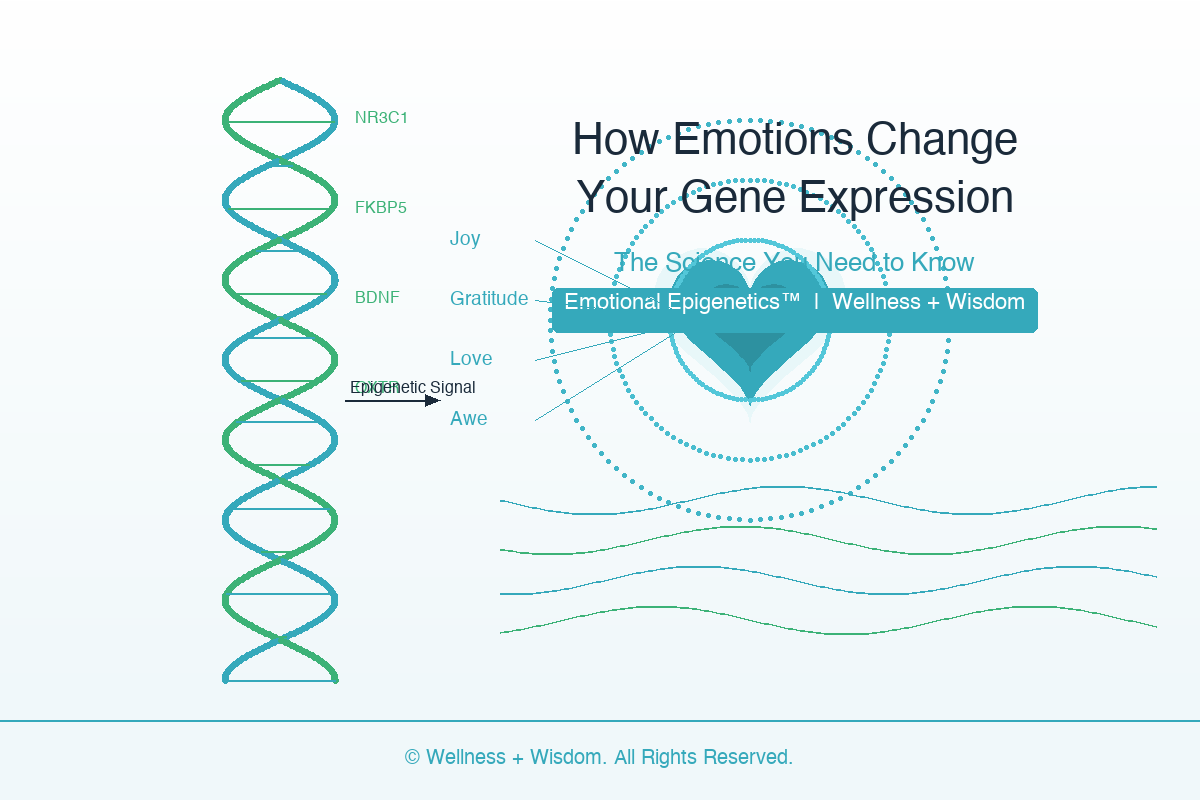
Your emotional states drive methylation patterns through a chain of biological events. Chronic stress, for example, elevates cortisol. Cortisol interacts directly with the glucocorticoid receptor gene NR3C1, promoting methylation that silences it over time, which reduces your capacity to regulate the stress response in the future. The emotion of chronic fear literally turns down your biology's ability to return to calm.
Conversely, states of emotional safety, love, joy, and connection have been shown to remove methyl tags from protective and regenerative genes, allowing them to be expressed more robustly. The library opens. More books get read. Your biology becomes more adaptive, resilient, and oriented toward growth.
Histone Modification: How Emotions Reshape Your Chromosomes
The second mechanism is histone modification. Your DNA is incredibly long. To fit inside a cell nucleus, it wraps tightly around protein spools called histones. When the DNA is wound tightly around its histones, the genes in that region are inaccessible and cannot be expressed. When the DNA is unwound, those genes become available to the transcription machinery.
Emotional states influence histone modification through the same hormonal and neurochemical pathways that drive methylation. A 2025 study published in Frontiers in Genetics found that reduced histone acetylation in the prefrontal cortex and hippocampus, both regions central to emotional regulation and memory, directly correlated with downregulated expression of BDNF and CREB, the molecules most associated with neuroplasticity, mood stabilization, and the capacity for joy.
In simple terms: sustained emotional distress literally winds your DNA tighter in the regions responsible for your ability to feel good, grow, and adapt. And sustained positive emotional states do the opposite. They are not passive experiences. They are active biological instructions.
The Specific Genes That Respond to Your Emotional State
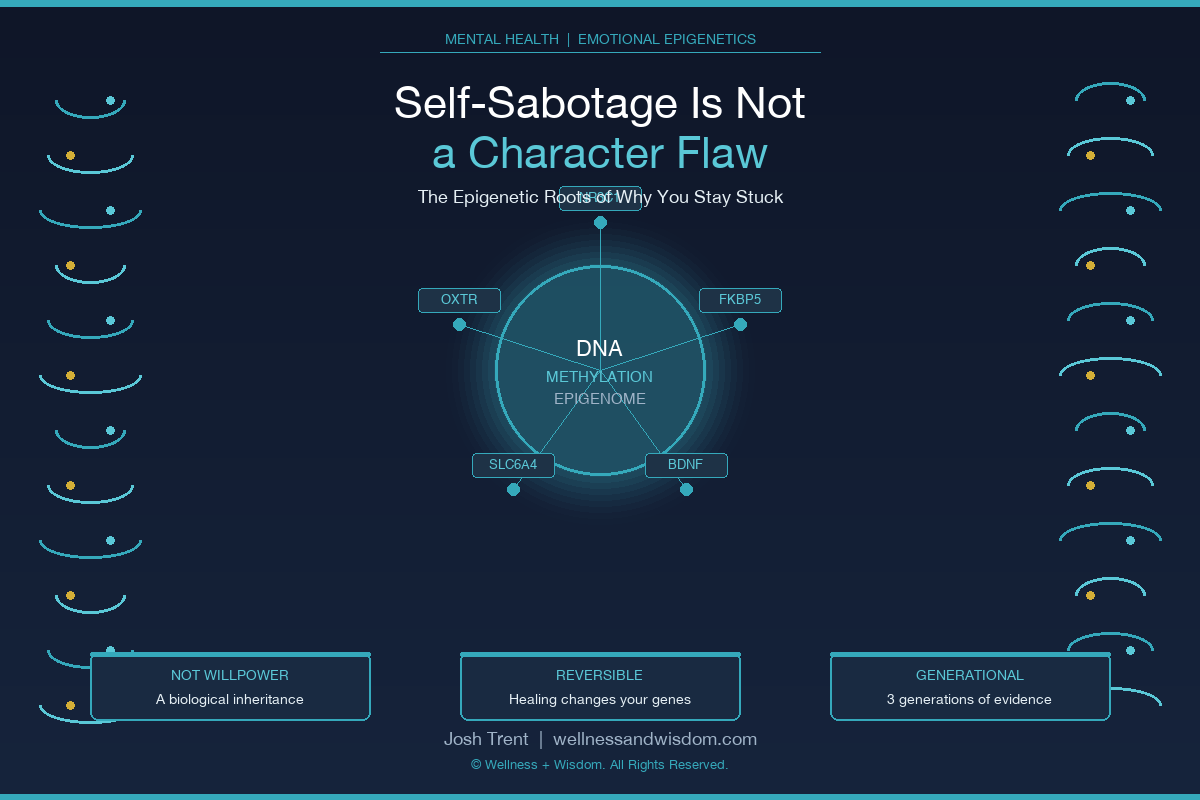
One of the most exciting findings in recent emotional epigenetics science is the identification of specific genes that function as direct sensors of emotional environment. The February 2026 review in Frontiers in Psychiatry consolidated years of epigenome-wide association studies and confirmed a core set of genes that consistently show altered methylation patterns in response to emotional and environmental conditions. Here are the four you need to know.
NR3C1: Your Stress Regulation Master Switch
NR3C1 codes for the glucocorticoid receptor, the protein that allows your cells to respond to cortisol and ultimately shut off the stress response once a threat has passed. When NR3C1 is properly expressed, you can feel the alarm of stress and then return to baseline. When NR3C1 becomes methylated and silenced through chronic emotional stress or early life adversity, your cellular stress response loses its brakes.
This is one reason why people who grew up in emotionally volatile environments often describe feeling perpetually on edge. It is not a personality trait. It is an epigenetic state. Their NR3C1 gene has been turned down by a history of fear, and their biology literally has a harder time returning to calm.
The extraordinary news, confirmed in the 2025 review in Frontiers in Psychiatry on the clinical use of epigenetics, is that CBT, mindfulness, and other emotionally regulating interventions have been shown to reduce NR3C1 methylation. You can literally turn the volume back up on your stress regulation gene through sustained emotional practice.
FKBP5: The Trauma Memory Gene
FKBP5 is the gene most closely associated with the biological encoding of traumatic experience. It modulates the glucocorticoid receptor's sensitivity, essentially fine-tuning how reactive you are to stress at a cellular level. Adverse experiences, particularly those in early life, produce lasting FKBP5 methylation changes that alter the entire architecture of emotional reactivity.
The famous Holocaust survivor study by Yehuda and colleagues documented FKBP5 methylation differences not just in survivors but in their children who had never personally experienced the trauma. This is the molecular evidence for intergenerational emotional transmission. The fear your grandparents lived with can be written into your stress response biology, not through memory, but through epigenetic inheritance.
This is not cause for despair. It is cause for understanding. When you know that your anxiety or emotional reactivity may be carrying an inherited signal, you can approach it with compassion rather than self-judgment. And the research is clear that this methylation is reversible through sustained emotional regulation practice.
BDNF: The Growth and Joy Gene
BDNF stands for brain-derived neurotrophic factor. It is often called the miracle grow of the brain. BDNF promotes the growth and survival of neurons, supports learning and memory, and plays a central role in neuroplasticity: your brain's ability to rewire itself in response to new experiences.
BDNF expression is directly responsive to emotional state. States of joy, love, connection, and engaged learning increase BDNF expression. States of chronic fear, grief, and isolation reduce it. A 2025 analysis in Cellular and Molecular Neurobiology documented the pathway directly: adverse emotional experience promotes histone modification changes that suppress BDNF expression in the hippocampus, contributing to reduced neuroplasticity and elevated vulnerability to depression.
Conversely, every positive emotional practice, from gratitude to meditation to physical connection to breathwork, supports BDNF expression. Joy is not just a nice feeling. It is the neurochemical environment in which your brain can grow.
OXTR: The Connection Gene
OXTR codes for the oxytocin receptor. Oxytocin is the molecule most associated with social bonding, trust, and the felt sense of safety in relationship. High-quality emotional connection and nurturing increase OXTR expression. Emotional neglect and relational trauma promote OXTR methylation and silencing.
The clinical implication, confirmed in the 2025 Frontiers in Psychiatry review, is that the quality of your emotional relationships is literally shaping your capacity for future connection at a genetic level. Children raised in emotionally attuned environments have different OXTR expression patterns than those raised in neglect or chronic relational stress. And this affects not just their emotional experience but their physiology, immunity, and longevity.
Connection is not a psychological preference. It is a biological requirement with epigenetic consequences.
Can Emotions Change DNA? What the Latest Research Says
This is the question at the center of emotional epigenetics science, and it deserves a precise answer rather than an oversimplified one.
The short answer: emotions do not change the sequence of your DNA. Your four-letter genetic code, the A, T, G, and C nucleotides that spell out your genome, remains stable across your lifetime. If your DNA were a piano, the keys themselves do not change. What changes is which keys are being pressed, with what force, for how long, and in what sequence.
That said, the evidence that emotions change how your DNA behaves, meaning which genes are expressed and to what degree, is now overwhelming, current, and peer reviewed at the highest levels of science.
The February 2026 study in Frontiers in Psychiatry concluded, after reviewing epigenome-wide association studies across thousands of participants, that chronic emotional stress produces documented methylation changes at multiple key gene sites including NR3C1, FKBP5, BDNF, OXTR, and SLC6A4. These are not theoretical associations. They are measured molecular events linked directly to emotional environmental conditions. Read the full study here.
And the 2025 review in Cellular and Molecular Neurobiology on genetic, epigenetic, and hormonal regulation in major depressive disorder mapped the precise molecular pathway: emotional experience produces hormonal shifts, those shifts produce epigenetic changes at specific gene sites, and those changes produce lasting alterations in emotional resilience, stress reactivity, and neuroplasticity. That study is accessible here.
When people ask can emotions change DNA, what they are really asking is whether their emotional life matters at a biological level. And the answer is an unequivocal yes. Your feelings are not separate from your body. They are your body's primary language for communicating with your genome.
The question is no longer whether this is happening. The question is whether you are going to be an active participant in what gets written.
The Emotional Epigenetics Framework That Changes Everything
The Emotional Epigenetics framework I have developed through years of research, personal practice, and working with thousands of people through the L.I.F.E. Method is built on three interlocking pillars.
The first pillar is Emotional Patterns: the recurring emotional signatures that you carry, many of which were inherited from your family of origin. These are not just psychological habits. They are bioenergetic memories encoded in your cells, shaping gene expression day after day through the chemical signals they generate.
The second pillar is Unconscious Beliefs: the stories you have internalized about who you are, what you deserve, and what is safe. These beliefs are not neutral. Every time an unconscious belief is activated, it triggers an emotional response, which triggers an epigenetic signal, which shapes gene expression. A belief that you are fundamentally unsafe activates a chronic low-grade fear state that is constantly suppressing NR3C1 and BDNF expression. A belief that you are deeply loved and capable does the opposite.
The third pillar is Environment: the external and internal conditions that signal your genome about whether to orient toward protection or growth. This includes your relationships, your daily stress load, your nutrition, your sleep quality, your spiritual practice, and critically, the quality of your emotional regulation habits.
What makes this framework so powerful is that it identifies three leverage points for change rather than one. You are not just trying to feel better. You are intervening at the level of inherited patterns, belief systems, and environmental signals simultaneously. That is how lasting epigenetic change happens, not through a single tool or a one-time breakthrough, but through a sustained, multi-dimensional shift in the emotional environment you create for your cells every day.
You can explore this framework in depth through the Wellness + Wisdom blog and through the episodes and solocasts on the Wellness + Wisdom Podcast.
Positive Emotions and Gene Expression: The Half the Research Is Finally Catching Up To
Here is the gap in the existing wellness content landscape that I want to fill in this article. Nearly all of the published research and popular writing on emotional epigenetics focuses on negative emotional states: stress, trauma, fear, grief. The field has built an extraordinary map of the biological damage that emotional distress produces at the genetic level.
What has been dramatically underexplored is the other side: how specific positive emotional states, joy, gratitude, love, awe, and heart coherence, actively switch on beneficial gene expression, reduce inflammatory markers, and produce measurable biological shifts toward resilience and health.
A 2025 systematic review and meta-analysis published in the International Journal of Applied Positive Psychology, led by researchers at the University of Oslo, finally brought this into rigorous scientific focus. Across 25 randomized controlled trials with 1,641 participants, positive psychology interventions including gratitude practice, kindness acts, nature exposure, music engagement, and meaning-focused activities produced a statistically significant reduction in inflammatory biomarkers, with an effect size of 0.46 overall and 0.61 in clinical populations. Access the full meta-analysis here.
Inflammation is not just a physical metric. It is a readout of the gene expression activity of your immune cells. When positive interventions reduce inflammatory markers, they are reducing the activity of pro-inflammatory genes and increasing the activity of anti-inflammatory ones. Joy, gratitude, and meaning are not soft concepts. They are epigenetic interventions with measurable molecular effects.
Gratitude and the Anti-Inflammatory Pathway
The gratitude research is particularly compelling. When a person deliberately practices gratitude, not just passive appreciation but an active, felt, embodied recognition of what is good, the resulting emotional state produces a neurochemical cascade that includes reduced cortisol, elevated oxytocin, increased dopamine, and reduced inflammatory cytokines including TNF-alpha and interleukin-6.
Each of these neurochemical changes is an epigenetic signal. Reduced cortisol means less suppression of NR3C1. Elevated oxytocin means more OXTR expression and greater capacity for connection. Reduced inflammatory cytokines means less activation of NF-kB-targeted genes, the inflammatory gene network associated with chronic disease and accelerated aging.
A gratitude practice is not just good for your mood. It is reshaping the inflammatory gene expression landscape of your immune system in real time.
Awe and the BDNF Boost
Awe is one of the most underresearched and undervalued emotional states in medicine, and it may be one of the most epigenetically potent. Studies on awe suggest that this emotion, triggered by encounters with vastness, beauty, nature, music, or profound meaning, produces a distinct neurochemical and immunological profile that includes elevated BDNF expression, reduced pro-inflammatory cytokines, and increased activity of the parasympathetic neural system.
People who regularly cultivate awe through nature, art, music, spiritual practice, and moments of genuine wonder are giving their BDNF gene a consistent positive signal. Their brains are being instructed to grow, adapt, and strengthen. That is not a metaphor. It is molecular biology.
HeartMath Coherence and Gene Activation
The HeartMath Institute has been conducting research on heart coherence and gene expression since the late 1990s, and their work has recently gained fresh validation. A December 2025 narrative review published in PubMed Central examined HeartMath coherence practice as a clinical intervention for emotional and physiological dysregulation. The review confirmed that sustained coherence practice, in which the practitioner brings focused positive emotion into the heart center and synchronizes heart rate variability through intentional breathing and feeling states, produces measurable parasympathetic dominance, reduced inflammatory markers, and enhanced emotional resilience. Read the HeartMath review here.
Earlier foundational research from HeartMath showed that heart-focused positive intention could influence DNA conformation directly. While the mechanisms of this finding continue to be studied, the clinical evidence for coherence practice producing downstream epigenetic benefits through hormonal and immune pathways is now substantial.
This is the science behind something that spiritual traditions have known for centuries: the heart has intelligence. And when you learn to deliberately activate the heart's emotional intelligence, you are speaking directly to your genome in the language it was designed to hear.
How Fast Do Emotions Change Gene Expression?
One of the most practically important questions in this field is the question of timing. How quickly can emotional states produce epigenetic changes, and how long do those changes last?
The research suggests a spectrum. Acute emotional events, particularly traumatic or intensely positive ones, can produce detectable epigenetic changes within hours to days. The methylation changes at acute stress response gene sites, for example, can be measured within 24 hours of a significant emotional event. This is why a single traumatic experience can produce lasting biological effects, not just psychological ones.
For sustained behavioral and emotional changes, the research points to weeks to months for measurable methylation shifts at key regulatory genes. The 2025 mindfulness meta-analysis published in Biogerontology found significant reductions in TNF-alpha, interleukin-6, and C-reactive protein across studies, consistent with lasting epigenetic shifts in inflammatory gene expression from sustained mindfulness practice. Most studies showing these effects involve practice periods of 8 to 12 weeks. See that research here.
Critical Epigenetic Windows
There are periods in human development when emotional epigenetics operates with particular intensity. The prenatal period is perhaps the most significant: the emotional state of a pregnant mother, through hormonal signaling, directly shapes the epigenome of the developing fetus at critical gene sites including NR3C1 and FKBP5. A child is receiving epigenetic instructions about emotional safety before they are born.
Early childhood, from birth through approximately age seven, is a second critical window. The emotional quality of caregiving during this period produces the most significant and lasting methylation patterns at connection, stress regulation, and neuroplasticity gene sites. This is not to generate guilt in parents. It is to underscore why the work of healing your own emotional patterns has implications that extend far beyond yourself.
Adolescence and, for women, perimenopause represent additional windows of heightened epigenetic sensitivity. During these periods, the genome is in a particularly receptive and malleable state, meaning that emotional practices during these times have amplified influence on gene expression patterns.
None of this means that change is impossible outside of these windows. The evidence for adult neuroplasticity and adult epigenetic reversal is robust. But it does mean that the emotional environment you create for yourself and your children is writing a legacy that extends much further than you might have realized.
Five Practices That Produce Measurable Epigenetic Shifts
Knowledge without application is just interesting information. Let us talk about what you can actually do with this science. Each of the following practices has peer reviewed evidence connecting it to measurable changes in the gene expression pathways discussed in this article.
Practice 1: Heart Coherence (5 Minutes Daily)
Heart coherence is the most evidence-backed rapid epigenetic intervention available. The basic practice: place your attention at your heart center, slow your breathing to approximately five seconds in and five seconds out, and deliberately activate a feeling of appreciation, care, or love. Hold this for five minutes.
This practice reduces cortisol, elevates DHEA, promotes parasympathetic neural system dominance, and produces measurable reductions in inflammatory gene expression. It is the single most efficient way to change the hormonal signal that your genes are receiving in a short time window. You can start today, right now, before you close this article.
Practice 2: EFT Tapping as Epigenetic Medicine
Emotional Freedom Technique, or EFT tapping, involves stimulating acupressure points while simultaneously processing emotional content. Researcher Dawson Church has conducted the most rigorous studies on EFT and gene expression, including a study showing that a single one-hour EFT session affected the expression of dozens of genes and produced significant reductions in cortisol. His ongoing clinical trials with veterans have shown 80 percent plus recovery rates from PTSD through EFT, with corresponding epigenetic improvements at stress regulation gene sites.
EFT works, in part, by activating the neural system's relaxation response while simultaneously processing emotional content, producing a dual signal to the genome that the threat has passed and that safety has been restored. You can access EFT resources through the Wellness + Wisdom store and explore related conversations on the latest podcast episodes.
Practice 3: Conscious Breathwork
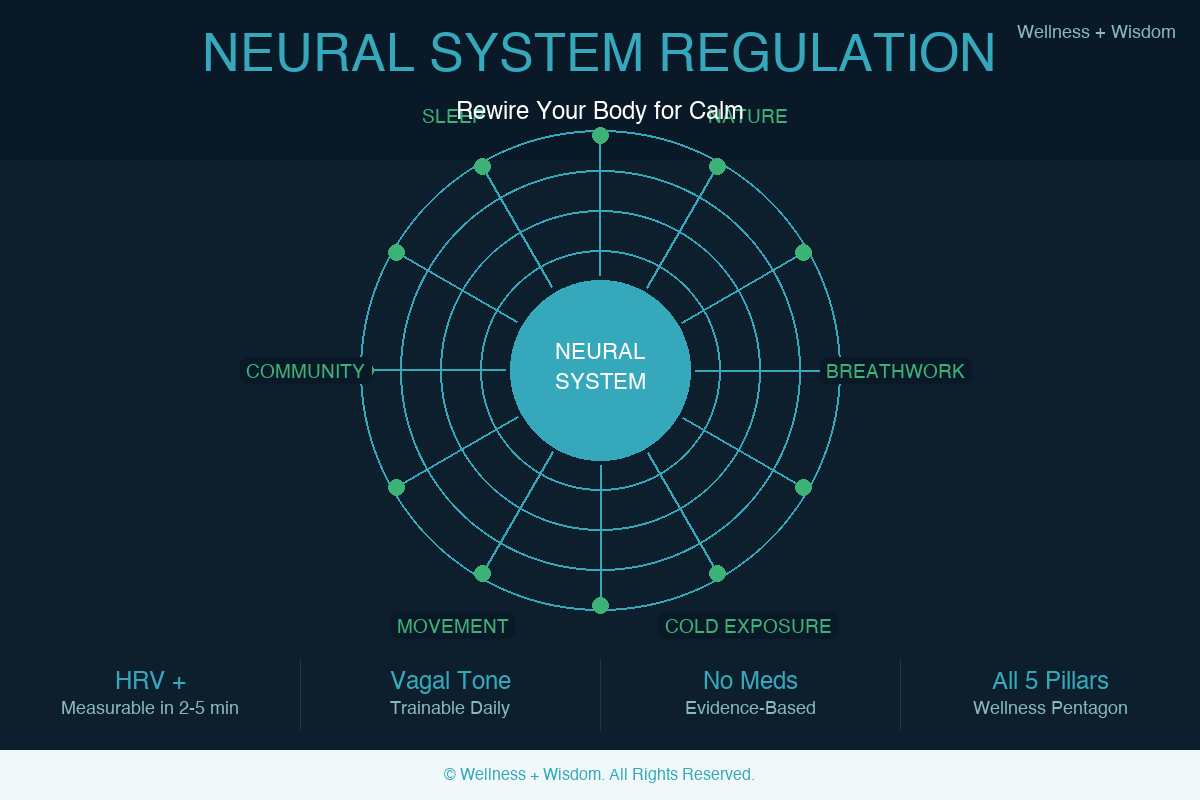
Breathwork is the only physiological process that is both completely automatic and fully under conscious control. This unique position makes it the most direct available pathway from conscious intention to neural system state. Through extended exhales, box breathing, or the connected breathing practices I teach through the L.I.F.E. Method, you can rapidly shift your autonomic state from sympathetic activation to parasympathetic dominance.
Every shift from sympathetic to parasympathetic changes the hormonal environment bathing your cells and therefore the epigenetic signals reaching your genes. A ten-minute breathwork practice is a ten-minute epigenetic intervention. If you would like to go deeper on this practice, you can explore breathwork episodes on the podcast or connect with our Liberated Life Tribe for guided sessions.
Practice 4: Gratitude as Biology (Not Just Mindset)
Based on the 2025 University of Oslo meta-analysis, even brief gratitude practices significantly reduce inflammatory gene expression markers. But the key is felt gratitude, not cognitive gratitude. Writing “I am grateful for my family” without actually feeling appreciation in your body is less effective than pausing, breathing, and genuinely dropping into the felt sense of what it means to have the people you love in your life.
The felt experience is what generates the neurochemical cascade. The emotion is the epigenetic signal. Aim for three to five minutes daily of genuine felt appreciation, focused on specifics: a conversation, a moment, a sensation, a relationship. This is not toxic positivity. This is molecular biology in practice.
Practice 5: Mindfulness and the Inflammation Signature
A 2025 meta-analysis in Biogerontology reviewed the effects of mindfulness-based interventions on what researchers call inflammaging: the chronic low-grade inflammation associated with aging, disease, and epigenetic dysregulation. The finding was clear. Mindfulness practice reduces TNF-alpha, interleukin-6, and C-reactive protein while improving vascular function. These are direct downstream readouts of anti-inflammatory gene expression.
Earlier research from the Benson-Henry Institute at Harvard documented that a single mindfulness session downregulated hundreds of stress response and inflammatory genes while upregulating genes associated with energy metabolism, insulin secretion, and telomere maintenance. Mindfulness is not just stress management. It is precision gene expression regulation.
You do not need an hour a day. Twenty minutes of focused, present-moment awareness, returning to the breath each time the mind wanders, produces measurable epigenetic effects with consistent practice. Connect with the Liberated Life Tribe for guided mindfulness resources within the community.
Your Emotional Work Reaches Seven Generations Forward
I want to close the main body of this article with something that I believe is the most important and most overlooked dimension of emotional epigenetics science.
The work you do on your emotional life does not stop with you.
The research on intergenerational epigenetic transmission, from the Holocaust survivor studies to the animal model research showing that emotional responses to specific stimuli can be transmitted across three generations, demonstrates conclusively that your emotional epigenome is not just your personal inheritance to carry. It is a living signal that you will pass forward through your biology, through your parenting, and through the emotional environment you create for everyone in your orbit.
When you practice heart coherence, you are changing the epigenetic environment your children are growing up in. When you heal a shame response that has lived in your lineage for three generations, you are potentially removing that methylation pattern from the biology of your grandchildren. When you cultivate authentic joy as a daily practice rather than an occasional visitor, you are orienting the gene expression of your entire household toward growth, resilience, and the capacity to feel at home in life.
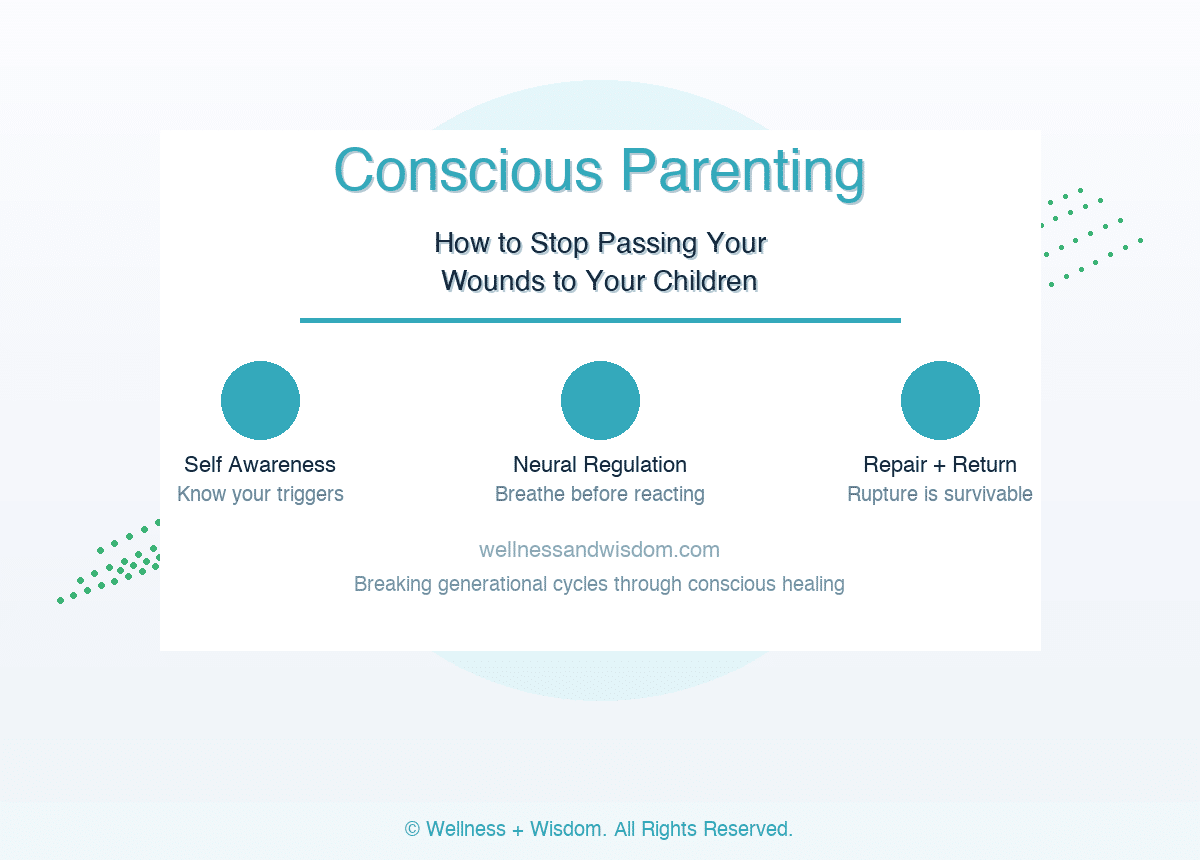
This is the teaching at the heart of the Emotional Epigenetics framework: healing is never just personal. It is generational. The work of conscious parenting is inseparable from the work of your own emotional healing, because every time you regulate rather than react, choose presence over performance, or bring love into a moment that could have been met with fear, you are writing a new code into the shared genetic inheritance of your family.
Seven generations forward. That is not a poetic metaphor. It is the scientific timeframe within which epigenetic changes from a single ancestor's emotional environment have been documented to persist. Your great-great-great-great-great grandchildren will carry something of what you choose to feel and heal today.
I do not know a more compelling reason to do this work with full commitment.
To go even deeper into this science and its personal applications, I invite you to explore the full Wellness + Wisdom blog, listen to the latest podcast episodes, or take the next step by joining our community below.
Frequently Asked Questions About Emotions Gene Expression
Can emotions actually change your DNA?
Emotions do not alter the sequence of your DNA, meaning the four-letter genetic code that spells out your genome remains stable. What emotions do change is how your DNA behaves: which genes are actively expressed and which are silenced. This is controlled through epigenetic mechanisms including DNA methylation and histone modification, both of which are directly responsive to hormonal and neurochemical signals generated by emotional states. The scientific term for this is gene expression and feelings research, and the evidence is now extensive and peer reviewed at the highest levels.
How long does it take for emotions to change gene expression?
The timeline is a spectrum. Acute emotional events can produce detectable epigenetic changes within hours to days at certain gene sites. For sustained changes in regulatory gene methylation patterns, research consistently shows 8 to 12 weeks of regular emotional regulation practice as the timeframe for measurable shifts. This is consistent with the clinical timelines for mindfulness, breathwork, and gratitude interventions showing reduced inflammatory biomarkers. The most important thing to understand is that every moment of emotional regulation is sending a signal to your genes, and those signals accumulate.
Which emotions are most beneficial for gene expression?
The research points to several emotional states as particularly potent positive epigenetic signals. Gratitude consistently reduces inflammatory gene expression markers. Heart coherence states, achieved through focused positive feeling combined with rhythmic breathing, reduce cortisol and promote parasympathetic neural system dominance, which changes the hormonal environment bathing your genes. Awe and wonder elevate BDNF expression, supporting neuroplasticity. Love and felt connection promote OXTR expression, enhancing the capacity for social bonding and safety. The common thread is that all of these states shift the body from a stress-response orientation to a growth-and-repair orientation, which directly changes which genes are most active.
Is emotional epigenetics science proven or is it still theoretical?
The science is well established and rapidly expanding. As of 2026, there are epigenome-wide association studies with thousands of participants confirming specific gene methylation changes in response to emotional environment. Randomized controlled trials have documented measurable changes in inflammatory gene expression from mindfulness, gratitude, and positive psychology interventions. The 2026 Frontiers in Psychiatry review, the 2025 University of Oslo meta-analysis, and the 2025 Cellular and Molecular Neurobiology review referenced in this article are all peer reviewed publications in tier-one journals. This is established science, not fringe theory. The clinical applications are still being developed, but the molecular mechanisms are confirmed.
Does therapy change gene expression?
Yes. The 2025 clinical review of epigenetics in psychiatry, published in Frontiers in Psychiatry, confirmed that CBT and mindfulness-based therapies produce measurable reductions in maladaptive methylation patterns at specific genes including FKBP5 and SLC6A4. This is one of the most significant findings in modern psychiatry: effective psychological treatment is not just changing thoughts and behaviors. It is changing the molecular architecture of gene regulation. High-quality emotional healing work, whether through therapy, somatic practice, breathwork, or community-based transformation, is epigenetically active at the cellular level.
How do I know if I am carrying inherited emotional epigenetic patterns?
Inherited epigenetic emotional patterns often show up as emotional reactivity that feels disproportionate to current circumstances, persistent emotional themes that have been present since childhood, or recurring relationship dynamics that mirror family-of-origin patterns. The felt sense is often one of carrying something that does not quite feel like yours, a weight or an edge that seems older than your personal history. The pathway to identifying and releasing these patterns is through the combination of somatic awareness, breathwork, emotional processing, and the kind of deep inquiry that the L.I.F.E. Method is designed to support. You can begin exploring this work by joining the Liberated Life Tribe and accessing the free Self Liberation Blueprint.
Ready to Shift Your Gene Expression Through Joy?
The science is clear. Your emotional life is writing your biology every single day. The question is: what do you want it to write?
Join the Liberated Life Tribe and receive your free 10-Day Self Liberation Blueprint: a guided journey into the emotional, somatic, and epigenetic practices that produce real biological change from the inside out.
Join the Liberated Life Tribe at liberatedlife.com
Free to join. Transformation included.
About Josh Trent
Josh Trent is the founder of Wellness + Wisdom and the host of the Wellness + Wisdom Podcast, one of the top-rated wellness podcasts in the world with over 600 episodes and millions of listeners. He is the creator of the Emotional Epigenetics framework, the Wellness Pentagon, and the L.I.F.E. Method: transformational systems that bridge cutting-edge science and the ancient wisdom of the body to help people break free from inherited patterns, self-sabotage, and the constructs that block authentic joy.
Josh has spent over fifteen years in the wellness space as a certified wellness coach, breathwork facilitator, and somatic practitioner. His work has reached millions of people globally through the podcast, his writing, and his programs. He lives in Dripping Springs, Texas with his family.
You can learn more about his story at wellnessandwisdom.com/joshs-story, explore all programs at wellnessandwisdom.com/pricing, or connect with him through the Wellness + Wisdom press kit.
This article is for educational and informational purposes only and does not constitute medical advice. Always consult a qualified healthcare provider for personalized guidance on your health and wellness.