Inherited Limiting Beliefs Are Real: How to Identify and Rewrite Your Family Programming

Here is something I want you to sit with for a moment. The voice in your head that says you are not smart enough, not worthy of real love, or that money is always going to be hard? That voice did not originate with you. It is almost certainly older than you are. Those are your inherited limiting beliefs, and the science now confirms what many of us have felt in our bones for years: the beliefs your family carried are literally woven into your biology.
I have spent over two decades on the Wellness + Wisdom Podcast talking to some of the world's leading scientists, healers, and transformation guides, and this topic is personal for me in ways I share openly in my own story. And one truth surfaces in nearly every conversation: most of the stories we tell ourselves about who we are and what is possible were handed to us before we had any say in the matter. They were encoded in the earliest years of our lives, reinforced by everything we watched the adults around us do and believe, and cemented at a biological level through a process I teach as Emotional Epigenetics.
The good news, and this is the part I really want you to feel, is that none of it is permanent. The same science that reveals how deeply inherited limiting beliefs run also proves that beliefs can be rewritten. Not just changed intellectually, but genuinely reprogrammed at the cellular level. That process starts with awareness, and it gets built out through embodied practice, community, and consistent intentional work.
This article is your complete guide to understanding where your family belief systems come from, how to spot the unconscious beliefs driving your behavior right now, and the practical steps to rewrite limiting beliefs that no longer serve the life you are building. Let us go.
What Are Inherited Limiting Beliefs?
An inherited limiting belief is any thought pattern, assumption, or internal story that was passed down to you through your family system and now operates as an invisible ceiling on what you believe is possible for your life. The key word here is invisible. These are not the beliefs you consciously chose. They are the ones that feel so fundamentally true that questioning them seems almost absurd.
Things like: money corrupts people. You have to work yourself to exhaustion to deserve anything. Strong people do not ask for help. Love always comes with a cost. Our family is not the kind that gets to have that. You are too much, or not enough. Sound familiar?
Those are not facts. They are inherited limiting beliefs, transmitted through a combination of modeling, direct instruction, emotional atmosphere, and increasingly what we understand as epigenetic biological programming. They live not just in your thinking mind but in your body, your neural system, and your automatic behavioral responses.
The Biology Behind Family Belief Systems
For most of human history, the transmission of beliefs from one generation to the next was understood as a purely psychological or cultural process. You watched your parents, you absorbed what they modeled, you internalized their worldview. Simple enough.
What the last decade of epigenetic science has revealed, however, is that this transmission goes far deeper than behavior modeling. A landmark 2025 review published in the International Journal of Molecular Sciences titled “Epigenetic Echoes: Bridging Nature, Nurture, and Healing Across Generations” demonstrated that trauma, emotional patterns, and the stress responses connected to those patterns create measurable changes in DNA methylation, histone modifications, and noncoding RNA patterns. These changes influence how specific genes are expressed, and critically, they can be passed on to children and grandchildren through both biological inheritance and the caregiving environment those children experience.
The study, authored by researchers at the University of Western Australia, articulated a phrase I think everyone in the personal growth world needs to hear: genetics may load the gun, but the environment pulls the trigger. The genes you were born with are not your destiny. But the epigenetic programming layered on top of those genes, the programming shaped by your family's history of trauma, stress, and the beliefs those experiences generated, that absolutely shapes what your genes are currently expressing. Read the full study at PubMed.
How Unconscious Beliefs Form Before You Can Remember
Neurodevelopmental research has consistently shown that the most critical window for belief formation is the first seven years of life, when the brain is operating primarily in a theta wave state. This is essentially a hypnotic receptive state. The child is a downloading machine, absorbing everything around them as literal truth without the filtering capacity of the critical adult mind.
What this means practically is that by the time you were seven years old, the core architecture of your internal belief system was already in place. The beliefs about safety, love, money, identity, and worthiness that your parents and caregivers held were being installed in you before you could even evaluate whether they were accurate. Those unconscious beliefs now run in the background of your adult life like an operating system you have never thought to update.
This is what I explore in depth in the Emotional Epigenetics solocast. The emotional patterns of your family system are not just psychological artifacts. They become part of how your biology functions. And the path to genuine freedom runs straight through them.
The Emotional Epigenetics Framework Explains Everything
The Emotional Epigenetics framework, which I have been developing and teaching for over a decade, describes the intersection of three forces that shape who you are at the deepest level: your emotional patterns (including the ones you inherited), your unconscious beliefs (including the family programming you absorbed before you had words), and your environment (the epigenetic signals your lifestyle and relationships send to your genes every single day).
These three forces work together in a continuous feedback loop. A family belief system about scarcity creates ongoing low grade stress. That stress generates cortisol and activates certain stress response genes. The activated stress response then confirms the belief that the world is not safe and resources are scarce. And the cycle continues across generations unless someone does the work to interrupt it.
This is not theory. This is documented biology.
Your Genes Are Not Your Destiny
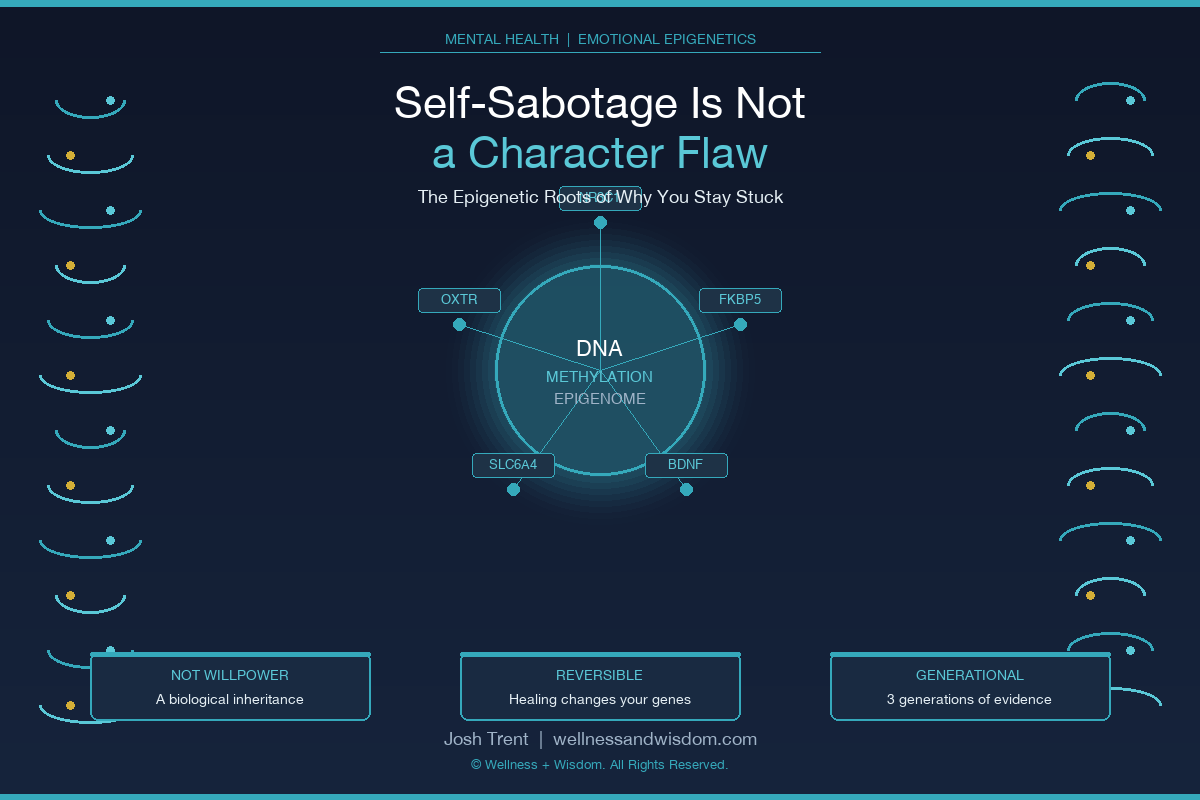
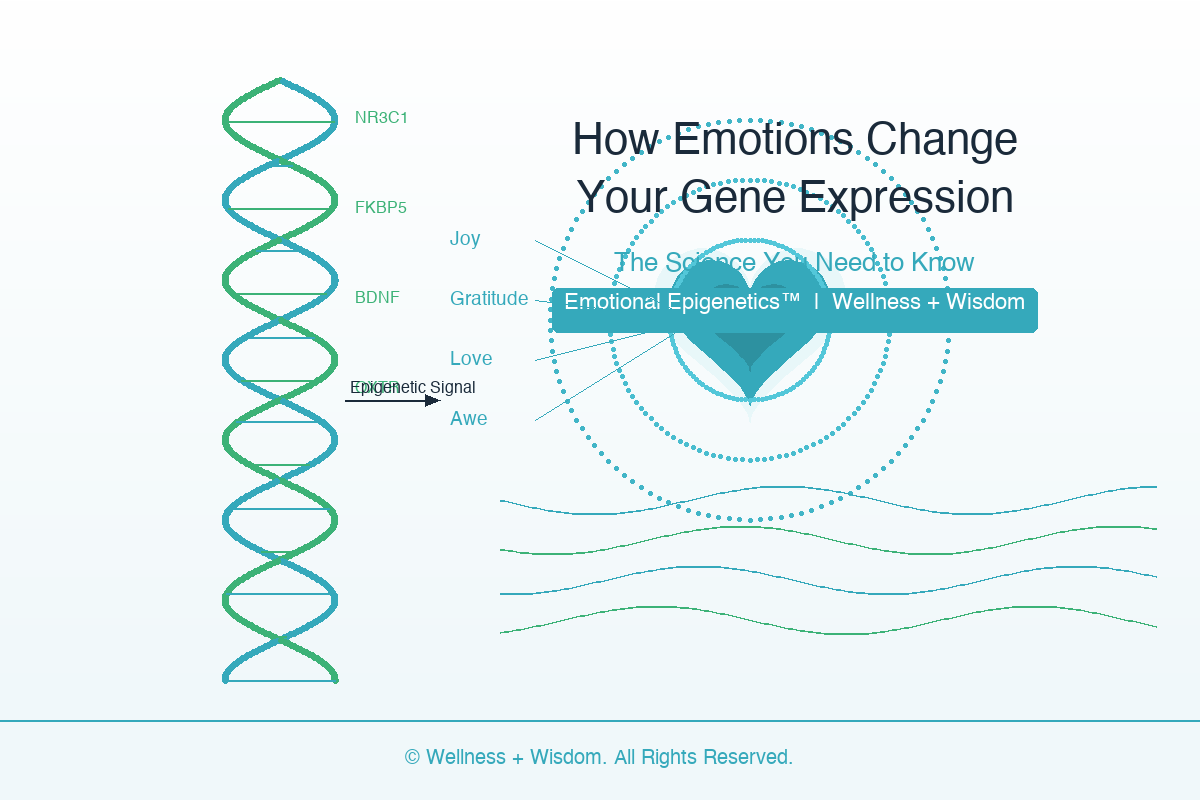
One of the most liberating ideas in modern science is this: your genes are not static instructions. They are dynamic switches that get turned on or off in response to your inner life and outer environment. The field of epigenetics studies precisely this phenomenon, the study of changes in gene expression that do not involve alterations to the underlying DNA sequence itself.
What this means for you is profound. You did not choose the genes you were born with. You also did not choose the epigenetic programming your ancestors passed down to you. But you absolutely have the capacity, through conscious practice, to send new signals to your genes. Through how you breathe, how you process emotion, the community you build, the beliefs you choose to nurture, and the practices you bring into your body, you are writing new epigenetic code every single day. This is the foundation of the L.I.F.E. Method and the heart of the transformation work I do with the Liberated Life Tribe.
What 2025 and 2026 Research Reveals About Inherited Beliefs
The science on this topic has been accelerating rapidly. A 2025 systematic review published in BMC Psychology synthesized eighteen quantitative studies examining the biological and psychological impact of intergenerational trauma on second generation descendants. The findings were clear and consistent: reduced cortisol, altered glucocorticoid receptor gene methylation, and measurably smaller amygdala volumes in the children of trauma survivors. The authors described this as “biological embedding” of trauma across generations, meaning the stress and survival programming of one generation literally reshapes the biology of the next. View the full systematic review at PubMed.
Even more striking is a 2025 study published in Scientific Reports following 371 third and fourth generation descendants of Holocaust survivors. DNA methylation analysis of saliva samples revealed that these descendants carry distinct methylation patterns in the CRH, CRHBP, FKBP5, and NR3C1 genes, markers of heightened stress reactivity and an overactivated survival response. These were patterns encoded by their grandparents' experiences of terror, and they were still biologically present three and four generations later. Read the full Holocaust descendants study at PubMed.
But here is what the researchers also found, and this is the part of the story that does not always get told: these same descendants showed lower attachment avoidance and a methylation pattern associated with higher oxytocin expression, a biological signal of bonding and social connection. Resilience, community orientation, and the capacity for love were also transmitting through the generations. Not just the wound. The wisdom, too.
This finding is central to the work I share on the latest episodes of the Wellness + Wisdom Podcast. You are carrying your family's pain, yes. But you are also carrying their strength, their creativity, their capacity for joy. Doing this work is not about erasing your lineage. It is about freeing everything that has been held hostage by the parts of that lineage that were never meant to run the show.
Seven Signs You Are Carrying Inherited Limiting Beliefs
Most people do not know they are operating from inherited limiting beliefs because those beliefs feel indistinguishable from reality. They seem like simple facts about how the world works. Here are the signs worth paying attention to:
1. You repeat the same patterns your parents did, even when you promised yourself you would not. You swore you would handle money differently, parent differently, love differently. And yet here you are, watching the same dynamics play out in your own life. That is not weakness. That is inherited programming doing exactly what it was designed to do.
2. Your emotional reactions are disproportionate to the actual situation. When a small event triggers a massive internal response, you are almost certainly touching something old. The present moment activated a blueprint from the past.
3. You hold beliefs about entire categories of life that feel absolute. All men are unreliable. You cannot trust people with money. Success requires suffering. Rich people are greedy. These wholesale judgments are rarely self generated. They come from family narratives that were reinforced over years.
4. You feel guilt or anxiety when things go too well. If receiving good things consistently triggers a sense of unease, as though something bad must be coming, you are likely running a scarcity or unworthiness program that was installed long before you had any say in the matter.
5. The same ceiling appears repeatedly across different domains. A specific level of income, intimacy, visibility, or success that you seem to reach and then unconsciously sabotage. That ceiling is not external. It is a belief running on a loop inside your family programming.
6. You have thoughts about yourself that you would never say to someone you love. The harshest voices in our heads are almost always inherited voices. They are the survival messages of ancestors who had to keep themselves small to stay safe.
7. Certain topics feel emotionally charged in a way that others do not. Money, sex, ambition, vulnerability, spirituality, asking for help. The topics that feel most loaded in your family system are almost always the ones where the most limiting beliefs are stored.
If any of those landed, I want you to know that recognition itself is already the beginning of freedom. You can explore more of this territory across the Wellness + Wisdom blog, and I would love for you to find the practices and community that bring this work to life inside the Liberated Life Tribe.
The Most Common Family Belief Systems That Limit Freedom
Every family has a belief system. Most of them are a mix of genuinely useful values and deeply limiting stories that got passed down alongside those values. Understanding the landscape of common family belief systems can help you recognize the ones operating in your own life.
Beliefs About Money and Worthiness
This category is where I see the most inherited programming in the people I work with through the L.I.F.E. Method programs. Families pass down profoundly powerful financial belief systems that operate entirely below conscious awareness.
Common inherited money beliefs include: money is the root of all evil; wealthy people are not good people; we are not the kind of family that gets to have financial abundance; there is never enough; you have to sacrifice your health and happiness to earn anything significant; talking about money is vulgar or inappropriate.
These beliefs do not just affect your relationship with money. They affect your sense of fundamental worthiness. When the family message is that wanting more is greedy, or that you should just be grateful for what you have rather than reaching for more, that message embeds itself in how you show up in every domain of your life. It keeps you from asking for the raise, from pricing your work appropriately, from receiving love and care without immediately trying to give it back.
Beliefs About Love, Safety, and Relationships
The attachment patterns you formed in your earliest relationships became your template for all subsequent relationships. If the love you received early in life was conditional, inconsistent, or came at a cost, you are almost certainly running beliefs that love is not safe, that you have to perform to be loved, or that closeness inevitably leads to hurt.
Inherited relational limiting beliefs often include: love means losing yourself; if someone really knew me, they would leave; needing others is weakness; conflict always destroys connection; I have to take care of everyone else to deserve to be here.
I talk about this extensively in the conscious parenting solocast, because these relational blueprints are precisely what we pass on to our own children when we have not done the work to examine them. The cycle of inherited limiting beliefs continues generation after generation not because families do not love each other, but because they simply do not know what they do not know.
Beliefs About Identity, Success, and Belonging
Every family also carries a story about who they are and what kind of people they are. These identity level beliefs shape everything from career choices to the level of visibility and success you allow yourself.
Common inherited identity beliefs include: people like us do not do things like that; ambition is arrogant; staying small keeps you safe; being different from the family is abandonment; you should not stand out; success means leaving your roots behind and becoming someone your family will not recognize.
These beliefs are especially painful because they create a no win scenario. Staying in the inherited pattern feels suffocating. Growing beyond it feels like betrayal. That tension is one of the most common things I see in the people who find their way to the Wellness + Wisdom mission. They are called to more, and simultaneously terrified that more means losing where they came from.
The truth is that genuine growth does not require abandoning your family. It requires choosing which parts of your family's legacy you consciously carry forward and which parts you consciously lay down. That discernment is a profound act of love for everyone in your lineage, backward and forward.
How Inherited Limiting Beliefs Rewire Your Neural System
Understanding why inherited limiting beliefs feel so unshakeable requires a quick look at how the brain processes belief change. And when you understand the neuroscience, the resistance you have felt to changing these patterns starts to make complete sense. You are not broken. You are biological.
The Neuroscience of Why Family Programming Feels True
Recent neuroimaging research has identified a fascinating dynamic around belief and belief change. When you hold a strongly embedded belief, including one you inherited from your family, it activates the nucleus accumbens, which is the brain's reward and positive affect center. The belief feels right. It feels like safety. It feels like home.
When you challenge or attempt to update that belief, a different region activates: the insula. The insula is associated with discomfort, anxiety, and the sensation of conflict. The brain registers the process of changing a core belief as a threat to survival. Not metaphorically. Literally. In neurological terms, updating your family programming triggers the same alarm system as physical danger.
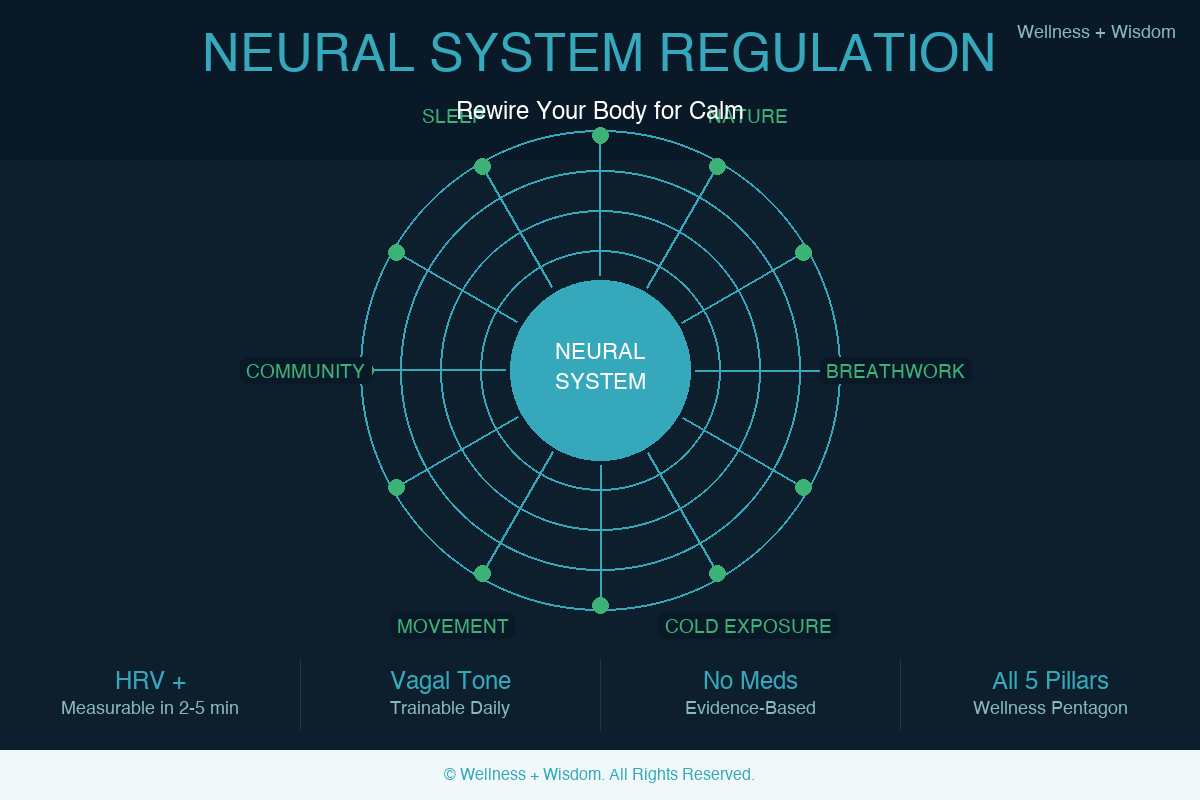
This is why people can intellectually understand that a belief is limiting and still be completely unable to act outside of it. The intellectual understanding lives in the prefrontal cortex. The inherited limiting belief lives in the body, in the neural system, in the automatic survival wiring that predates rational thought. This is precisely why practices that work at the body level, breathwork, somatic processing, community, and embodied repetition, are essential components of genuine belief change. You cannot think your way out of a belief you never thought your way into.
A 2025 study published in the International Journal of Developmental Neuroscience confirmed that high quality caregiving environments lower the methylation of the OXTR and NR3C1 genes, the same genes altered by inherited stress, and that psychological interventions including cognitive behavioral therapy and mindfulness practice can normalize maladaptive epigenetic marks. In other words, the healing practices actually change the biology. Explore this epigenetics and resilience research at PMC.
This is the foundational insight behind everything I share in the best wisdom from 2025 and across the Wellness + Wisdom ecosystem. The work is real. The biology shifts. And the freedom you find through it extends beyond your own life into every generation that comes after you.
How to Identify Your Specific Inherited Limiting Beliefs
General awareness is important, but the real transformation work requires getting specific. Here are the two most effective ways to identify the particular unconscious beliefs that are running your operating system right now.
The Family Inventory Practice
Set aside thirty to forty five uninterrupted minutes. Get a journal and work through the following questions. Write without editing, without explaining, without making yourself sound reasonable. Just write what is true at the feeling level.
Part One: What did your family believe? Write down every belief you can remember your parents or primary caregivers holding about money, love, success, health, spirituality, safety, bodies, and what your family was capable of. Include the things that were never said out loud but were communicated through tone, silence, and example. Then ask yourself: where did those beliefs come from? What did your grandparents believe? What were the historical, economic, or cultural pressures that shaped those beliefs?
Part Two: What do you still believe? Look at each item on your list and ask honestly: Do I still carry this belief in some form? Where do I still see it operating in my choices, my limits, my automatic reactions? Be ruthlessly honest. The goal is not judgment. The goal is inventory.
Part Three: What are you unwilling to give up? This is the most revealing question. Some inherited beliefs feel so connected to your family identity or sense of belonging that releasing them feels like a loss. Notice which ones those are. Those are usually the ones with the most power to limit you and the most richness to teach you about what loyalty, love, and belonging mean at the deepest level.
Body Based Detection: Your Neural System Knows First
Your neural system is a remarkable belief detector. The body registers a limiting belief as tension, contraction, a subtle sense of wrongness or danger, long before the conscious mind catches up. Learning to read those signals is one of the most valuable skills in the entire transformation toolkit.
Here is a simple body based practice for detecting inherited limiting beliefs in real time. The next time you feel resistance, hesitation, or a pull away from something you consciously want, instead of analyzing the thought, bring your attention to the physical sensation first. Where do you feel it in your body? What is its texture, temperature, weight? Then ask: how old does this feeling feel? Does it remind you of anything from childhood? Whose voice does the accompanying thought sound like?
Nine times out of ten, that trace will lead you directly back to a family belief system that has been running silently in the background for decades. This body based approach to identifying unconscious beliefs is central to all of the transformation programs I offer, because no amount of intellectual analysis can do what direct somatic awareness achieves.
How to Rewrite Limiting Beliefs at the Cellular Level
This is the work I am most passionate about. Because once you can see the inherited programming clearly, and once you understand that it is biological and not merely psychological, the path to actually rewriting limiting beliefs becomes something you can approach with confidence rather than confusion.
Here is the five step process I teach. It is simple enough to start today and deep enough to continue for a lifetime.
Step One: Name the Belief Without Judgment
Write the belief down in plain language. Not a softened version. The actual belief. “I am not smart enough to lead.” “I do not deserve financial abundance.” “Being fully seen is dangerous.” Getting it out of the shadows and onto paper is a genuinely powerful act. It shifts the belief from invisible operator to examined object. You can work with something you can see.
Step Two: Trace the Origin
Ask yourself: where did I first learn this was true? Who taught it to me, directly or indirectly? What in their history might have made that belief feel necessary for them? This is not about blame. It is about context. Understanding that your parent believed money was dangerous because they grew up in genuine scarcity completely changes your relationship to that belief. You can see it as a survival tool that made sense once and no longer serves. That shift in perspective is the first crack in the wall.
Step Three: Test the Belief Against Reality
Ask: Is this belief actually true in my current life and context? What evidence contradicts it? Can I find three examples from my own direct experience that demonstrate the belief is not universally valid? This step uses the prefrontal cortex to begin loosening the neural grip of the belief. It will not complete the rewiring by itself, but it begins the process of creating new neural pathways that the body based practices can then strengthen and stabilize.
Step Four: Install the New Belief Through Embodiment
Here is where most people stop short. They identify the limiting belief, they understand its origin, they intellectually affirm a new belief. And then they are surprised when nothing really changes in their behavior or results. The reason is that a new belief stated as an affirmation without embodied repetition stays in the intellectual layer. It never reaches the cellular level where the old programming lives.
Embodied installation requires movement, breath, and repetition. Write the new belief. Say it out loud in front of a mirror. Notice the resistance your neural system offers and breathe through it rather than tensing around it. Move your body in a way that expresses the new belief. Find evidence in your life, however small, that the new belief is already true in some form. And then repeat this daily, with breath, with movement, with presence, until the new pattern becomes the default.
This is the core of what the breathwork practice brings to the L.I.F.E. Method and Emotional Epigenetics teachings. The breath is the bridge between the thinking mind and the feeling body. Using conscious breath as an anchor during belief installation work dramatically accelerates the repatterning process at the biological level. Research published in Frontiers in Psychiatry in 2026 confirmed that stress induced epigenomic changes that increase risk for anxiety and depression are genuinely reversible through psychological intervention, and that the reversal includes measurable changes at the gene expression level.
Step Five: Repeat in Community
This step is not optional, and I cannot emphasize it strongly enough. We were programmed in relationship, and we heal in relationship. Doing this work in isolation is like trying to rewrite your operating system without a stable power source. You keep running out of energy before the new code takes hold.
The reason the Liberated Life Tribe and the mission of Wellness + Wisdom are built around community is exactly this. Healing in community provides co regulation (the neural system settles in the presence of regulated others), mirroring (other people's progress shows your own biology what is possible), and accountability (which turns intention into consistent practice). You were not designed to do this alone. The tribe matters.
Resilience Is Also Inherited: The Good News in the Science
Here is something I want to be absolutely clear about, because I think this is one of the most important and underreported findings in the entire field of intergenerational epigenetics: the transmission of patterns across generations is not limited to trauma and limitation. Resilience, social bonding, creativity, and the capacity for joy are also passed down biologically.
The Holocaust descendants study I mentioned earlier found that alongside the stress response genes, these third and fourth generation survivors also carried elevated oxytocin system expression and lower attachment avoidance than control populations. They had inherited not only their grandparents' wounds but also their grandparents' bonds. The love that held the family together under unimaginable conditions had also found its way into their biology.
A 2025 scoping review in the International Journal of Developmental Neuroscience similarly showed that protective factors, including strong social bonds, meaning making practices, and positive caregiving environments, create epigenetic changes associated with resilience that transmit across generations, just as adverse experiences do. The biology of love is just as heritable as the biology of fear.
This means that every genuinely loving moment you create, every time you act with integrity from your deepest values, every time you show up fully present for someone who needs you, you are not just doing something good in this moment. You are sending an epigenetic signal that could echo forward through your bloodline for generations. Your grandchildren and great grandchildren may carry biological markers of the joy you built today. That is a staggering and beautiful responsibility.
The Seven Generation Window
In Indigenous wisdom traditions across multiple cultures, decisions and actions are considered in the context of seven generations. What you do now, how you live, what you choose to heal or leave unhealed, will reverberate for seven generations in both directions. Modern epigenetic science, including rat model studies that have now tracked epigenetic inheritance across ten consecutive generations, gives rigorous biological support to this ancient understanding.
This is the message at the heart of the Emotional Epigenetics framework and the teaching I have built my life's work around. When you do the work of identifying and rewriting your inherited limiting beliefs, you are not just healing yourself. You are healing your children, your grandchildren, and the versions of your parents and grandparents that live inside you. You are completing something that could not be completed until now, in this moment, with the awareness and tools you have access to. That is not a burden. That is an extraordinary privilege.
Everything I have learned on this path, including the science, the somatic practices, and the hard personal lessons, I share freely in my story and across the Wellness + Wisdom blog. The path is real. The healing is real. And you do not have to walk it alone.
Inherited Limiting Beliefs vs. Healthy Family Values: Knowing the Difference
As you do this work, one question tends to arise with some urgency: how do I know the difference between an inherited limiting belief I need to rewrite and a genuine family value I want to honor and carry forward?
This is a profound question and it deserves a thoughtful answer. Here is the clearest way I know to make this distinction.
An inherited limiting belief contracts your life. It takes something away. It creates an invisible ceiling on your capacity, your freedom, your joy, or your contribution to the world. When you operate from it, you feel smaller, more afraid, or less fully yourself.
A healthy family value expands your life. It connects you to something larger than yourself. It gives your choices meaning and grounds your sense of identity in something worth belonging to. When you operate from it, you feel more integrated, more aligned, and more genuinely yourself even when it asks you to sacrifice something in the short term.
A grandmother's belief that money is dangerous because she lived through the Great Depression is a limiting belief worth examining. Her value of taking care of the people around you no matter what circumstances arise is something worth carrying forward consciously and freely. The process of doing this work is the process of making those distinctions clearly and intentionally rather than absorbing the whole package wholesale as though it were all equally true.
The Wellness + Wisdom Podcast has explored this distinction across hundreds of episodes and conversations, and the nuance in this work is exactly why I believe it is best done in community and with guidance rather than in isolation. The Liberated Life programs and the tools available at the Wellness + Wisdom store exist precisely to support this kind of grounded, nuanced, embodied growth.
Frequently Asked Questions About Inherited Limiting Beliefs
Can inherited limiting beliefs really be changed, or are they permanent?
They absolutely can be changed. This is one of the most important findings in modern epigenetics and neuroscience. Beliefs that were installed in you through family programming are not permanently wired into your biology. The same neuroplasticity that allowed those beliefs to form allows new patterns to be formed in their place. What is required is not just intellectual understanding but embodied, repeated, consistent practice that reaches the body and neural system where the old programming lives. Research has confirmed that interventions including breathwork, mindfulness, somatic therapy, and community based healing create measurable changes in gene expression, literally rewriting the biological substrate of your inherited beliefs. The process takes real commitment and real time, but it is absolutely achievable.
How do I know if a belief is inherited or something I developed myself?
The most reliable signal is whether the belief feels like a thought you chose or a truth that simply is. Inherited limiting beliefs usually feel so fundamental and obvious that questioning them seems almost irrational. They also tend to show up in the same form across multiple family members, sometimes across multiple generations. When you notice a belief that feels more like a fact about reality than a perspective you hold, trace it back through your family system. Ask who else in your family believes or believed the same thing. Ask where it came from in the family history. That genealogy of belief is almost always illuminating.
Is it possible to inherit limiting beliefs without experiencing trauma yourself?
Yes. Epigenetic transmission of stress patterns and belief frameworks does not require direct traumatic experience in your own lifetime. Research on multiple generations of trauma survivors has consistently shown that biological and psychological markers transmit even when the descendant has not personally experienced the original adverse events. The transmission happens through DNA methylation changes in sperm and egg cells, through the emotional atmosphere of early caregiving environments, through the modeling of stress responses and behavioral patterns, and through the direct communication of family belief systems. You can carry your grandparents' limiting beliefs without knowing anything specific about what they went through.
What is the role of community in rewriting inherited limiting beliefs?
Community is not supplemental to this work. It is essential. Because limiting beliefs were originally programmed through relationship, they are most effectively repatterned through relationship as well. In community, you experience co regulation, meaning your neural system literally synchronizes with and is calmed by the neural systems of others who are operating from healthier baselines. You also receive the mirror of witnessing others heal the same patterns you are working on, which gives your biology tangible evidence that change is possible. Finally, community provides accountability and consistent practice structure, both of which are required for genuine epigenetic repatterning. This is why the Liberated Life community and the Wellness + Wisdom mission and teachings place community at the center of everything.
How long does it take to rewrite an inherited limiting belief?
There is no single answer to this because it depends on how deeply embedded the belief is, how much of your family system reinforces it, and how consistently you practice. What I can tell you from over two decades of this work is that the first breakthrough of genuine awareness can happen very quickly, sometimes within a single breathwork session or a deeply honest journaling exercise. The full biological repatterning, where the new belief becomes the default and the old one no longer triggers automatic responses, typically requires sustained practice across weeks and months. Think in terms of seasons, not days. But I also want you to know that progress is not linear. Every single practice session matters, even when you cannot see the cumulative effect yet. The roots are always growing before the new growth appears above ground.
Can working on my own inherited limiting beliefs actually help my children, even if they are already grown?
This is perhaps the most beautiful truth in all of the research on intergenerational epigenetics: yes. When you heal your own patterns, the relational and biological environment you create for everyone around you changes. For children still in the home, the epigenetic signals they receive from a parent in a regulated, joyful, expanded state are measurably different from the signals of a parent operating from chronic stress and inherited limitation. For adult children, the changes in your relational patterns, your emotional availability, and the modeling of genuine growth all create new possibilities in the family field. And at the deepest biological level, research suggests that your own epigenetic healing shifts the signals that your reproductive cells carry, which means the next biological generation in your lineage may inherit a genuinely different foundation. The work you do on yourself is never just for yourself.
Your Family's Story Does Not Have to Be Your Destiny
The inherited limiting beliefs you carry were never meant to define the rest of your life. They were survival tools forged in a different time, by people doing the best they could with what they had. You get to honor that story and write a new one.
Join the Liberated Life Tribe and receive your 10 Day Self Liberation Blueprint at liberatedlife.com. It is free. It is real. And it is built for exactly this work. You can also explore all of Josh's transformation programs and pricing at wellnessandwisdom.com/pricing.
About Josh Trent
Josh Trent is the founder of Wellness + Wisdom and host of the Wellness + Wisdom Podcast, one of the top wellness podcasts in the world with over 700 episodes and millions of listeners. Josh is a certified breathwork facilitator, emotional fitness coach, and creator of the L.I.F.E. Method and the Emotional Epigenetics framework. His mission is to help people globally step out of self sabotage and inherited patterns so they can live from authentic joy. Josh lives in Dripping Springs, Texas with his family and leads the Liberated Life Tribe, a free global community dedicated to self liberation and generational healing. You can explore all of Josh's teachings, episodes, and programs at wellnessandwisdom.com.
© Wellness + Wisdom. All Rights Reserved. This article contains affiliate and informational links. Always consult a qualified healthcare provider before beginning any new wellness practice.