
Self-Sabotage Is Not a Character Flaw: The Epigenetic Roots of Why You Stay Stuck
You set the alarm. You wrote the plan. You told yourself this time was different. And then somewhere between the intention and the action, something pulled you back. Not a dramatic failure. Not a catastrophe. Just a slow, familiar drift back to the pattern you have been trying to escape for years.
If that resonates, I want you to hear this first: you are not weak, broken, or fundamentally flawed. What you are is biological. And the biology of self-sabotage is one of the most compelling and empowering stories that modern science has given us.
The term self-sabotage epigenetics has been quietly emerging at the intersection of behavioral science and molecular biology, and what researchers are uncovering changes everything about how we understand self-defeating patterns. The science published in early 2025 and 2026 confirms what many of us in the wellness space have long suspected: the patterns that hold you back are not random character defects. They are encoded, inherited, and in many cases chemically inscribed into your DNA through experiences you did not even personally live through.
This is not a story of limitation. This is a story of liberation.
In this deep-dive I am going to walk you through the actual science of emotional epigenetics, explain precisely why self-sabotage patterns form at the gene expression level, explore what cutting-edge research from Yale, the University of Florida, and major international journals published in 2025 and 2026 tells us about intergenerational trauma, and give you a clear, joy-forward roadmap for breaking the self-sabotage cycle at the biological level.
By the time you finish reading, you will not just understand why you stay stuck. You will know, with scientific certainty, that you can change.
What Self-Sabotage Really Is (and What It Is Not)
Before we get into the science, I need to dismantle something. The word “self-sabotage” carries an implicit accusation. It suggests that some part of you is actively working against yourself, as if a malicious inner agent woke up one morning and decided to ruin your plans. That framing is not only inaccurate; it is harmful. It keeps you trapped in a cycle of shame, which, as we will see, is itself one of the primary drivers of mental health patterns that keep you stuck.
What we call self-sabotage is more accurately described as a protective biological response that has outlived its usefulness.
Consider this: every behavior that looks like sabotage from the outside was once adaptive. The person who pulls back from relationships before they get close enough to be hurt learned at some early age that closeness equals pain. The entrepreneur who tanks her own launch the night before it goes live learned somewhere that visibility equals danger. The fitness devotee who destroys his streak every time he gets close to his goal learned that achievement in his family of origin was followed by pressure, not celebration.
These are not flaws. These are limiting beliefs encoded at a cellular level. And the mechanism by which they become encoded is epigenetics.
Epigenetics Explained: Your Genes Are Not Your Destiny
Most of us learned in school that DNA is destiny. You get a set of genes from your parents, those genes determine who you are, and that is largely that. This model is decades out of date.
Epigenetics is the study of changes in gene expression that do not alter the DNA sequence itself but profoundly change which genes get turned on and which get silenced. Think of your DNA as a piano keyboard with 88 keys. The keys do not change. But epigenetics determines which keys get pressed, which get held down, and which never get touched at all. The result is an entirely different song.
The primary mechanism of epigenetic change is DNA methylation, the addition of a small chemical tag (a methyl group) to a specific point on the DNA strand. When methylation occurs at a gene's promoter region, that gene is typically silenced. When methylation is removed, the gene can be expressed again. These tags are influenced by your environment, your experiences, your stress levels, your relationships, your diet, and your emotional states.
This is the field of emotional epigenetics: the science of how lived experience writes itself into the genome. And when we apply this lens to self-sabotage patterns, the picture becomes extraordinarily clear.
The National Institute of Environmental Health Sciences framed it powerfully in their February 2025 feature on epigenetics and the exposome: we are entering a new era in which environment and experience are understood to be the primary drivers of health outcomes, not just the genes we were born with. Your epigenome is a living record of everything your body has learned about how to stay safe.
The question is: when did “staying safe” start meaning “staying small”?
The Epigenetic Roots of Self-Sabotage Patterns
Here is what happens at the molecular level when a child experiences chronic stress, trauma, or an environment in which their needs are consistently unmet.
The body responds to threat by activating the HPA axis (hypothalamic-pituitary-adrenal axis), flooding the system with cortisol. In an acute crisis, this is lifesaving. In a chronically stressed environment, it is destructive. And the destruction operates at the level of DNA.
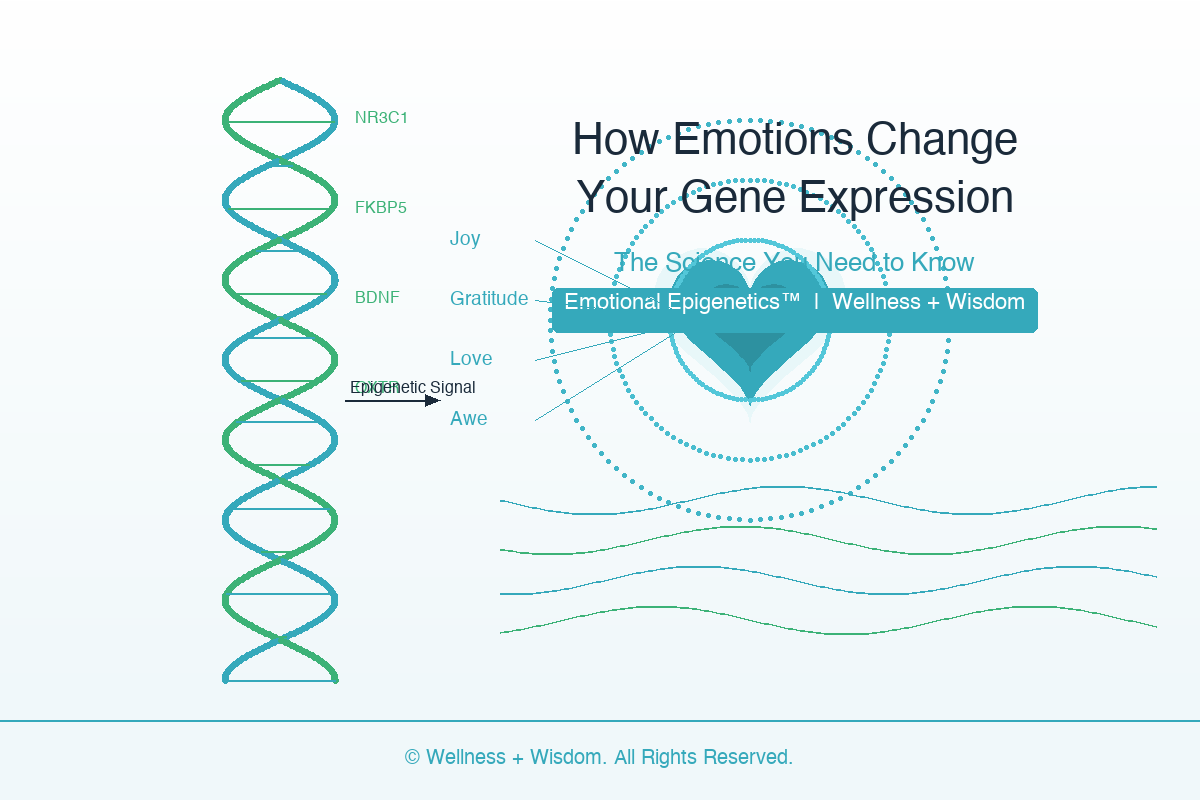
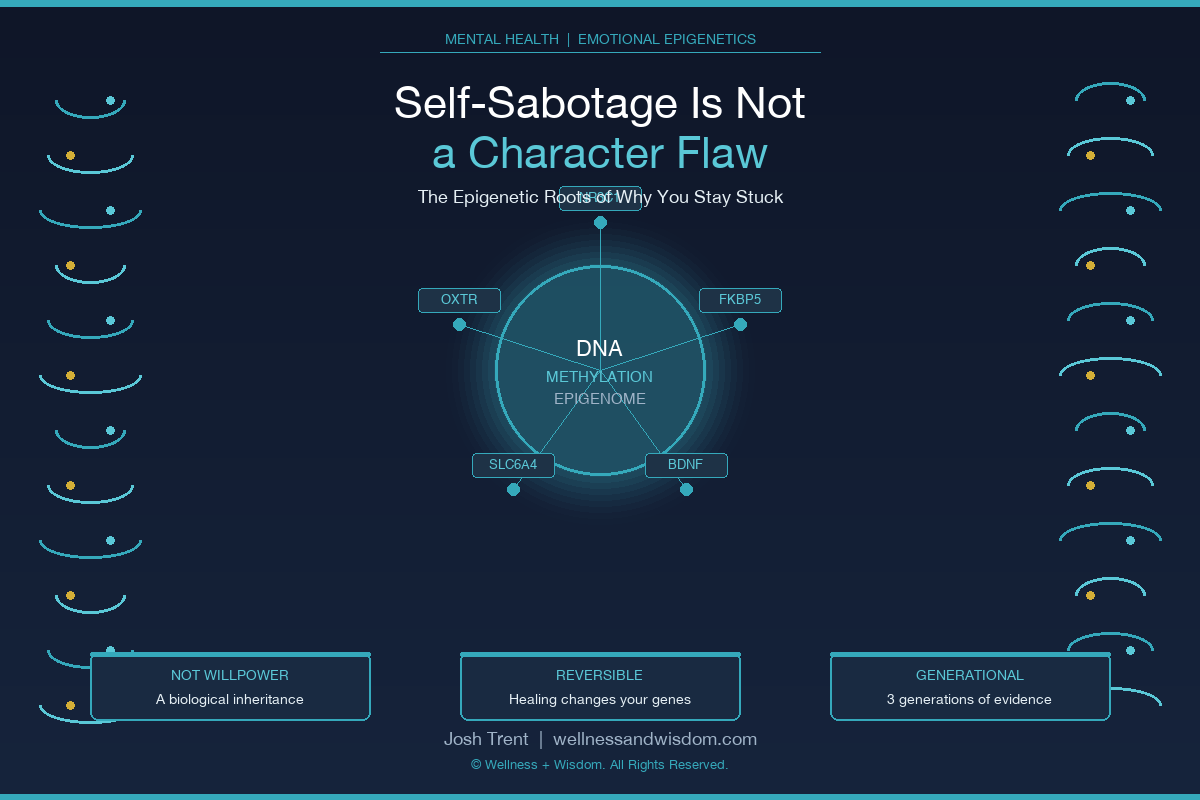
Chronic activation of the stress response triggers methylation changes on genes that regulate that very response. Two of the most studied are NR3C1 (the glucocorticoid receptor gene, which governs how the body shuts off cortisol after a stressor has passed) and FKBP5 (which modulates the HPA axis recovery response). When these genes are hypermethylated by early trauma, the body loses its ability to efficiently downregulate the stress response.
In practical terms: you get triggered, cortisol floods in, and it just stays there. Your body cannot turn it off efficiently. Every subsequent stressor compounds on top of the last. The baseline of your chronic stress keeps rising.
Now add BDNF to the picture. BDNF (brain-derived neurotrophic factor) is the primary molecule of neuroplasticity. It is literally the brain's growth and change molecule. When BDNF is expressed, your brain can form new neural pathways, learn from new experiences, and break old behavioral loops. When BDNF is silenced by methylation, which chronic stress directly causes, your brain becomes less capable of forming new patterns.
A landmark 2025 study published in the Journal of Psychosomatic Research demonstrated exactly this mechanism in a sample of 123 military police officers under chronic occupational stress. The researchers found that chronic stress produced significantly increased DNA methylation at multiple CpG sites in the BDNF exon IV promoter region (Epigenetic impact of chronic stress: BDNF exon IV gene methylation in high-risk professionals, 2025). Higher methylation meant suppressed BDNF expression. Suppressed BDNF means impaired neuroplasticity.
This is the biological mechanism of why people know exactly what they need to do and still cannot do it. The neural system pathways required to build new behavior are being chemically blocked. This is not weakness. This is neuroscience.
The Key Genes Behind Why You Stay Stuck
Understanding the specific genes involved in self-sabotage epigenetics gives you a target. You cannot aim at what you cannot name. Here are the primary players.
NR3C1: The Cortisol Receptor Gene
NR3C1 codes for the glucocorticoid receptor, the protein that allows cells to receive cortisol's “all clear” signal after a stressor. When this gene is hypermethylated through early trauma or chronic stress, the cortisol shutoff mechanism is impaired. Your body stays in survival mode even when the threat is long gone. The result is a baseline of hypervigilance that makes it neurologically impossible to feel safe enough to take risks, be vulnerable, or sustain new growth-oriented behaviors.
FKBP5: The Stress Axis Thermostat
FKBP5 is sometimes called the stress axis thermostat because it regulates how efficiently the HPA axis recovers after activation. A 2025 study in the European Journal of Psychotraumatology found that childhood trauma interacting with the FKBP5 rs1360780 genotype significantly predicted FKBP5 methylation patterns over time (FKBP5 childhood trauma methylation, 2025). In plain language: early trauma permanently alters the gene that regulates your body's ability to return to calm. If the thermostat is broken, you run hot all the time, and running hot is exhausting. When you are exhausted, you retreat to familiar behaviors regardless of how much you intellectually want to change.
BDNF: The Brain Change Gene
As discussed above, BDNF is the molecule that makes behavioral change biologically possible. When it is silenced by methylation, the brain's ability to wire new patterns is dramatically reduced. This is the molecular substrate for the experience of “knowing better but not doing better.” Your prefrontal cortex knows the plan. Your methylated BDNF gene is blocking the rewiring. Understanding this reframes the entire inner critic narrative from character failure to biological condition.
SLC6A4: The Serotonin Transporter
SLC6A4 governs how serotonin is transported between neurons, directly affecting mood regulation, anxiety, and avoidance behavior. Trauma-induced methylation changes on this gene are associated with dysregulated emotional responses, the kind that make a person blow up a good situation seemingly out of nowhere. When serotonin transport is impaired by epigenetic silencing, the emotional intelligence system is operating with faulty wiring.
OXTR: The Oxytocin Receptor Gene
The oxytocin receptor gene mediates our experience of social safety, trust, and bonding. When this gene is disrupted by trauma-associated methylation, the neurobiology of connection is altered. This helps explain patterns of self-sabotage that show up specifically in relationships, why someone who desperately wants love keeps finding ways to exit the moment real intimacy becomes possible. The biology of attachment is not just psychological. It is epigenetic.
Intergenerational Transmission: You May Be Running Inherited Programs
Here is where self-sabotage epigenetics becomes genuinely astonishing, and where the compassion that real healing requires becomes scientifically mandated.
The patterns you are fighting may not have originated in your own lifetime.
In February 2025, researchers from Yale University and the University of Florida published a landmark study in Scientific Reports examining epigenetic markers across three generations of Syrian refugee families (Quinn et al., 2025, PubMed 40016245). They studied 138 people across 48 families and found something extraordinary: grandchildren who had never personally experienced war-related violence carried their grandmothers' epigenetic trauma markers. The trauma-induced DNA methylation changes that violence had inscribed into the first generation had been passed down to a third generation with zero direct exposure to the original trauma.
Yale News covered this in March 2025 with the headline: “Violent experiences alter the genome in ways that persist for generations.” The University of Florida called it direct evidence of biological memory across generations.
A complementary study published in Scientific Reports in July 2025 examined 371 third and fourth-generation Holocaust descendants and found distinct methylation patterns in the CRH, CRHBP, FKBP5, and NR3C1 genes (the entire HPA stress axis), indicating inherited stress hyperreactivity in people whose grandparents and great-grandparents had experienced the Holocaust (Oren et al., 2025, PubMed 40681848). These descendants had a biologically more reactive stress response, not because of anything they had personally experienced, but because of what their ancestors had survived.
What does this mean for you and your self-sabotage patterns? It means that some of what you have been calling your personal failures may be inherited survival software written into your genome before you were born. Your patterns are not your fault. They are your family's memory encoded in biology.
And importantly: the same research that reveals how trauma transmits also reveals that the process is reversible. The Holocaust study found that alongside the stress-axis methylation changes, descendants also carried altered methylation patterns linked to higher oxytocin expression, the biology of social bonding and resilience. The wound and the capacity for healing were transmitted together.
This is the joy-forward truth at the heart of epigenetics: your biology carries your ancestors' trauma and their capacity for repair.
Why Do I Self-Sabotage? The Biology of the Pattern Loop
When people ask “why do I self-sabotage,” they are usually asking in a tone of genuine desperation. They have read the books, done the therapy, made the commitments. And the pattern keeps returning. Understanding the biology of the pattern loop dissolves the shame that accompanies this question and replaces it with something far more useful: precision.
The self-sabotage loop operates through several interacting mechanisms.
The Threat Detection System Runs the Show
The amygdala, your brain's threat detection center, is an extraordinarily efficient pattern-matching machine. It does not reason. It matches. When a current situation shares enough features with a past experience that was coded as threatening, the amygdala fires, cortisol floods, and the prefrontal cortex (the seat of executive function, long-term planning, and conscious choice) goes partially offline.
In this state, you are not choosing to sabotage. You are executing a threat response that was wired in when you were younger, less resourced, and genuinely needed it. The problem is that the amygdala cannot tell the difference between “my parent is enraged and I am in danger” and “my boss sent a terse email.” Both activate the same response program.
When FKBP5 and NR3C1 methylation impair cortisol shutoff, this response stays activated for longer than it should, deepening the neural groove of the pattern with every cycle.
The Reward System Gets Hijacked
Familiar behaviors, even painful ones, produce a neurochemical reward. Your brain prefers the familiar pain it knows how to manage over the unfamiliar growth it cannot predict. Dopamine is released in anticipation of expected outcomes. When you return to a self-sabotaging pattern, there is a physiological sense of relief, not because the pattern is good for you, but because the neural system recognizes it as known territory.
This is the binding force of limiting beliefs: they are comfortable because they are familiar, and they are familiar because they have been reinforced thousands of times in the neural system.
The Window of Tolerance Closes
The concept of the window of tolerance, articulated by Dr. Dan Siegel and central to somatic healing approaches, describes the zone of neural system activation within which a person can function optimally. Outside of this window, above it in hyperarousal or below it in hypoarousal, the capacity for conscious choice, learning, and integration collapses.
When chronic stress keeps cortisol elevated through the NR3C1 methylation mechanism described above, your window of tolerance narrows. You spend more time outside of it. More of your daily life is spent in survival mode rather than growth mode. Self-sabotage is what survival mode looks like when it is applied to a life that is actually safe.
Your Neural System and the Sabotage Cycle
The 5 Levels of Health framework that anchors the Wellness + Wisdom approach recognizes that physical, mental, emotional, spiritual, and social health are not separate domains. They are layers of a single integrated system. And nowhere is this integration more apparent than in the connection between emotional epigenetics and neural system function.
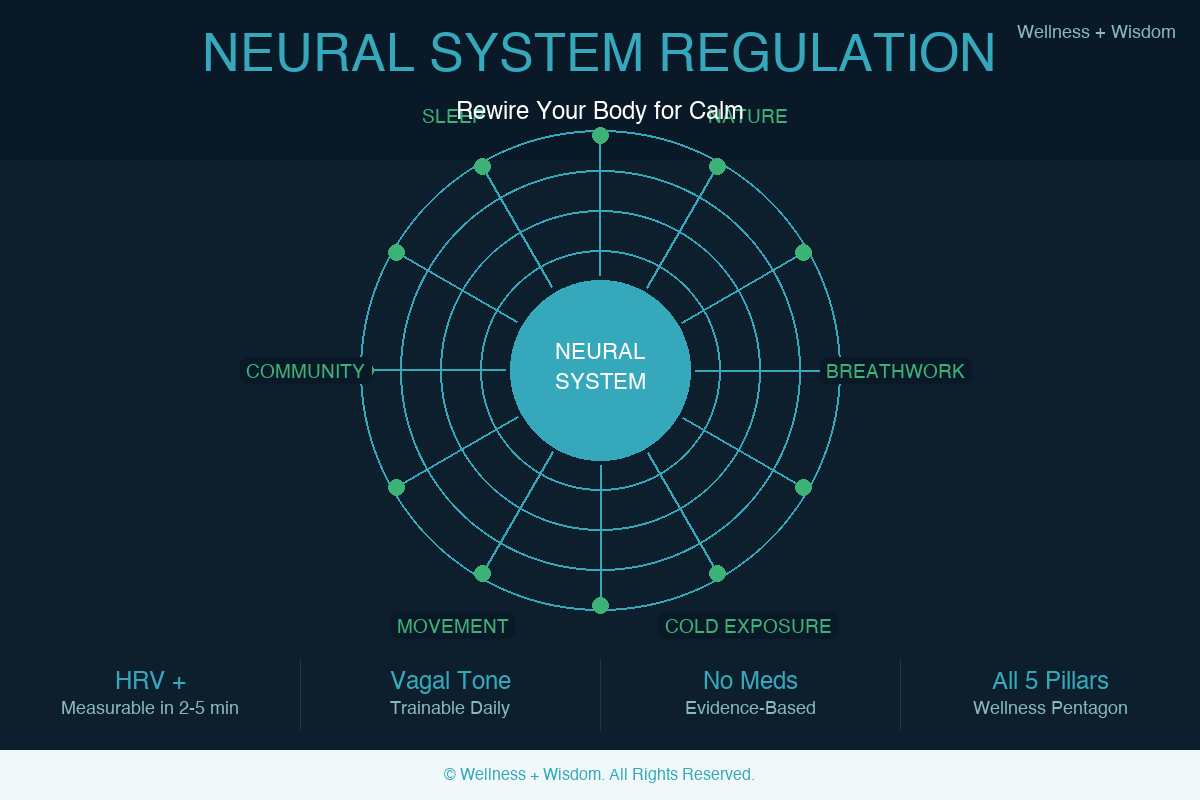
Your neural system is not just a communication highway between brain and body. It is the medium through which epigenetic signals are translated into moment-to-moment experience. The vagus nerve, the primary pathway of the parasympathetic (rest and restore) branch of the neural system, plays a central role in moderating the HPA axis response. When vagal tone is high, meaning the vagus nerve is well-toned and responsive, the body can move efficiently from activation back to calm. When vagal tone is low, the recovery from stress is slow and costly.
Trauma-associated epigenetic changes on genes like NR3C1 and FKBP5 directly impair the neural system mechanisms that support vagal tone and parasympathetic recovery. The result is a body that is biologically predisposed to stay stuck in the sympathetic activation loop that self-sabotage patterns live in.
This is why practices that directly address the neural system from the bottom up, including breathwork, cold exposure, somatic movement, and mindfulness-based regulation, produce results that talking therapies alone often cannot. They access the epigenetic machinery through the body, not the mind.
A 2025 Frontiers in Nutrition study found that mindfulness meditation directly modulates DNA methylation patterns, reducing both stress and inflammation markers at the gene expression level. This is not metaphor. Sitting in intentional breath awareness literally changes which genes are being expressed in your body.
Breaking the Self-Sabotage Cycle: The Epigenetic Approach
Breaking the self-sabotage cycle through an epigenetic lens requires a fundamental reorientation. You are not trying to overcome weakness. You are trying to update inherited software with new environmental signals that tell the genome a different story about safety.
Here is what the science points to as the most effective levers.
1. Make the Pattern Visible, Not Criminal
The first step in breaking the self-sabotage cycle is radical non-judgment. Shame is itself a cortisol-producing stress response, and cortisol-producing stress responses compound exactly the methylation patterns we are trying to unwind. Every time you attack yourself for the pattern, you reinforce the biology of the pattern.
Curiosity is the antidote. When you notice the self-sabotage impulse arising, try: “This is a protective response. What is it protecting? What did this behavior keep me safe from when I first developed it?” This inquiry is not just therapeutic. It is epigenetically relevant, because it activates the prefrontal cortex, which begins to counteract the amygdala hijack that drives the loop.
This connects directly to the work on inner child healing: the part that sabotages is almost always a younger version of you doing the best it could with what it had. Compassion for that part is not weakness. It is the neurological prerequisite for change.
2. Use the Body to Update the Genome
Because epigenetic patterns are encoded through the body's lived experience, they can be updated through the body's new experiences. This is the core insight behind somatic approaches to breaking the self-sabotage cycle, and it is now supported by measurable molecular evidence.
Specifically, interventions that produce consistent parasympathetic activation produce measurable methylation changes on the stress-axis genes discussed above. These include:
- Breathwork: Slow, controlled diaphragmatic breathing directly activates the vagus nerve and shifts HPA axis tone. Practiced daily, it communicates new safety signals to the genome.
- Cold exposure: Cold therapy trains the neural system's stress response recovery pathway, increasing norepinephrine resilience and improving vagal tone.
- Mindfulness meditation: Directly modulates DNA methylation, as confirmed in the 2025 Frontiers in Nutrition research. Even brief daily practice produces measurable changes.
- Optimized sleep: Sleep is the primary window during which the brain consolidates new neural patterns and moderates cortisol levels. Consistently protecting sleep is one of the highest-leverage epigenetic interventions available.
3. Change the Social Environment
Because the OXTR (oxytocin receptor) gene is part of the epigenetic signature of both trauma and healing, the social environment is a direct epigenetic input. Safe, consistent, attuned relationships produce measurable changes in oxytocin signaling and the methylation patterns associated with it.
The Wellness + Wisdom community and the Liberated Life Tribe exist precisely because of this biology: healing does not happen in isolation. The social signals of belonging, trust, and consistent safety are among the most powerful epigenetic levers a person can activate.
You cannot think your way into new gene expression. But you can belong your way there.
4. Psychotherapy That Reaches the Epigenome
A 2025 study published in Psychodynamic Psychiatry found that successful treatment of PTSD through evidence-based psychotherapy reverses DNA methylation marks, specifically on FKBP5 and BDNF genes (Trauma, Epigenetic Alterations, and Psychotherapy, PubMed 40454823). The healing modalities that produced the most measurable epigenetic change were those that combined cognitive reprocessing with somatic integration.
In practical terms: the therapy that works is not the therapy that only helps you understand the pattern intellectually. It is the therapy that helps you process it through the body, so the neural system can complete the interrupted stress response cycles that are being held in the epigenome.
This points to EMDR, somatic experiencing, Internal Family Systems, and trauma-focused CBT as the modalities most likely to produce the combination of cognitive, emotional, and somatic integration that creates lasting epigenetic change.
Joy-Forward Tools That Produce Measurable Epigenetic Change
What excites me most about where the science of self-sabotage epigenetics is heading is the confirmation that joy itself is a biological force. The interventions that most consistently produce positive epigenetic change are not grim disciplines. They are the practices of aliveness.
Community and Belonging
I have said it on the Wellness + Wisdom Podcast for years: you cannot heal in isolation. The 2025 Holocaust descendants study confirmed that even with inherited stress-axis methylation changes, participants who reported stronger social support showed better oxytocin-related gene expression. Social safety is not just emotionally good for you. It is epigenetically therapeutic.
Purpose and Meaning
Meaning-making activates the prefrontal cortex and moderates the threat-detection system. When you are connected to a purpose larger than your patterns, the neural system has a reason to tolerate the discomfort of change. Research on abundance mindset and positive psychology consistently shows that sense of meaning is correlated with healthier cortisol patterns and more adaptive gene expression.
Movement and Nature Exposure
Aerobic exercise is one of the most studied and confirmed BDNF promoters. It directly counteracts the BDNF suppression caused by chronic stress methylation. Walking in nature, as research on forest bathing shows, produces measurable reductions in cortisol and improvements in HPA axis tone. These are not luxury practices. They are epigenetic medicine.
Gratitude and Self-Compassion Practices
Positive emotional states produce measurable changes in gene expression through multiple pathways. A gratitude practice is not naive positivity. It is a neural system training protocol that, over time, recalibrates the threat-detection bias that drives self-sabotage loops. Daily self-compassion practice has been shown to reduce cortisol reactivity and increase the window of tolerance for growth experiences.
The New Science of Hope: Epigenetics Is Reversible
The most important thing I want you to take from this article is the single most important finding in the entire field of self-sabotage epigenetics: epigenetic changes are not permanent.
The methylation marks that chronic stress, trauma, and intergenerational transmission have laid down on your genes are chemical tags. They can be removed. The genome is not a verdict. It is a dialogue. And you are a participant in that dialogue every single day through every choice you make about how you live, who you surround yourself with, what you eat, how you breathe, and what meaning you make of your story.
The 2025 research in Psychodynamic Psychiatry on trauma, epigenetics, and psychotherapy explicitly showed that FKBP5 methylation decreased in individuals who responded to treatment. The gene responsible for your stress axis recovery was measurably changed by the process of therapeutic healing. This is not a metaphor for feeling better. This is a molecular description of what healing actually is at its deepest level.
A 2026 review in Frontiers in Psychiatry surveying the latest literature on epigenetic changes associated with multi-generational trauma concluded that therapeutic interventions targeting these specific epigenetic mechanisms show genuine and growing promise. The reviewers included DNA methylation, histone modification, and non-coding RNA pathways as all potentially responsive to well-designed healing modalities.
You are not fixed. You are responsive. The question is: what signals are you sending your genome today?
If you are ready to go deeper and join a community of people who are doing exactly this work, I want to personally invite you to explore the Liberated Life Tribe. The Tribe is a community built on the science and practice of this kind of cellular, joy-forward healing. It is where the tools described in this article come to life in the company of other people doing the same brave, biological work of becoming free.
And if you want to explore the framework that ties all of this together, the 5 Levels of Health is the place to start.
You Are Not Your Patterns. You Are the One Who Can Change Them.
Join thousands of growth-oriented humans who are using the science of joy-forward healing to break inherited cycles and live fully expressed lives in the Liberated Life Tribe.
Join the Liberated Life Tribe →
Community. Science. Joy-forward healing. All in one place.
Frequently Asked Questions About Self-Sabotage Epigenetics
What is the connection between self-sabotage and epigenetics?
Self-sabotage patterns are often driven by epigenetic changes on stress-regulating genes like NR3C1, FKBP5, BDNF, and SLC6A4. These changes, caused by chronic stress or trauma, alter gene expression in ways that keep the neural system in a state of hypervigilance and reduce the brain's capacity for neuroplasticity and new behavior formation. The result is a biology that literally makes it harder to change old patterns, independent of willpower or intention. Understanding this connection transforms the way we approach breaking the self-sabotage cycle: instead of working harder at the level of behavior, we work smarter at the level of biology.
Why do I self-sabotage even when I know better?
The disconnect between knowing and doing is largely biological. When the BDNF gene (the brain's neuroplasticity molecule) is suppressed by stress-induced methylation, the brain's ability to form new behavioral pathways is chemically impaired. Simultaneously, FKBP5 and NR3C1 methylation changes keep the HPA stress axis in a state of chronic activation, meaning the neural system is spending more time in survival mode than in growth mode. Intellectual knowledge of what to do lives in the prefrontal cortex. The self-sabotage response executes from the limbic threat-detection system, which is faster and operates below conscious awareness. The path to change runs through the body and the epigenome, not just the mind.
Can self-sabotage patterns be inherited from parents or ancestors?
Yes, and this is now confirmed by robust human research. A landmark 2025 study published in Scientific Reports by Yale and University of Florida researchers found that grandchildren of Syrian women who experienced war-related violence carried the same epigenetic methylation marks as their grandmothers, despite having zero personal exposure to violence. A companion 2025 study on Holocaust descendants found inherited methylation changes across the entire HPA stress axis in third and fourth-generation descendants. These findings confirm that trauma-associated epigenetic changes can be transmitted across generations, meaning some of what looks like personal self-sabotage may be inherited biological programming from family experiences you did not personally live through.
Are epigenetic changes from trauma permanent?
No. This is perhaps the most important finding in the science of self-sabotage epigenetics: epigenetic changes are reversible. A 2025 study in Psychodynamic Psychiatry found that successful evidence-based psychotherapy treatment produced measurable decreases in FKBP5 methylation, directly reversing a key trauma-associated epigenetic mark. Additional research confirms that lifestyle interventions including breathwork, mindfulness meditation, aerobic exercise, and safe social connection all produce measurable positive changes in DNA methylation patterns on the stress-regulating genes most associated with self-sabotage. The genome is not a verdict; it is a dialogue.
What are the most effective practices for breaking the self-sabotage cycle at the epigenetic level?
The most evidence-supported practices for breaking the self-sabotage cycle through epigenetic mechanisms include: (1) consistent breathwork and somatic practices that activate the vagus nerve and parasympathetic neural system, directly communicating safety signals to the HPA axis; (2) mindfulness meditation, which has been shown in a 2025 Frontiers in Nutrition study to regulate DNA methylation and reduce stress-associated gene expression; (3) aerobic exercise, which is one of the most reliable BDNF promoters, counteracting the BDNF suppression that blocks neuroplasticity; (4) trauma-focused psychotherapy modalities including EMDR, somatic experiencing, and IFS, which 2025 research shows can produce measurable methylation reversal; and (5) consistent safe social connection, which activates oxytocin receptor pathways and contributes to HPA axis regulation. Community-based healing approaches are among the most powerful because they engage multiple epigenetic levers simultaneously.
What is emotional epigenetics and how does it relate to self-sabotage?
Emotional epigenetics is the study of how emotional experiences, particularly chronic stress, trauma, and sustained emotional states, alter gene expression through epigenetic mechanisms like DNA methylation and histone modification. In the context of self-sabotage, emotional epigenetics explains why the emotional patterns established in childhood or inherited from family trauma can become biologically encoded in ways that persist into adulthood and actively resist change. The genes most affected include those governing the stress response (NR3C1, FKBP5), brain plasticity (BDNF), mood regulation (SLC6A4), and social bonding (OXTR). Addressing self-sabotage through an emotional epigenetics lens means targeting the emotional and somatic environment that is sending signals to these genes, not just analyzing the behavior at the surface level.
Research Citations
- Quinn EB, Hamadmad D, Dutton CL, et al. Epigenetic signatures of intergenerational exposure to violence in three generations of Syrian refugees. Scientific Reports. 2025;15. PubMed 40016245
- Oren G, Shoshani A, Samra NN, et al. From trauma to resilience: psychological and epigenetic adaptations in the third generation of Holocaust survivors. Scientific Reports. 2025. PubMed 40681848
- Epigenetic impact of chronic stress: BDNF exon IV gene methylation in high-risk professionals. Journal of Psychosomatic Research. 2025. ScienceDirect
- Trauma, Epigenetic Alterations, and Psychotherapy. Psychodynamic Psychiatry. 2025. PubMed 40454823
- Frontiers in Psychiatry: Epigenetic Changes Associated with Multi-Generational Trauma: Characterization, Mechanisms, and Therapeutics. 2026. Frontiers in Psychiatry
About Josh Trent
Josh Trent is the founder of Wellness + Wisdom and host of the Wellness + Wisdom Podcast, one of the top wellness podcasts in the world with over 600 episodes. He is a certified breath coach, wellness intelligence expert, and the creator of the 5 Levels of Health framework.
For over a decade, Josh has guided thousands of people through the science and practice of whole-person wellness, drawing on cutting-edge research in emotional epigenetics, somatic healing, breathwork, and neural system regulation. His mission is to help people move from surviving to thriving, not by forcing change, but by creating the internal conditions in which change becomes natural.
Josh lives in Dripping Springs, Texas, and is committed to showing up as a fully expressed, joy-forward human being in every area of his life.
© Wellness + Wisdom. All Rights Reserved. | Mental Health Articles | Podcast