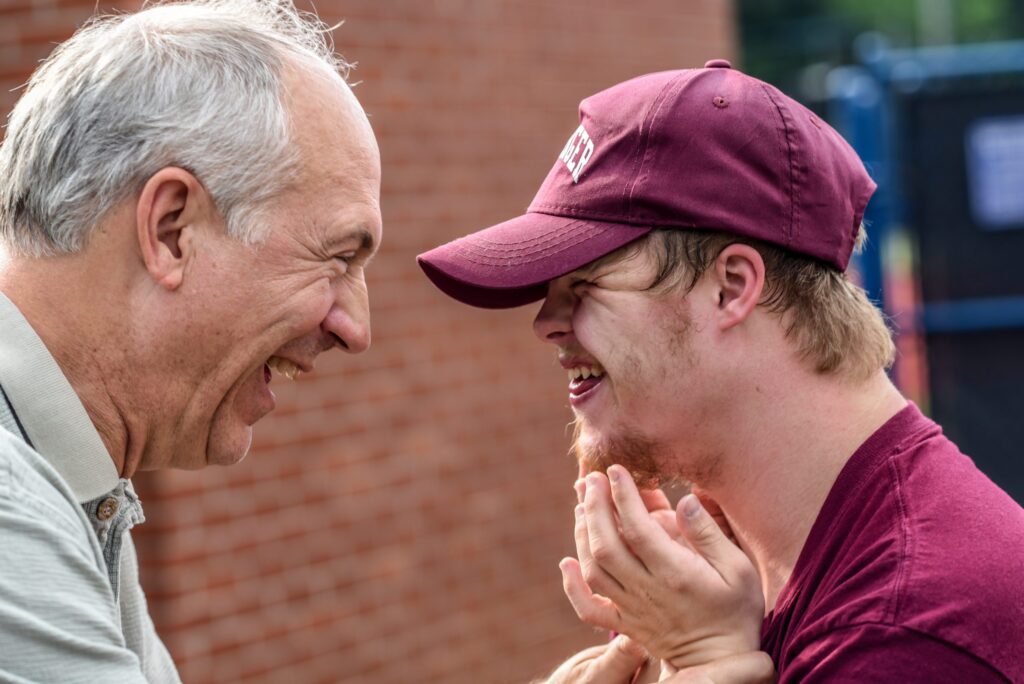
Exercise is important for all of us, whether we are younger, middle-aged, or older, but sometimes it can be tough to find motivation, even more so for children with special needs. For 7 ways to make exercise fun for your special needs child, read on…
 Whether a child has ADHD, autism, cerebral palsy, down syndrome, or anything in between, getting them to exercise may be tricky. This could be due to difficulty with motor function which impacts their ability to exercise, trouble with the social side of it all, or due to another reason altogether.
Because of this, obesity levels in special needs children are high, so how can parents and educators help? Well, SEN law requires special needs children to be fully supported in life and their education, and that includes physical education.
Special needs children may need additional support, such as specific exercises they can try, or special equipment to help, but not all parents and educators are equipped with these means. We’re here to help, even in a small way. That’s why we’ve come up with seven different ways to make exercise fun for special needs children. Let’s take a closer look…
1. Movement Songs
Not all exercise has to be intense. Even if there are minimal movements, it can help your child to stimulate the muscles in their body to keep them active, especially if it is done on a regular basis, such as a couple of times a week.
A fun way of doing these minimal movements is alongside music, which they can choose to sing to along the way. The minimal aspect of this makes it great for those children in wheelchairs. It also keeps things fun and lively, so it doesn’t feel like exercise.
Not only this, music has many positive benefits for special needs children, such as boosting memory and improving sleep. Songs like “Head, Shoulders, Knees, and Toes”, “I’m a Little Teapot”, “Hokey Pokey”, “YMCA”, “Row, Row, Row your Boat”, and “The Macarena” are all popular songs amongst children and are considered fun to join in with.
On top of it all, these songs and dances are something that parents, teachers, brothers, and sisters can join in with. It’s also inclusive of children of all abilities, making it a unifying social activity for young people who may otherwise struggle to make friends.
2. Playing on Playground Equipment
If you are a parent looking for a fun way to help your special needs child exercise, one of the easiest solutions could be going to the playground, where they can run around on the different equipment. Most playgrounds have equipment such as monkey bars, swings, ladders, etc.
 One piece of equipment which is almost equivalent to a workout exercise is the swing. When your child curls their legs back to swing, it is almost as if they are doing crunches.
However, the swing can be hard for some special needs children, especially those that suffer from motor skills disorder, which can affect movement or balance. It is possible to get a vestibular swing which might suit them more.
3. Counting Exercises
Children who have recently learnt to count love to show off their new skills. A fun exercise for a special needs child could be counting whilst doing an active movement. This not only helps them to engage their brain and learning skills, but also gets them moving.
For example, it could be that they are doing jumping jacks, running to a post and back, or monkey bars, and counting their progress. You could even play hide and seek with them, where they count and then run around to find someone.
4. Move Like an Animal
Most children love animals, but what they may love more is pretending to be an animal. Ask them to pretend that they’re their favourite animal, or instead, you decide on 10 different animals for them to pretend to be and then get them to do a series of movements which the animal would do in the wild.
Ask them to show you how a proud lion would walk, how a lazy dog would stretch, how a wiggly worm would crawl. It’s not only is fun, but some of the movements will challenge them and act as a workout. For instance, a worm crawling would target core and upper body, and a dog stretching will target their hamstrings.
5. Jumping on a Trampoline
Jumping on a trampoline can be an extremely joyful exercise for a special needs child. Even if purchasing a trampoline to have in your garden isn’t an option, there are leisure centres that usually do trampoline lessons, or instead, there are trampoline parks across the UK.
 Having a bounce for 20 minutes, or however long, is a great way to exercise, and it can target many muscles in the body, such as the legs, arms, and stomach. What’s more, it can also help to improve balance and flexibility.
It is also possible for children in wheelchairs to use trampolines. They can be put on the trampoline in their wheelchair and bounce, which can target their core and be used as a cardio exercise.
6. Playing Catch
Catch is a simple exercise, but it can help children who have problems with their motor skills to improve their hand-eye coordination and fine motor skills. It could be slowly throwing a large ball back and forth, and once they progress and are more accurate with their throw and catch, to select a smaller ball.
The more they develop, the more challenging you could make it. For example, you could move further away, change the angle, or throw the ball against a wall. There are so many different ways for it to be made harder, so you can be as creative as you want.
7. Simon Says
Similar to the exercise movement songs mentioned previously, you could play Simon Says. This is something that works better in a group setting as it can almost be seen as a competition between children. Even if your child doesn’t cope well in group settings, it can still be a fun way to get them to focus and do movements.
Ready to Get Your Special Needs Child Exercising?
As we have established, sometimes children with special needs can feel overwhelmed when exercising. This is especially the case if it requires them to socialise or communicate with their peers.
The benefit of the exercises that we have listed above are that they don’t have to be done in a group setting if that is not possible. Instead, they can be done individually with a parent, teacher, therapist, or perhaps done with their brothers and sisters. What’s more, they add a bit of fun to what can otherwise be a bit of a chore.
What do you think of the above ideas for exercising with special needs? Do you have any more ideas to add to the list? Be sure to leave them in the comments down below.
Please be advised that this article is for general informational purposes only, and should not be used as a substitute for advice from a trained medical professional. Be sure to consult a medical professional or healthcare provider if you’re seeking medical advice, diagnoses, or treatment. We are not liable for risks or issues associated with using or acting upon the information on this site.
Image Sources:
Image 1:Artem Kniaz
@artem_kniaz
https://unsplash.com/photos/DqgMHzeio7g
Image 2: Vika Strawberrika
@vika_strawberrika
https://unsplash.com/photos/dGwLxzFuGZo
Image 3: Matheus Costa
@matheusagcosta
https://unsplash.com/photos/_jthou8Bjk0