
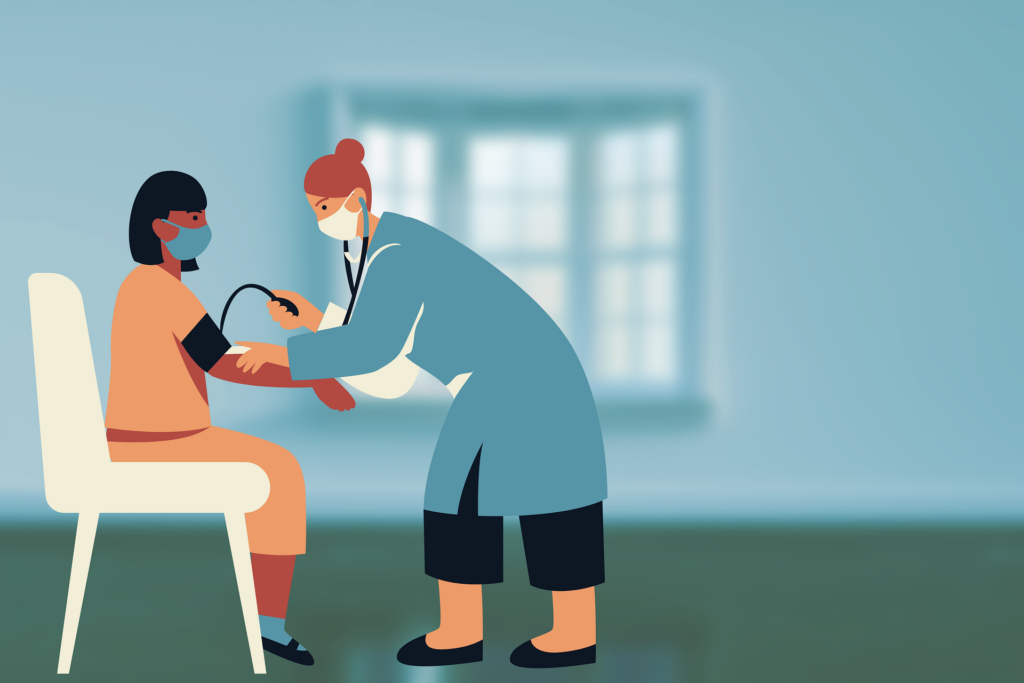
 Healthcare facilities can, without a doubt, be a significant source of stress and anxiety at times. Worry and stress can affect patients for various reasons, not all related to their diagnosis or treatment.
But when coping matters become difficult for patients, there is one entity that must take a stand – nurses. Nurses play a vital role in reducing patient anxiety and stress. They use various methods, including effective communication, personal visits, medication, and ensuring that their patients are in a haven.
To shed more light on that matter, below, we have defined the role of a nurse in reducing stress and anxiety among patients with the help of a few helpful strategies:
1. Recognizing the signs
Anxiety and stress can manifest in various ways depending on the person and the scenario. For example, it can take the form of withdrawal, rage, or sarcasm. A nurse addresses these matters by assessing the signs while performing the initial evaluation or using an anxiety scale similar to a pain scale.
Nurses or nursing students can enroll in specific programs that teach the best ways to calm patients' fears and handle whatever emergencies occur. For instance, online ABSN programs are ideal for potential nurses who wish to adapt to the evolving healthcare industry and learn the quality of care.
Furthermore, it is vital to remember that some anxiety or stress-related symptoms may be less evident than others. There is also a chance that the patient may deny feeling anxious or stressed. The following are some common signs of anxiety and stress:
• Sleeping problems.
• Elevated heart rate.
• Digestive problems.
• Difficulty focusing.
2. Acting as an educator for patients
As the date for a medical procedure approaches, many patients experience increased stress levels. Awareness about their condition and practice can help reduce anxiety levels in patients who prefer to know what will happen and what they can presume. Nurses can play an active role in patient education by providing literature on their condition, describing procedures, and referring questions to the doctor.
3. Paying attention to the patients
The most important skill to develop is listening when dealing with nervous patients. Most patients want to know that you care about their troubles. People visit them in their room and talk to them, but they are rarely concerned about their well-being. Active listening skills are highly beneficial to patients because they relieve anxiety.
Nurses play their roles by asking open-ended questions, demonstrating that they pay attention to their patient's needs, and inquiring about their feelings. They show active listening by paying close attention to patients and reiterating important information. Another primary concern is paying attention to nonverbal cues from their patients. A patient's facial expressions and body language can reveal whether or not they are concerned about something. Inquiring courteously and clarifying may help to ease them.
4. Allowing visits
 The presence of family members helps reduce anxiety, especially during heartbreaking actions. It is said that having family nearby can help to alleviate pain. Having family members nearby is a recognized requirement, and this need is felt acutely at all times of distress.
Family members are the most critical helpers for their loved ones, especially during trying times. Furthermore, most patients prefer to have family members present during medical and nursing procedures. As a result, nurses allow close friends or family members to accompany their patients and reduce their anxiety. On the other hand, nurses are also on the lookout for patients who feel uncomfortable and stressed due to the presence of family members.
5. Communication that works
One of the most fundamental approaches is also the most effective. Patients are frequently perplexed and troubled by what is going on in the unfamiliar setting. Nurses help calm them down by introducing themselves and describing what they are doing and why. It is beneficial to bring informational handouts. The more a patient understands what will happen, the more regulated and calm they will feel.
6. Making use of humor
In nursing, humor promotes communication and creates trust between the patient and the nurse.
Nursing professionals use humor to deal with difficult situations and patients. Humor in nursing is a refined nursing intervention that requires a lot of creative energy and mental capacity. Professional nurses know how to be cheerful and lift the spirits of others.
They inquire about the patients' personal lives, such as the number of grandchildren or children they have, their spouses, and their plans for the future. That helps to accomplish two objectives. It gives patients something to think about other than their current situation and nervousness. Second, it relieves stress by making them feel more at ease in your presence.
7. Using guided imagery
The effects of guided imagery are similar to breathing exercises. Guided imagery relies on the concept of a mind-body connection, in which mental focus alleviates anxiety symptoms by lowering respiration, blood pressure, and heart rate. The approach is what distinguishes the two tactics. Whereas the former technique emphasizes exhalation, guided imagery uses imagination. Patients are instructed to imagine something in such detail that their bodies react as if it were before them. This technique transports the patient's mind away from the exam room and into a more comfortable environment.
In hospitals, nurses have their patients imagine a relaxing environment, such as a garden or a beach. These settings are less stressful than an antiseptic exam room and allow for more patient satisfaction and relaxation.
8. Acting as a medical confidant
Patients will frequently confide in a nurse before confiding in family members or doctors. While nursing's clinical responsibilities often seem to prioritize unrelated side issues, nurses are sometimes in the situation of serving as close associates to patients.
Nurses who ask probing questions and encourage patients to discuss their problems make a huge difference in recovery and disease management.
Conclusion
A nurse's job entails helping patients and their families get through a difficult time and providing comfort and peace. After all, offering support and comfort is essential for a nurse's job. Patients can have a better experience if nurses take the time to assess their anxieties and offer methods for relaxation. And through the strategies listed above, nurses can build rapport with stressed-out and anxious patients and learn to alleviate their concerns. If the overall nervousness decreases, the quality of services offered and patient outcomes will increase.
However, in order for nurses (and other healthcare professionals) to be able to offer the level of care described above, it is important that their own wellness is protected. After all, they often work impossibly long hours in order to cater to their patient's every need – and many will forgo breaks in order to be able to do this. As such, employers should make a concentrated effort to reduce employee workload without taking them away from their patients.
One way in which you can achieve this goal is through the use of specialist healthcare technology, such as a pac system for radiology. After all, this makes it far easier to carry out radiology tests and examinations, so that nurses can stay on top of their workload.