 Can hyperbaric oxygen therapy reverse aging? A tech entrepreneur’s quest to slow biological aging using oxygen under pressure sparks both excitement and scientific scrutiny.
In the world of biohacking and human optimization, few names carry as much weight as Bryan Johnson. The tech entrepreneur turned longevity enthusiast is known for his rigorous anti-aging protocol, Blueprint, and for treating his body like a science experiment. His latest endeavor? A 90-day hyperbaric oxygen therapy (HBOT) experiment using HpoTech’s ZEUGMA chamber, a stylish, clinical-grade device designed to deliver oxygen under elevated pressure. The results, according to Johnson, suggest real potential for slowing or even reversing biological aging.
The science behind HBOT
 Hyperbaric oxygen therapy isn’t new. Traditionally used to treat decompression sickness, wound healing, and carbon monoxide poisoning, HBOT has recently entered the spotlight in the field of longevity science. The treatment involves breathing 100% oxygen inside a pressurized chamber, typically set between 1.5 and 2.0 ATA, or even higher. This increases the amount of oxygen dissolved in the bloodstream, promoting cellular repair, reducing inflammation, and stimulating angiogenesis (the formation of new blood vessels).
Emerging studies, including those led by Dr. Shai Efrati, have found that HBOT may lengthen telomeres (the protective caps on DNA linked to cellular aging) and reduce senescent cells, hallmarks of biological rejuvenation. It’s these findings that caught Johnson’s attention and motivated him to undergo the longevity HBOT protocol.
The ZEUGMA HBOT experiment: 60 sessions in 90 days
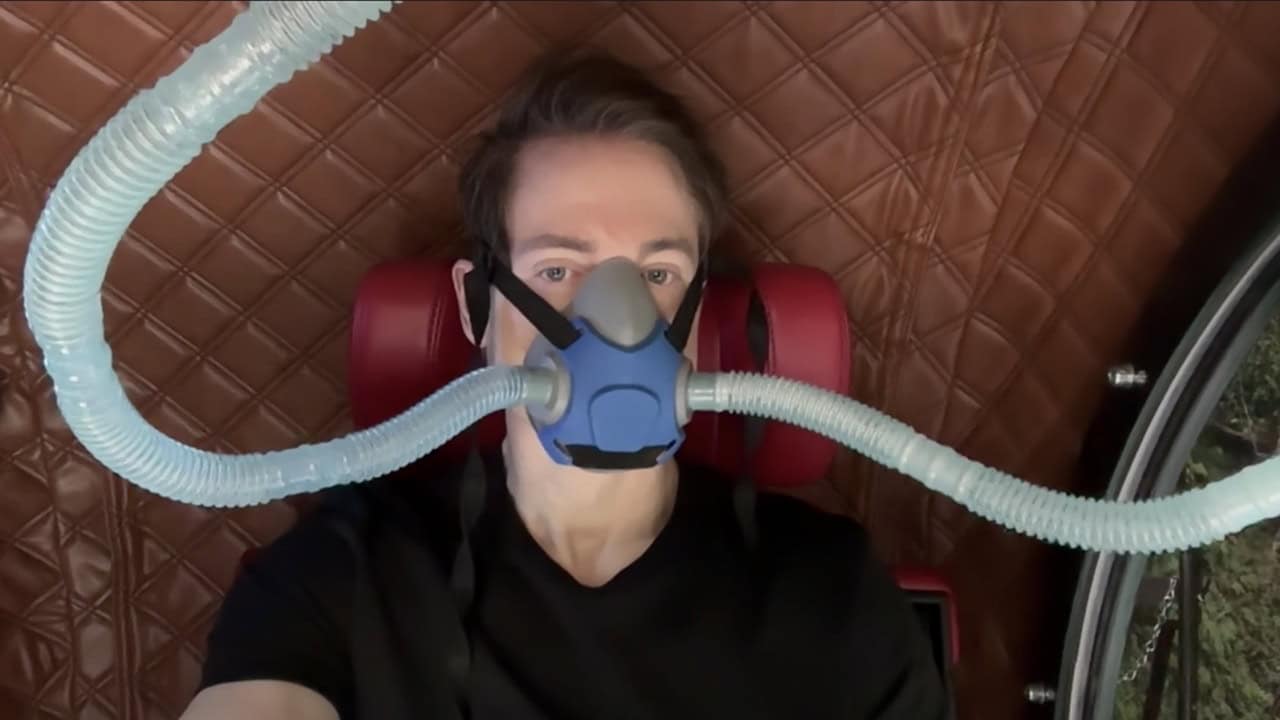
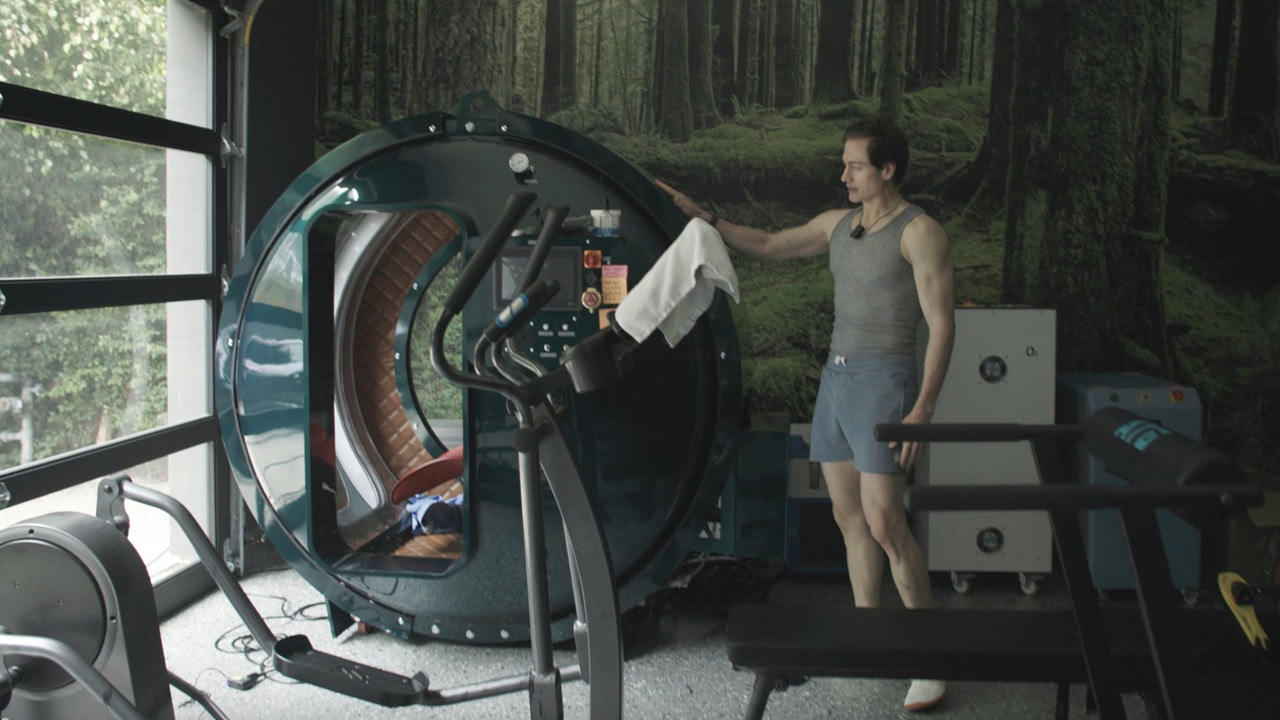 Between January and April 2025, Johnson underwent a total of 60 HBOT sessions over 90 days. Each session lasted 90 minutes and followed a well-researched cycle: 20 minutes of breathing pure oxygen followed by five minutes of regular air, repeated several times. The pressure in the ZEUGMA chamber was set at 2.0 ATA, consistent with clinical protocols used in scientific studies.
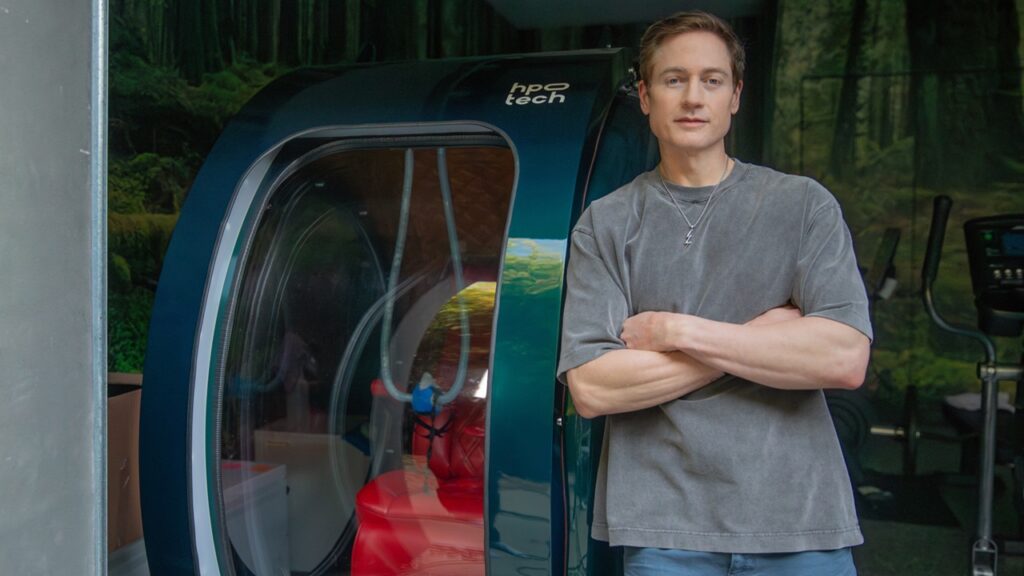
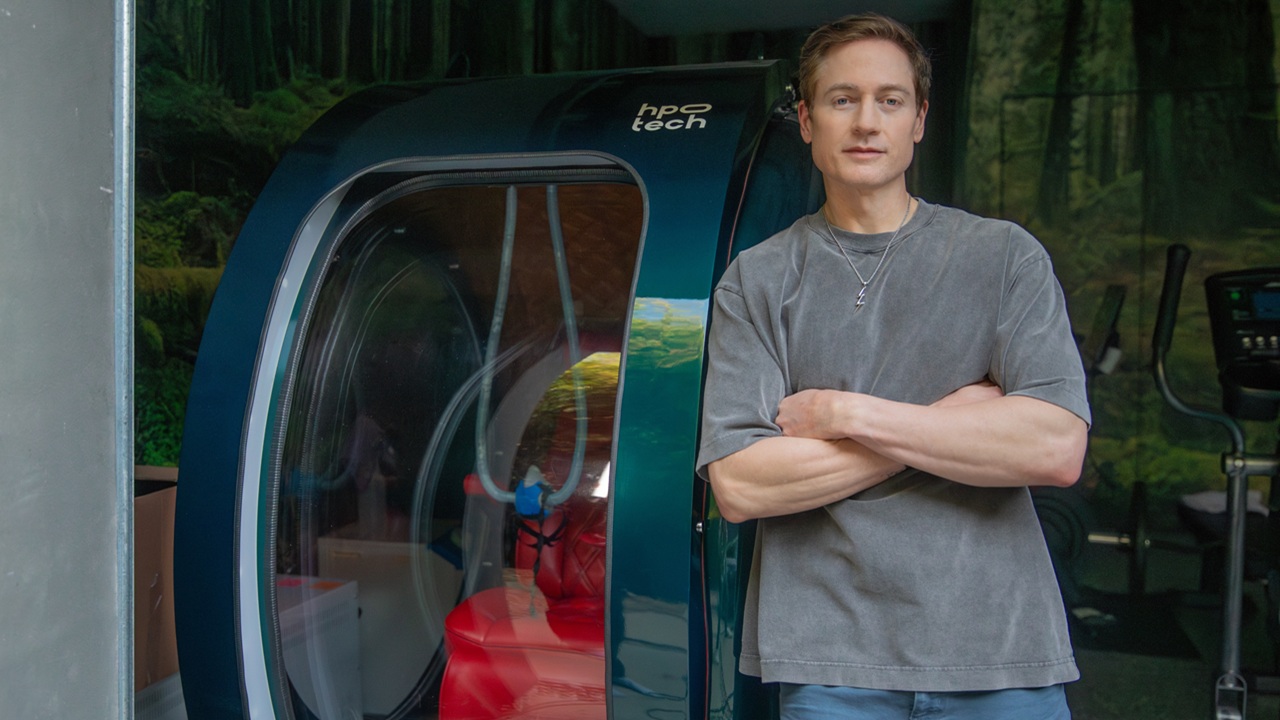
The ZEUGMA chamber itself is noteworthy. Built for both performance and comfort, it features panoramic viewing windows to reduce claustrophobia, precise pressure control, and a BIBS mask system that optimizes oxygen delivery while ensuring safety. For someone like Johnson, who tracks his body’s performance with military precision, ZEUGMA offered the technical consistency of handling controlled pressure levels needed for such a long-term intervention.
What Bryan measured, and why it matters
This wasn’t a casual experiment. Bryan Johnson used an advanced battery of tests before and after the HBOT cycle to measure changes in his biology. These included:
- Epigenetic clocks (such as DunedinPACE and DNAmAge), which estimate biological age based on DNA methylation patterns
- Telomere length, a marker of cellular aging
- hsCRP and CRPm, both used to assess systemic inflammation
- VO₂ max and neuroimaging, to evaluate cognitive and physical performance
- Microbiome sequencing, to understand changes in gut health
- VEGF levels, indicating blood vessel regeneration
His goal was not just to feel better, but to see quantifiable shifts in the molecular markers of aging.
Key findings: promising shifts in biomarkers
 After 60 sessions of HBOT, Johnson reported several significant results.
First, his inflammation markers dropped dramatically. hsCRP, a common blood test for chronic inflammation, went from low to undetectable. His CRPm score, a notable epigenetic inflammation indicator—reached historically low levels.
Second, his biological aging slowed measurably. The DunedinPACE clock dropped below 1.0, meaning his body was aging at a rate slower than one year per calendar year. Telomere length, while not disclosed in exact numbers, reportedly improved, matching results seen in previous clinical HBOT trials, where telomeres lengthened by over 20%.
Johnson also observed signs of angiogenesis, or new blood vessel formation. VEGF (vascular endothelial growth factor) levels increased, suggesting improved tissue oxygenation and regenerative potential. While he has yet to publish VO₂ max data or neuroimaging results in detail, preliminary feedback points to positive changes in both cognitive performance and physical stamina.
On the gut health front, Johnson’s team sequenced his microbiome and noted shifts consistent with improved diversity and resilience, though these findings are still being analyzed.
Limitations and considerations
As compelling as Johnson’s results may be, this remains an N=1 experiment, a personalized intervention without a control group. Moreover, Johnson underwent three total plasma exchange (TPE) procedures during this same timeframe, which are known to reduce systemic inflammation. This complicates attempts to isolate the effects of HBOT alone.
It’s also worth noting that while HBOT is generally safe when properly supervised, it can pose risks, including sinus and ear discomfort, oxygen toxicity, and in rare cases, seizures. The therapy is time- and cost-intensive, requiring clinical-grade chambers and trained operators.
A tool, not a miracle
What Bryan Johnson’s ZEUGMA experiment demonstrates is not that HBOT is a miracle cure, but rather a promising tool in the growing field of longevity science. By combining well-established clinical protocols with precise personal monitoring, Johnson offers a case study in how emerging therapies might influence the biology of aging.
His findings align with those from peer-reviewed literature, but without replication in broader, randomized trials, they should be viewed as hypothesis-generating, not conclusive. Still, the enthusiasm is warranted. HBOT’s potential to extend telomeres, reduce inflammation, and stimulate tissue regeneration puts it on the map for researchers, clinicians, and biohackers alike.
Final thoughts
Bryan Johnson’s 90-day hyperbaric oxygen therapy protocol, powered by the ZEUGMA chamber, is one of the most detailed, quantified self-experiments in the world of modern longevity. The early results, from slower biological aging to enhanced vascular health, are exciting, especially when they mirror findings from clinical studies.
Yet as with any single-subject experiment, the takeaway isn’t certainty, it’s curiosity. Johnson’s work pushes the boundaries of what we think is possible with human biology. But more importantly, it invites us to ask better questions about what aging is, and how we might learn to age on our own terms.
For readers interested in a more technical breakdown of the full protocol, biomarker panels, and raw before-and-after data, a comprehensive case study is available here Read the full ZEUGMA HBOT Case Study