Neural System Regulation: How to Rewire Your Body for Calm Without Medication
Let me ask you something honest. When was the last time you actually felt calm? Not medicated calm. Not exhausted calm. Not scrolled-into-numbness calm. Real, settled, present-in-your-body calm, where your chest feels open and your jaw is soft and you are just here, grounded and alive?
If you had to think about it for more than a second, you are not alone. Neural system regulation has become what wellness insiders and researchers alike are calling the defining health challenge of 2026. Sanctuary Wellness named it the number one trend of the year. Dr. Axe called it the pivot point from optimization culture to something far more foundational. And across therapist circles, TikTok, and peer-reviewed journals, one message is breaking through loud and clear: we cannot think our way to calm. We have to feel our way there.
This article is about exactly that. I am going to walk you through the most current science on neural system regulation, including what two landmark 2025 and 2026 studies actually tell us about breathwork and vagal tone, what the polyvagal theory controversy of early 2026 really means for your practice, and how the Emotional Epigenetics framework I teach on the Wellness + Wisdom Podcast connects directly to your body's capacity for self-regulation.
More than that, I want to give you tools. Real, usable, science-backed tools for calming your neural system naturally that you can begin today. No prescription required. No expensive device required. Just you, your breath, and a willingness to come home to your body.
What Neural System Regulation Actually Means in 2026
The wellness world has been throwing around the phrase “regulate your neural system” for years now. But most people using it either do not know exactly what it means biologically, or they are working from a framework that the science is actively updating right now.
So let us start from the ground up.
Your neural system is your body's communication and command network. It runs through every organ, every muscle, every cell. The part most relevant to what we are discussing is the autonomic neural system, the portion that regulates all the functions you do not consciously control: heart rate, digestion, immune response, hormone release, and the speed at which your body moves between states of activation and rest.
The autonomic system has two primary branches. The sympathetic branch handles activation, mobilization, and response to threat. You know this as the fight-or-flight state. The parasympathetic branch handles recovery, digestion, social connection, and repair. This is the rest-and-digest state. In a healthy, regulated system these two branches work in dynamic balance, shifting appropriately based on what your environment actually requires.
Neural system regulation is the capacity to move fluidly and efficiently between these states without getting stuck in either one.
A person with strong neural system regulation can encounter a stressor and return to baseline within minutes. A person with dysregulation stays activated long after the threat is gone, which cascades into chronic stress, inflammation, disrupted sleep, digestive problems, anxiety, and the persistent sense that something is wrong even when nothing is actually happening.
The good news, and this is real news grounded in 2025 and 2026 research, is that neural system regulation is a trainable capacity. Not a fixed trait. Not a personality type. Not something you either have or do not have. A skill. One that responds to practice, to breathwork, to specific body-based interventions that are now backed by multiple large-scale clinical trials.
That is what this article is about. How to build that skill, intentionally and joyfully, without medication.
The Science Behind Your Neural System: What the Latest Research Shows
In March 2026, one of the most widely shared findings in the mental health world was a comprehensive review of what we now know about breathwork and heart rate variability. Published in 2025, the study titled “Breathe Better, Live Better” analyzed the consistent relationship between slow, intentional breathing and measurable improvements in autonomic regulation.
The core finding: breathing at four to six cycles per minute consistently and significantly increases heart rate variability across multiple validated measures, including SDNN, RMSSD, and high-frequency HRV, all markers of parasympathetic dominance and neural system flexibility. The effects showed up in sessions as short as two to five minutes, making this one of the most accessible and powerful neural regulation tools available to anyone, anywhere (Breathe better, live better: the science of slow breathing and HRV, PubMed 2025).
Two to five minutes. Not an hour of meditation. Not an expensive device. Two minutes of intentional slow breathing shifts your autonomic state in a measurable, documented way.
This is why I have been teaching breathwork as the foundation of the BREATHE Program for years. The science is not catching up to the practice. The science is now confirming what somatic practitioners, meditation teachers, and breathwork facilitators have been saying for decades.
A companion study published in a 2025 PMC review examined two specific non-invasive interventions, HRV biofeedback and the Safe and Sound Protocol, finding that both measurably enhanced vagal activity and autonomic flexibility in clinical populations. The researchers concluded that these approaches offered strong evidence for cardiovascular and stress-regulatory benefit without pharmacological intervention (HRV biofeedback and SSP for vagal neuromodulation, PMC 2025).
And in December 2025, the largest trial of the Wim Hof Method published in Scientific Reports enrolled 404 healthy adults across a 29-day intervention. Participants who completed the Wim Hof protocol, which combines cyclic breathing patterns with cold exposure, showed significantly greater improvements in self-reported energy, mental clarity, and stress tolerance compared to control groups. This was the first large-sample randomized controlled trial specifically on the method, and it produced results that confirmed what practitioners had been reporting anecdotally for years (Breathwork and Cold Immersion RCT, Scientific Reports 2025).
The science in 2026 is not debating whether neural system regulation is possible. It is showing us, with increasing precision, exactly which interventions work, at what dosage, and why.
The Polyvagal Framework in 2026: What the Science Debate Tells Us
If you spend any time in therapy communities, wellness podcasts, or somatic healing spaces, you have probably heard about the polyvagal theory controversy that exploded in early 2026. Here is what you need to know and, more importantly, what it means for your practice.
In early 2026, a paper co-signed by 39 researchers was published arguing that several of the biological claims in the polyvagal theory as originally framed by Dr. Stephen Porges were anatomically inaccurate. Specifically, the critics argued that the two vagal pathways (the myelinated ventral pathway associated with social engagement and the unmyelinated dorsal pathway associated with shutdown) are not as functionally distinct as the theory proposes, and that the evolutionary hierarchy Porges described does not map neatly onto the actual neuroanatomy.
Porges responded. Clinicians responded. The Polyvagal Theory: Current Status, Clinical Applications, and Future Directions paper published in 2026 offered his scholarly rebuttal, arguing that critics had constructed a simplified version of the theory and applied category errors in their analysis.
The debate is real. The science is being actively revised. And if you built your understanding of neural regulation entirely on polyvagal language, it is worth knowing that some of the anatomical specifics are contested.
Here is what has not changed.
The practical, observable phenomena that polyvagal theory helped clinicians describe and work with remain valid. States of mobilization, connection, and shutdown are real. The vagus nerve is a real and critical regulator of the autonomic system. Interventions that target vagal tone, including slow breathing, humming, cold exposure, and social connection, produce real and measurable improvements in autonomic regulation. The therapeutic frameworks that practitioners built around these ideas still produce real results for real people.
Dr. Arielle Schwartz put it well in her clinical response to the Grossman critique: the controversy does not dismantle the practical architecture of somatic work. It refines the biological language we use to describe it.
I find this conversation genuinely exciting. When science gets more precise, our tools get sharper. The invitation here is not to abandon what has worked. It is to hold it with appropriate intellectual humility and to stay curious about what the updated research reveals.
What matters most for your daily practice is not the name of the neural pathway you are activating. It is whether your body is moving toward safety, connection, and regulation. And on that front, the evidence is unambiguous: intentional practices work.
Neural System Regulation vs. Suppression: Why This Distinction Changes Everything
This is the conversation I find myself having constantly on the Wellness + Wisdom Podcast and inside the Liberated Life Tribe, and it is one of the most important distinctions in the entire field of mental health and somatic healing.
There is a significant difference between regulating your neural system and suppressing it.
Suppression is using substances, distraction, numbing, or sheer willpower to override the signals your body is sending. A glass of wine to take the edge off. Scrolling until your brain stops racing. Pushing through anxiety with white-knuckle determination. These approaches can create the feeling of calm in the short term, but they do so by cutting off communication with your own internal system. They do not build regulation capacity. They deplete it.
Regulation is a fundamentally different process. It is not about making the signal go away. It is about developing the capacity to stay present with the signal, to metabolize the activation, and to return to a state of balanced readiness. Real regulation builds the actual neural infrastructure of resilience, the neuroplasticity required to respond rather than react, to feel fully without becoming overwhelmed.
This distinction matters especially if you have been using pharmaceutical approaches to manage anxiety, depression, or stress-related conditions. Medication can be a genuinely useful tool in certain clinical contexts, and I am not dismissing it. But for many people, long-term medication use without complementary somatic work addresses the symptom while leaving the underlying regulatory deficit in place. The body never learns to regulate itself because it is always being chemically managed from outside.
The goal of genuine neural system regulation is to build your body's own capacity for self-governance. To develop what researchers call autonomic flexibility, the ability to mobilize when the situation requires it and return to rest when the crisis has passed, with speed and ease that grows over time.
This is a learnable skill. And the breathwork practices I am about to share are some of the most potent tools available for building it.
Vagal Tone Exercises: The Breathwork Practices That Produce Real Results
When we talk about vagal tone exercises, we are talking about practices that directly stimulate the vagus nerve, the longest cranial nerve in the body, which runs from the brainstem down through the chest and abdomen, connecting the brain to the heart, lungs, and digestive system. High vagal tone is associated with greater autonomic flexibility, stronger immune function, better emotional regulation, and improved resilience to stress.
The vagus nerve is the highway that makes calming the neural system naturally possible.
Extended Exhale Breathing
The single most well-documented vagal tone exercise is extended exhale breathing. The mechanism is elegant and simple: the sympathetic branch of your autonomic system activates on the inhale, and the parasympathetic branch activates on the exhale. By making your exhales longer than your inhales, you are directly and reliably shifting the balance toward parasympathetic dominance.
The protocol I use and teach: inhale for four counts through the nose, exhale for eight counts through slightly pursed lips. Repeat for five to ten cycles. Notice the shift in your heart rate, the softening of your jaw and shoulders, the deepening of your physical presence.
A 2025 PMC review of structured breathwork found that extended exhale patterns are among the most consistent and reproducible interventions for reducing physiological arousal markers across populations (The A52 Breath Method: A Narrative Review of Breathwork for Stress Resilience, PMC 2025). This is not esoteric practice. It is functional biology.
Resonance Frequency Breathing
Resonance frequency breathing is the breathwork protocol used in HRV biofeedback training. It involves breathing at approximately six cycles per minute, usually a five-second inhale followed by a five-second exhale, which creates a state of cardiovascular coherence where heart rate variability is maximized and the autonomic system is most receptive to regulatory input.
The 2025 study on HRV biofeedback confirmed that regular practice of resonance frequency breathing produces lasting improvements in autonomic regulation, not just acute state shifts. Ten minutes per day of this practice, done consistently over several weeks, meaningfully increases baseline parasympathetic tone.
I use this practice daily before important conversations, creative work, or anything that requires me to be both grounded and fully present. You do not need a biofeedback device to do it. A simple count of five in, five out for ten minutes produces the core benefit.
Humming and Toning
The vagus nerve passes directly through the vocal cords. Any practice that activates the vocal cords, humming, chanting, toning, singing, stimulates vagal afferent fibers and sends regulatory signals upward toward the brainstem. This is the neurophysiological reason why group singing has been shown to synchronize heart rates across participants and produce measurable reductions in cortisol.
Try this: hum any single continuous tone for two to three minutes. Notice the vibration in your chest, throat, and skull. This vibration is vagal stimulation. It is one of the oldest and most universal forms of calming the neural system naturally, found across virtually every human culture through chant, prayer, song, and mantra.
Diaphragmatic Breathing with Nasal Respiration
Nasal breathing activates the diaphragm more fully than mouth breathing and produces nitric oxide in the sinus cavities, a vasodilator that improves blood flow and supports parasympathetic tone. Chronic mouth breathing, especially common in people with anxiety and chronic stress, bypasses this mechanism entirely and keeps the system in a subtly activated state around the clock.
Simply shifting to full nasal breathing during rest and light activity is one of the most underestimated vagal tone exercises available. Pair it with conscious diaphragmatic expansion, where your belly rises before your chest on each inhale, and you are giving your autonomic system a consistent, low-level parasympathetic input throughout the entire day.
Calming Your Neural System Naturally: 7 Evidence-Based Approaches
Breathwork is the foundation of calming the neural system naturally, and I teach it as the primary tool in the BREATHE Program because it works at the intersection of the voluntary and involuntary, giving you direct access to a system that usually runs entirely on autopilot.
But regulation is not a one-tool practice. Here are seven approaches supported by current research, each of which works through a distinct biological pathway.
1. Slow Breathing as a Daily Practice
The 2025 research is clear: four to six breaths per minute, practiced for as little as two to five minutes, produces measurable shifts in HRV and parasympathetic tone. Make this the first thing you do in the morning before your phone, before caffeine, before the to-do list enters your awareness. Five minutes of slow breathing is a genuine neural system reset that sets the regulatory tone for the entire day.
2. Cold Exposure
Cold water exposure activates the diving reflex through the trigeminal nerve, producing a rapid and powerful parasympathetic response. The December 2025 randomized controlled trial on the Wim Hof Method demonstrated that structured cold exposure, combined with breathwork, produced significant improvements in stress tolerance, mental clarity, and energy across a 29-day period.
You do not need an ice bath to get the benefit. Ending your shower with thirty to sixty seconds of the coldest water available produces vagal stimulation and a real parasympathetic shift. Learn more about cold exposure practices in our deeper guide.
3. Somatic Movement
Yoga, qigong, tai chi, and other slow somatic movement forms have robust evidence for improving autonomic regulation through multiple pathways: proprioceptive input, interoceptive awareness, breath coupling, and attentional training. A somatic healing practice that asks you to feel into your body, not just move it, builds the regulatory neural circuits over time in ways that traditional exercise alone does not.
4. Social Co-regulation
Humans are a co-regulating species. We synchronize neural states with those around us. Being in physical proximity with a calm, regulated person literally shifts your own autonomic state through facial expression reading, voice tone detection, and behavioral mirroring. This is one of the reasons why the Liberated Life Tribe community is not just a social support structure but a genuine healing environment. Regulated community is one of the most powerful neural system tools in existence.
5. Nature Immersion
Time in natural environments has been shown to reduce cortisol, lower blood pressure, decrease sympathetic activation, and increase heart rate variability across multiple studies. The specific mechanisms include reduced sensory overstimulation compared to built environments, exposure to phytoncides that have documented immunomodulatory effects, and the naturally slower pacing of outdoor environments that supports longer exhale rhythms.
Twenty minutes in a natural setting three times per week produces measurable reductions in cortisol. This is not a metaphor. This is biology.
6. Meditation and Interoceptive Awareness
Interoception is your ability to sense what is happening inside your body: your heartbeat, your breath, your gut tension, the subtle proprioceptive signals from your muscles and fascia. Research shows that people with higher interoceptive awareness have greater autonomic flexibility and emotional regulation capacity.
Meditation practices that cultivate body awareness rather than purely thought observation, body scans, somatic sitting, open awareness with physical anchoring, are some of the most effective training tools for the interoceptive dimension of neural regulation.
7. Sleep Architecture and Neural Recovery
Sleep is the primary period of autonomic restoration. During deep slow-wave sleep, the parasympathetic system dominates and performs the recovery, immune, and repair functions that sustained waking activation disrupts. Chronic sleep deprivation is one of the fastest routes to neural system dysregulation, and improving sleep quality is often the single most impactful intervention a chronically stressed person can make.
Practical entry points: consistent wake times, no screens in the sixty minutes before bed, keeping the sleep environment below 68 degrees, and a brief five-minute breathwork practice as you enter your sleep window. These are not advanced biohacking techniques. They are basic neural system hygiene.
Heart Rate Variability and Neural System Regulation: How to Know It Is Working
One of the genuinely empowering developments in the neural system regulation space is the increased accessibility of heart rate variability measurement. HRV is the variation in time intervals between consecutive heartbeats. A higher HRV indicates greater autonomic flexibility, meaning your neural system is responsive, adaptable, and recovering well. A chronically low HRV is a reliable physiological indicator of stress load, poor recovery, and reduced regulatory capacity.
Consumer-grade HRV tracking through wearables has become accurate enough to use as real-time feedback for your regulation practice. Watching your HRV rise in response to breathwork, cold exposure, or a quality sleep night is not just motivating. It is educational. It teaches your body and your conscious mind the direct connection between specific practices and specific physiological outcomes.
The taVNS research published in March 2025 in Biomedicines showed that specific parameters of transcutaneous auricular vagus nerve stimulation produced significant increases in SDNN (a key HRV metric) compared to sham stimulation in healthy adults (Acute Effects of taVNS on HRV in Healthy Adults, Biomedicines 2025). This represents the frontier of neural system regulation technology, precision vagal stimulation using wearable devices. But the fundamental principles being studied, raise parasympathetic tone, increase HRV, build autonomic flexibility, are the same ones you can apply today with your breath.
You do not need an experimental device. You need a consistent practice.
The Wellness Pentagon and Neural System Health
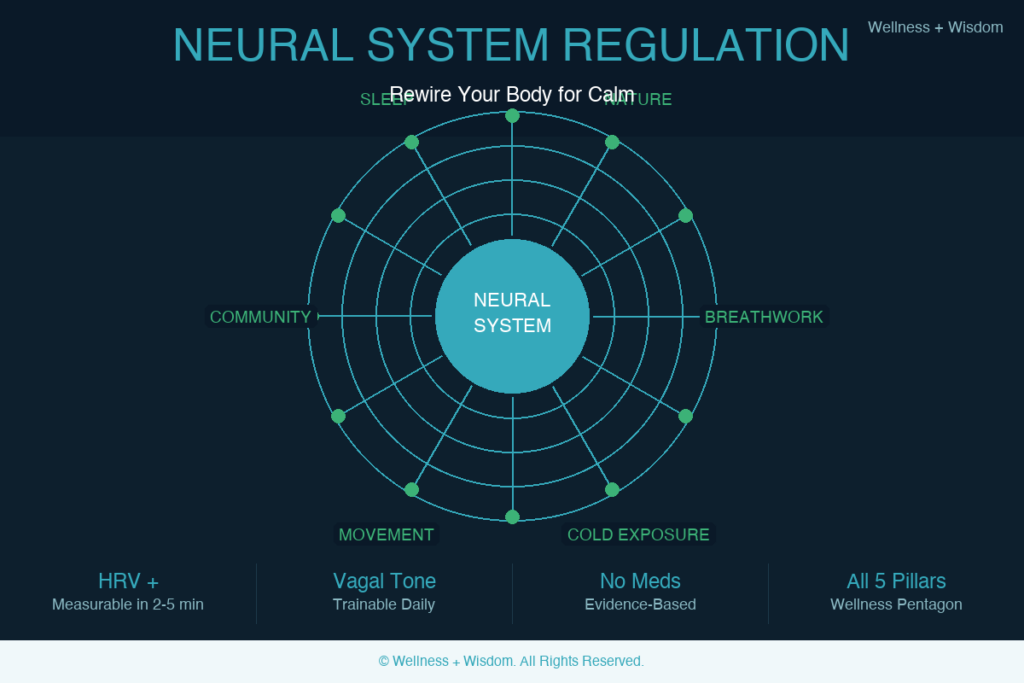
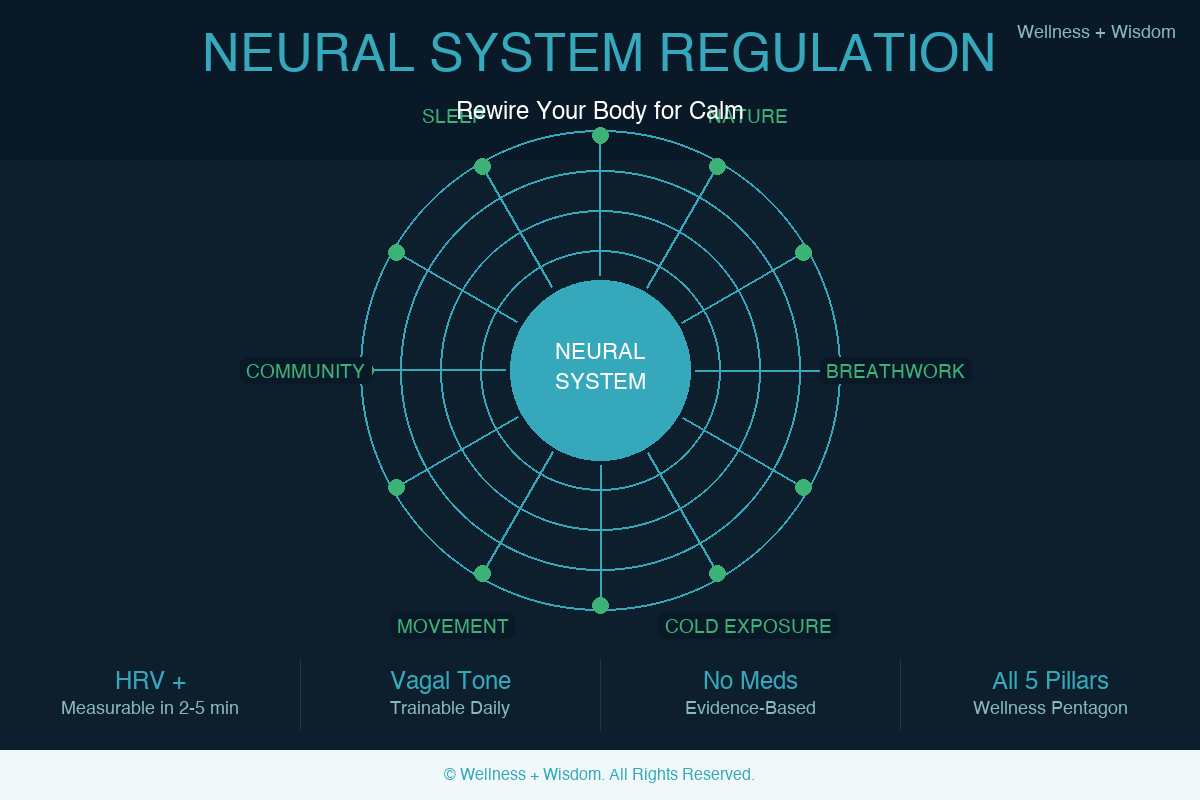
One of the core teachings of the Wellness Pentagon is that all five dimensions of whole-person wellness are interconnected and mutually reinforcing. Physical. Mental. Emotional. Spiritual. Financial. Neglect any one of them and the others are pulled out of balance.
Neural system regulation sits at the intersection of all five.
Physical wellness is impossible to maintain long term without neural system regulation. Chronic sympathetic dominance creates systemic inflammation, disrupts hormonal balance, impairs sleep, and degrades immune function. Every physical health goal you have, whether it is body composition, energy, longevity, or reduced pain, is downstream of your regulatory capacity.
Mental wellness requires the ability to think clearly, to access the prefrontal cortex's capacities for planning and perspective rather than being hijacked by the amygdala's threat response. When your neural system is dysregulated, you are chronically thinking from the state of a threatened animal, not from the integrated intelligence of a grounded human being.
Emotional wellness is the capacity to feel the full range of your emotional experience without being overwhelmed by it or cutting it off. This requires a regulated neural system as its foundation. You cannot develop genuine emotional intelligence while living in a chronically activated body.
Spiritual wellness involves the capacity for presence, receptivity, wonder, and connection to something larger than the ego's survival agenda. The sympathetic fight-or-flight state is physiologically incompatible with these states. You cannot be simultaneously braced for threat and open to transcendence. Regulation is the prerequisite for spiritual aliveness.
Financial wellness requires creative thinking, long-term perspective, risk tolerance calibrated to reality, and the ability to make decisions from a state of resourcefulness rather than scarcity. Every financial behavior pattern that undermines wealth building, impulsive spending, avoidance of money altogether, fear-based hoarding, has a neural system correlate in the dysregulated threat response.
When you commit to neural system regulation, you are not just working on one dimension of wellness. You are improving the foundation from which all five dimensions can flourish. This is why I call it the most important holistic health practice of our time.
To go deeper on the Wellness Pentagon as a complete framework, explore the L.I.F.E. Method programs, where we apply all five dimensions in an integrated six-week journey. And listen to the latest episodes of the Wellness + Wisdom Podcast for guest conversations about each dimension in depth.
Building a Daily Neural System Regulation Practice That Lasts
Information is not transformation. Knowing that breathwork shifts HRV does nothing if you never actually do the breathing. The gap between knowing and doing is the entire field of embodiment, and closing that gap is the work of the L.I.F.E. Method.
Here is what a sustainable, effective daily neural system regulation practice actually looks like in the real world.
Morning Anchor Practice (5 to 10 Minutes)
Before your phone. Before coffee. Before the demands of the day enter your body as tension.
Start supine or seated. Five cycles of extended exhale breathing to shift your baseline from sleep state into waking parasympathetic tone. Then two to three minutes of body scanning, simply feeling where you are holding tension without trying to fix it. Then five minutes of resonance frequency breathing at five seconds in, five seconds out.
This ten-minute sequence is not a spiritual ritual (unless you want it to be). It is neural system hygiene. Like brushing your teeth, it is a daily maintenance practice that keeps the system functioning cleanly.
Midday Reset (2 to 3 Minutes)
The data on cortisol patterns shows that most people hit a secondary sympathetic peak in the early afternoon, often compounded by caffeine, sedentary work, and accumulated stress load. A two-minute midday reset, which is literally just the extended exhale breathing practice described above, can intercept this peak and prevent the afternoon energy crash and irritability that many people normalize as just how afternoons feel.
Set a phone reminder at 1 PM. Put your feet flat on the floor. Close your eyes. Breathe. Two minutes. Done.
Evening Wind-Down Practice (5 Minutes)
The sixty minutes before sleep are a critical window for neural state transition. The goal is to shift from the day's sympathetic residue into the parasympathetic dominance that allows for deep, restorative sleep.
Five minutes of breathwork, specifically humming or toning if you are alone, or extended exhale breathing, combined with dimmed light and a screen-free environment, sends a clear signal to your autonomic system that the survival mode shift is over and recovery can begin.
The Role of Consistency Over Intensity
One thing I want to be direct about: neural system regulation is built through daily repetition, not through occasional dramatic interventions. A ten-day silent retreat followed by eleven months of phone-scrolling and cortisol loading is not a regulation strategy. It is a vacation. The ten minutes per day you put in every single day for a year builds far more lasting regulatory capacity than any weekend intensive.
This is the core teaching of the BREATHE Program. Consistency is the compound interest of neural system health. Every day you practice, you are making a deposit into the regulatory account that your body will draw on when life gets hard.
Working with the L.I.F.E. Method for Deeper Regulation
For those who want to go beyond daily maintenance into the deeper work of clearing the stored trauma and inherited patterns that keep the neural system running hot as a default, the L.I.F.E. Method is the integrated container I created for exactly that.
L.I.F.E. stands for Love, Integration, Forgiveness, and Embodiment. It is a six-week program that combines breathwork, Emotional Epigenetics education, somatic processing, and community accountability to address not just the current dysregulation but the upstream patterns, inherited or self-created, that produced it.
I cover the Emotional Epigenetics foundations in detail on the Wellness + Wisdom Podcast, and I regularly share practice tools, episode breakdowns, and community conversations inside the Liberated Life Tribe. If you are ready to take your neural system regulation practice beyond individual techniques and into genuine transformation, that community is where the work deepens.
You can also explore the W+W store for tools, courses, and resources designed to support your ongoing regulation practice, and read more on the Wellness + Wisdom blog for the full archive of science, tools, and teachings.
What the Research Tells Us About Long-Term Outcomes
The research on sustained breathwork and neural regulation practice is genuinely encouraging. HRV biofeedback studies show measurable improvements in autonomic baseline within four to eight weeks of consistent practice. Somatic movement studies show structural changes in interoceptive brain regions within eight to twelve weeks. And the broader literature on contemplative practice documents measurable shifts in baseline cortisol, inflammatory markers, and self-reported wellbeing across practice periods of three months and longer.
Your neural system is plastic. It was shaped by experience and it can be reshaped by experience. That is the entire premise of both neuroplasticity and the Emotional Epigenetics work I teach.
The question is never whether change is possible. The question is whether you are willing to show up for the daily practice that makes change inevitable.
Ready to Take Your Neural System Regulation Practice to the Next Level?
Your body already knows how to regulate itself. It just needs the right conditions and the right community to rebuild that capacity fully. Join thousands of people who are living proof that real, lasting calm is possible without medication, without expensive devices, and without years of talk therapy alone.
Frequently Asked Questions About Neural System Regulation
What is the fastest way to reset my neural system in the moment?
The fastest evidence-based technique for an acute neural system reset is the extended exhale breath. Inhale through your nose for four counts, then exhale slowly through slightly pursed lips for eight counts. Repeat five to ten times. This directly activates the parasympathetic branch of your autonomic system through the vagal afferent pathway in the diaphragm. Most people notice a physical shift within two to three cycles. The 2025 research on slow breathing confirms this works in as little as two minutes for most adults.
Can you regulate your neural system without medication long term?
Yes. The peer-reviewed research from 2025 and 2026 confirms that non-pharmacological interventions including breathwork, HRV biofeedback, somatic movement, cold exposure, and nature immersion produce measurable and lasting improvements in autonomic regulation without medication. These practices work by building the body's own regulatory capacity rather than chemically overriding it from outside. Long-term regulation without medication requires consistent daily practice, not occasional intensive interventions, and is supported by community and somatic education structures like the L.I.F.E. Method.
What are vagal tone exercises and why do they work?
Vagal tone exercises are practices that stimulate the vagus nerve directly, increasing its resting tone and improving the body's ability to shift into parasympathetic (rest and recovery) states. The vagus nerve runs from the brainstem through the chest and abdomen, connecting the brain to the heart, lungs, and gut. High vagal tone is associated with greater emotional regulation, better digestion, improved immune function, and stronger resilience to stress. Exercises that raise vagal tone include extended exhale breathing, humming and toning, cold water immersion, slow resonance frequency breathing at six cycles per minute, and diaphragmatic nasal breathing. These work because they directly stimulate vagal afferent fibers that send regulatory signals to the brainstem and shift autonomic balance toward parasympathetic dominance.
How long does it take to see real changes in neural system regulation?
Research on HRV biofeedback and breathwork shows measurable improvements in autonomic baseline within four to eight weeks of consistent daily practice. The key word is consistent. Two to ten minutes per day every day builds regulatory capacity far faster than occasional longer sessions. Most people report subjective improvements in stress resilience, sleep quality, and emotional steadiness within two to three weeks of daily practice. Structural changes in the interoceptive brain regions associated with body awareness and emotional regulation have been documented within eight to twelve weeks of sustained somatic practice.
Is there a connection between childhood trauma and neural system dysregulation?
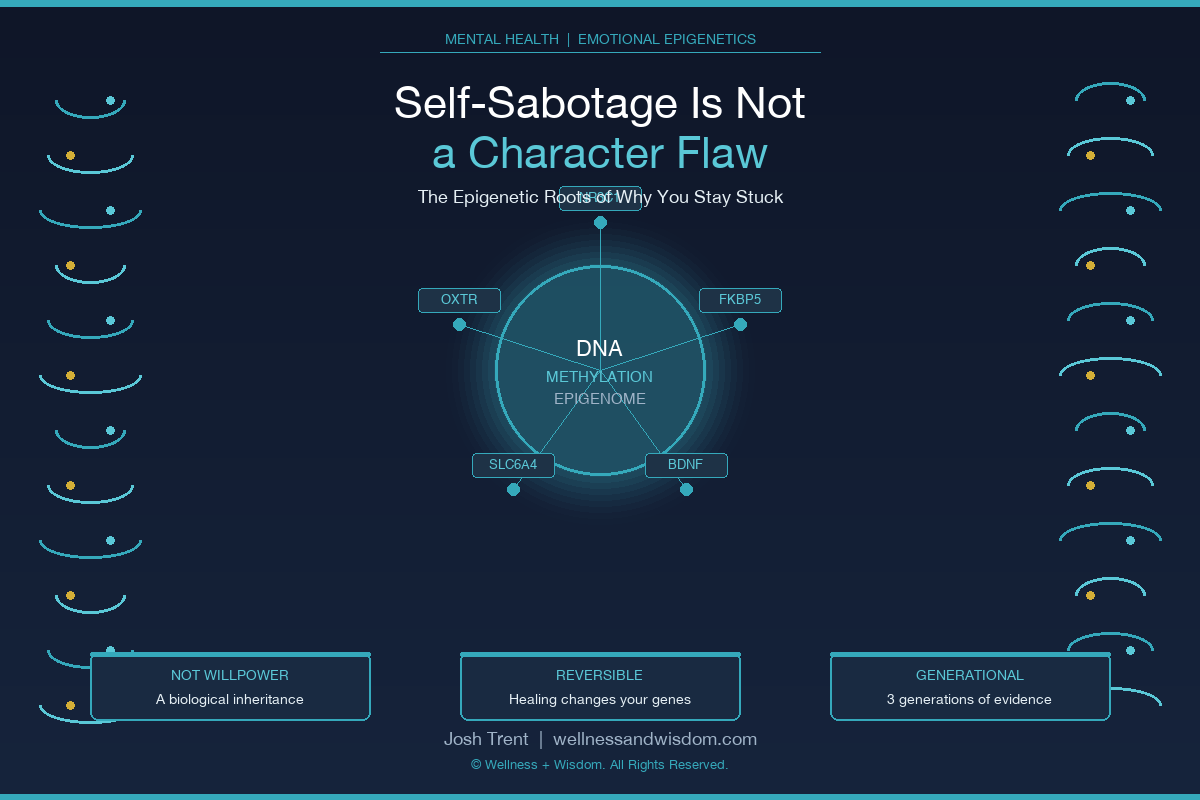
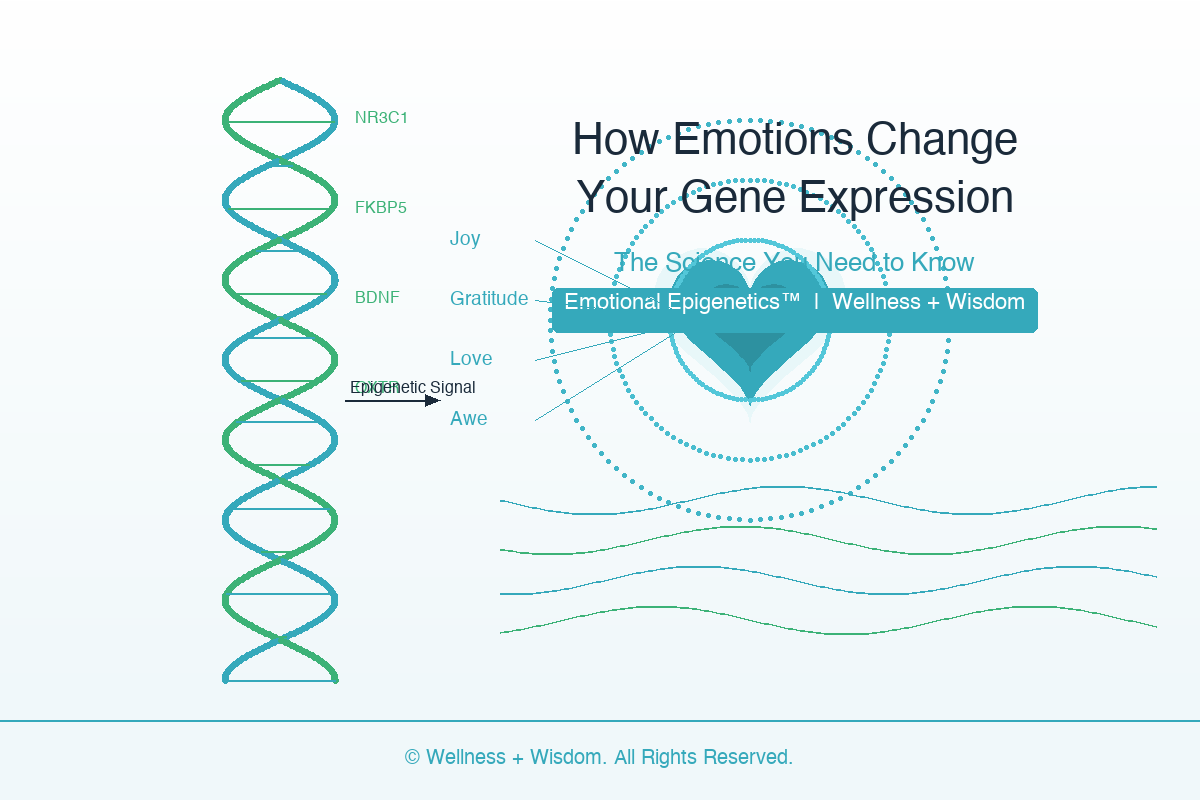
Absolutely, and it is one of the most important connections in all of mental health science. Chronic stress and trauma in childhood produce epigenetic changes on genes that govern the stress response, including NR3C1 and FKBP5, which regulate the body's ability to shut off cortisol after a stressor has passed. When these genes are altered by early adversity, the neural system defaults to a higher baseline of activation and has a reduced capacity to return to rest. This means many adults who struggle with chronic anxiety, hypervigilance, or difficulty calming down are not just dealing with current life stressors. They are working with a neural system that was calibrated to a more threatening environment during a formative developmental window. Trauma-informed somatic work and breathwork address this at the level where it was inscribed.
What is the difference between a neural system reset and neural system regulation?
The terms are often used interchangeably in wellness culture, though “neural system regulation” is the more accurate and comprehensive term. A “neural system reset” typically refers to an acute intervention that temporarily shifts your autonomic state, which is valuable but not the whole picture. Neural system regulation refers to the broader, ongoing process of developing autonomic flexibility and resilience as a baseline capacity. Think of it this way: a neural system reset is like closing the apps that are running your phone too hot. Neural system regulation is upgrading the operating system so it runs more efficiently at all times and handles future load better. Both matter, and the daily practices I describe in this article accomplish both simultaneously when done consistently.
About Josh Trent
Josh Trent is the founder of Wellness + Wisdom and one of the leading voices in the intersection of science, breathwork, and embodied transformation. With over a decade of work in the wellness space and more than 500 episodes of the Wellness + Wisdom Podcast, Josh has interviewed the world's foremost researchers, clinicians, and practitioners in neural system regulation, Emotional Epigenetics, and human optimization.
Josh created the L.I.F.E. Method, a six-week embodied transformation program combining breathwork, somatic healing, Emotional Epigenetics, and community, as well as the BREATHE Program, a dedicated breathwork practice curriculum rooted in the latest science on autonomic regulation.
His mission, grounded in the Wellness Pentagon framework, is to help people globally step out of self-sabotage and inherited patterns so they can live their lives from authentic joy. He lives in Dripping Springs, Texas, with his family.
Connect with Josh on the Wellness + Wisdom Podcast, explore his work at the press kit, or join the free Liberated Life Tribe community to begin your neural system regulation journey alongside thousands of others who are choosing freedom over fear.
This article is for educational purposes only and does not constitute medical advice. Always consult your healthcare provider before modifying or discontinuing any treatment or medication.