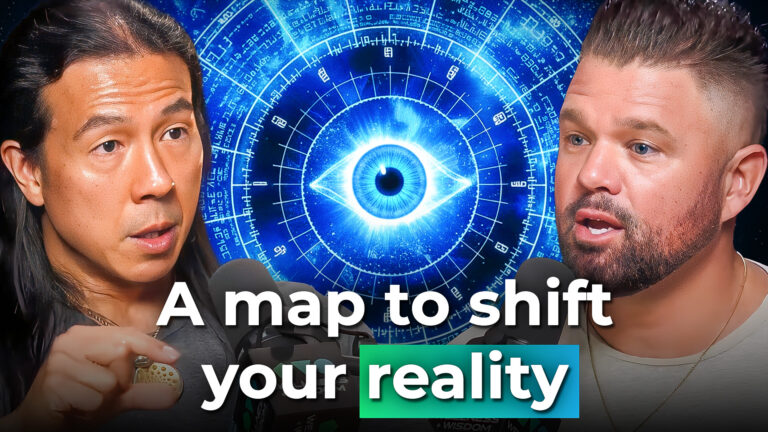
Psychiatrist Reveals: Psychedelics Won’t Fix The Life You’re Hiding From (Will Van Derveer, MD)

Psychiatrist Reveals: Psychedelics Won't Fix The Life You're Hiding From (Will Van Derveer, MD)

PODCAST INTRO

What if your psychedelic journey is helping you avoid the very thing you need to feel?
Josh Trent welcomes Will Van Derveer, MD, co-founder of the Integrative Psychiatry Institute, to the Wellness + Wisdom Podcast, episode 836, to explore why psychedelics open a door for healing, but you actually have to do the work, and why real healing means building the capacity to feel everything.

In This Episode, Will Van Derveer, MD, uncovers:

[01:25] Why Psychedelics Don’t Work for Everyone

  • How nothing works for everyone, including antidepressants, because every nervous system, every receptor, and every social environment is genuinely different.
  • Why an insight from a journey can feel absolutely true the morning after and then fade entirely without the hard work of actually making changes in daily life.
  • How the body does not speak in words, and why clinical training that never addresses the felt sense in the body misses most of the signal.
  • How Will met a Buddhist teacher at the end of his residency who led embodied meditation practices where 300 people would spend an hour on their backs locating and releasing tension, and how that changed everything for him as a clinician.

Resources:

[08:55] Why Mental Illness Becomes Intractable

  • Why Gabor Maté said intractable mental health conditions are intractable because most treatments never reach the root.
  • How the fight or flight response in the midbrain will override every form of human potential including creativity, love, and problem-solving, every single time.
  • Why the nervous system’s number one job is to survive and not to feel good, and why understanding that changes how you approach healing.
  • Why intractable means being trapped inside a trauma pattern in the nervous system that will not release through willpower, medication, or talking alone.
  • Addiction is the opposite of connection, either to self or to others, and why that framing cuts through most of what psychology tries to explain in fifty pages.
  • How microplastics, forever chemicals, and the constant bombardment of social media represent a kind of environmental toxicity that is genuinely new in human history.

Resources:

[14:30] The MDMA Study That Changed Everything

  • How getting involved in MDMA clinical research roughly fifteen years ago was the moment everything converged for Will.
  • Why before that moment he was quietly going to ayahuasca ceremonies in South America but felt his hands were tied in his clinical practice because he could not discuss it with patients.
  • How the people who entered the PTSD study had, on average, 30 years of PTSD symptoms, had tried hundreds of therapy sessions, and had made earnest committed efforts to get well without result.
  • How two-thirds of the participants walked out of the study no longer meeting the diagnostic criteria for PTSD after three sessions.
  • Why Will calls that result miraculous because the word cure is essentially never used in psychiatry, yet what he witnessed warranted it.

[18:35] What Can Go Wrong in the Ceremony Space

  • How Josh developed a complex OCD that lasted over two years after attending a poorly facilitated ceremony with 8,500 people that he cannot name because of an NDA.
  • What it took to come back: finding a mentor who gave him specific prayers and repersonalization practices, and over two years of patient daily work.
  • How Will has treated people he calls refugees who had long and devastating integration experiences after ceremony with difficult journeys that lasted years.
  • Why 5-MEO-DMT has left seasoned psychonauts with decades of experience saying they were not themselves for more than a year afterward.
  • Why the danger does not live only in ayahuasca and why staying away from one substance does not mean you are protected from a difficult long-term integration.
  • Why shady shamans using dark energy to compete with neighboring shamans are a real phenomenon and why one of Will’s patients was repeatedly sexually assaulted by the shaman she was working with.

[24:10] Time, Set, and Setting

  • Why denying that evil exists in this space is foolish and why going in with eyes wide open is what preparation actually means.
  • How Will thinks about two distinct groups: people in acute clinical need where psychedelic intervention can be life-saving, and people in personal growth where the conversation is entirely different.
  • Why for someone who is thinking about suicide or using alcohol to manage their suffering, finding the right holding environment as quickly as possible matters enormously.
  • How people have been accessing altered states for thousands of years without putting anything in their mouth through breathwork, singing, chanting, and drumming.
  • How Will sat in ceremony with a Brazilian shaman who uses only singing, drumming, and water offerings in the Umbanda tradition and had a full psychedelic experience with somatic releases and visualizations.
  • Why the pill is not the thing doing it, and why the ancient technologies for entering altered states are often safer and more measurable.
  • Why the most important question before any journey is not what medicine to take but what is your intention and why are you doing this at all.

[31:40] Can Plant Medicine Heal Your Pain?

  • Why the goal of healing is not to feel less bad but to build the capacity to feel everything that is being offered.
  • How the universe and the totality of human experience are equal in dark and light, and how trauma collapses that balance into much more darkness than light.
  • Why the American cultural reflex of moving toward feeling good and away from feeling bad is itself a preparation problem before any psychedelic journey.
  • How one of the most valuable things that can happen in psychedelic work is an expansion of capacity across the full spectrum of emotion, not a narrowing toward only the pleasant.
  • How Josh’s two years of integration after the difficult ceremony brought him to a place of not regretting what happened and being able to speak about it clearly and honestly.

[34:50] Psychedelics Open a Door But You Have to Walk Through It

  • How the phrase that came to Josh is that psychedelics open a door but you still have to have the courage to see what is behind it.
  • Why you can go inside a psychedelic journey and consciously or unconsciously avoid the very thing that needed to be seen, especially if you have spent years developing the mental muscle over every other kind of intelligence.
  • How our culture has made the mental approach to healing seem legitimate while treating somatic and embodied approaches as lesser, and how that has produced some of the most defended people Will has ever sat with.
  • Why the highest form of intelligence in a healing context is actually not thinking but feeling and why our culture has those backwards.

[38:50] The FDA, Ibogaine, and the Caution Flag

  • Why Will approaches the double-blind placebo-controlled trial with both respect and skepticism, because the design wipes out almost everything relevant to how healing actually works in real life.
  • What the Trump executive order on psychedelics in April 2026 actually did and did not do: it accelerated FDA review for substances that have already completed the clinical trial pipeline, which ibogaine has not.
  • Why many people came away from that news conference believing ibogaine was about to be widely available when in reality it is among the furthest behind in the approval process.
  • How ibogaine can cause serious cardiac arrhythmias and has been linked to over thirty deaths in the medical literature, making it the most medically risky psychedelic substance currently under discussion.
  • Why ibogaine carries extraordinary promise alongside real cardiac risk and why rolling it out without rigorous research could produce a rapid backfire that sets the whole field back.
  • How a journey with ibogaine can last up to 72 hours and why that alone raises the question of whether it is the right vehicle for the kind of healing being sought.

[44:30] Who Should Never Take Psychedelics

  • Why teenagers are generally not appropriate candidates because the years between roughly 17 and 24 are when psychotic disorders including schizophrenia first manifest, often for the first time.
  • How LSD and other psychedelics have almost certainly triggered first-break psychotic episodes in young people who might not have developed them otherwise, and why that risk cannot be studied ethically in trials.
  • Why a family history of schizophrenia makes psychedelic work a serious contraindication regardless of age.
  • How Josh wonders whether his own difficult ceremony experience was at least partly a product of his epigenetic signature from his bipolar mother.
  • The effects of lithium for curing depression.
  • How treating someone for the wrong condition for a decade is one of the most humbling things a clinician can experience.
  • What Will missed that led to the misdiagnosis.

[52:20] The Root of Mental Illness

  • Why mental illness is primarily a hardware problem and how it seems more likely to him that most of what we call mental illness is stuck energy that never had a safe pathway to move through.
  • How the anti-seizure drugs used to treat bipolar, including Depakote and Lamictal, point toward a strange sibling relationship between epilepsy and bipolar that raises questions about what electricity and energy are actually doing in these states.
  • How identical twin studies show that the same genetic load for bipolar or schizophrenia does not produce the same outcome in different family environments, which points directly at attachment and small T trauma as major factors.

[58:10] Chronic Childhood Trauma Is More Damaging Than Big T

  • What predisposes someone to a psychotic break.
  • Why your sense of who you are and what is possible for your life is largely determined by how you were treated as a child and what you were implicitly taught to believe about yourself.
  • How messaging like “your needs are not important to me” or “you’re a burden” delivered consistently over years creates a person who doubts their own worth at the cellular level.
  • Why children before the age of seven are essentially in a psychedelic state themselves, with hemispheres connected and neurogenesis producing millions of new connections daily.
  • How parents trampling those roses without knowing it represents one of the most widespread and unconscious forms of intergenerational harm.
  • Why Josh believes going back through psychedelics or any deep healing modality to see what happened, not to know why it happened, produces a kind of liberation that explanation alone can never touch.

[01:01:05] The Infant Alone on the Floor

  • How two patients dying by suicide in the same week cracked open something in Will that he had not known was there.
  • How he reached out to Gabor Maté saying he was quitting psychiatry and how Gabor replied by asking what was under the pain rather than engaging with the career question at all.
  • How that led him into a psychedelic session where he found himself as an infant, alone, covered in vomit and feces, unable to understand where anyone was.
  • What he found when he called his mother the morning after about the first week of his life.
  • How the father, not yet mature enough for what was required, told a neighbor in their student housing to check on the baby if they heard screaming, and likely went to play golf.
  • How that first week alone in his body produced a precocious self-sufficiency, an Eagle Scout personality, and a lifelong pattern of finding it terrifying to let in care and support from others.

[01:08:10] Drawn to Heal The World

  • How Will arrived at college intending to be a museum curator with a double major in French and art history and a plan to live in Europe.
  • Why studying art history pulled him into anthropology of tribal healing rituals in Papua New Guinea and remote Southeast Asia.
  • How at 21 years old he got access to interview people in the throes of active psychotic episodes in the hospital next to his campus.
  • How Mark Wolynn’s research on intergenerational trauma and amygdala-stored memory connects to why the deepest healing experiences do not surface in ordinary memory but in something more primal and pre-verbal.

Resources:

[01:11:15] The Price of Not Grieving

  • Why grief, sitting at 75 on the Hawkins scale, has a certain payoff because people offer sympathy and warmth, and why that payoff can become its own form of staying stuck.
  • Why the Buddhist teaching that life is suffering is actually talking about the attachment to the story about what is happening, not about pain being inherent to existence itself.
  • How the Tibetan teachers Will has spent time with can have cancer and dementia and still be the happiest people in the room, because the distance between having an experience and accepting it has essentially collapsed.
  • Why gratitude is not the same as acceptance but is actually beyond it, the place where you recognize you would not want the painful thing taken away because of what it made you.
  • How the grief we do not process becomes the fuel for dysregulation, inflammation in the body, and the victim identity that keeps people from moving forward.
  • How everyone on the Karpman drama triangle is cycling through the roles and why as a clinician the exit from the rescuer position requires constant mindfulness.
  • Why the mentor’s advice Will carries is to never dig up the treasure the patient needs to dig up themselves, because it is not yours to excavate.

Resources:

[01:18:10] Non-Directive Is the Only Safe Direction

  • How the acronym Will teaches facilitators in training is WAIT, which stands for Why Am I Talking.
  • Why when in doubt in a psychedelic session the best move is to say nothing at all and let the person’s own process lead.
  • What the difference is between a question that opens a person’s curiosity and a question that takes them in a specific direction toward something the facilitator has already decided.
  • How music is itself a form of direction, because the wrong song can instantly transport someone back to a painful memory.
  • How the field was built by people who learned the hard way over decades that the non-directive approach produces better outcomes and fewer casualties than the directive one.

[01:20:25] Stop Chasing Change Through Plant Medicine

  • Why genuine personal growth is boring and repetitive and nothing like the story of the experience itself.
  • Why the trip report is appealing to share and the daily reps are not, and how that imbalance keeps many people chasing state changes rather than building a different life.
  • What the whole point of spiritual practice is.
  • How after approximately 75 ayahuasca sessions Will started hearing a message to go back and do his actual work, and then went back a second time still hoping to become an apprentice shamanic practitioner.
  • What the medicine said to him in one of his last sessions.
  • How a deeply painful first marriage was the thing he was avoiding when he kept returning to ceremony.

[01:26:40] Biology at War with Reality Is Disease

  • How many buildings in every downtown skyline were built by men who were running away from something rather than toward something.
  • When a person is not swimming against the current of their own life, they have a felt sense that they are woven into the fabric of the universe in a way that is fundamentally harmonious.
  • How at the cellular level, the organ level, and the energetic level, swimming against that current creates problems.
  • Why dis-ease is an accurate description of what happens biologically when the body is in a constant state of resistance to what is.
  • How false prophets market healing experiences they have not actually gone through themselves.
  • Why the marketing hook of any healing path is always the peak experience and why that promise of more good than pain is exactly what makes people susceptible to giving their healing away to someone else.
  • How the manager part of a healer is the part that gets too invested in the outcome and why that is usually where childhood wound patterns show up in clinical work.

[01:34:10] Science Is Just Spirituality With a Lab Coat

  • How the FKBP5 gene and its role in regulating the stress response is one of the places where epigenetics and intergenerational trauma get a biological address.
  • Why Will loves moving back and forth between the neuroscience and the spiritual framework because he experiences them as different languages for the same reality.
  • How American healing is largely organized around getting back to “I’m good” as the destination, and why that framework makes it almost impossible to use pain as a genuine starting point for development.
  • Why promising more pleasure than pain in a healing container is a form of dishonesty that sets people up for long integration difficulties Will has seen in his practice.
  • The role of a therapist in a psychedelic session.

[01:39:55] The Real Value of Psychedelic Therapy

  • How the reps accumulated over many years are what actually produce the exhale that everyone is seeking, not any single revelation or session.
  • Why Josh’s difficult ceremony in Costa Rica came in part from a come-from of scarcity, of “God, heal me,” and why that specific orientation makes someone more vulnerable.
  • How psychedelics, done really well with skilled guidance and proper integration, are genuinely subversive.
  • What seeing the forest for the trees actually means is identifying the concessions you made, the moments you stopped speaking up, the places you put on the straitjacket.
  • Why identifying the doors inside a session means nothing unless you do the daily work of walking through them.
  • How the whole spectrum of this life, including the pain and the beauty and the awe and the confusion, is what psychedelic therapy at its best helps a person stop flinching from and swim into more fully.

Leave Wellness + Wisdom a Review on Apple Podcasts


All Resources From This Episode


Josh’s Trusted Products | Up To 40% Off

Disclosure: We may earn a commission from certain links on this site when you make a purchase, at no extra cost to you. These commissions help support Wellness + Wisdom and do not affect the products or resources we choose to recommend. Full disclosure .

Biohacking⁠

Wellness Test Kits

Focus + Be Present

Nutrition + Gut Health

Supplements

Sleep

Natural Energy

Fitness + Physical Health

Healthy Home

Mental Health + Stress Release

Personal Care⁠

Mindfulness + Meditation

Clothing

About

Will Van Derveer, MD
Will Van Derveer, MD is New York Times bestselling coauthor of Psychedelic Therapy: Restore Your Mental Health and Reclaim Your Life (2026). He is co-founder of Integrative Psychiatry Institute, which has provided comprehensive training for several thousand mental health professionals in various integrative mental health continuing education programs. In addition to his psychiatry practice and teaching, he has staffed clinical trials sponsored by MAPS, investigating MDMA-assisted psychotherapy for chronic, treatment-resistant PTSD.
Start Your
Self-Liberation Journey

Get the free Self-Liberation Blueprint™ and join the Liberated Life™ Tribe—your guided entry point into identity transformation, breathwork, and embodied awareness.

Share this Post

Know someone who would love this episode? Share it with your network.

health

About Josh Trent

Josh Trent lives in Austin, Texas with his love Carrie Michelle, son Novah, daughter Nayah + a cat named Cleo. He is the host of the Wellness + Wisdom Podcast and the creator of the BREATHE: Breath + Wellness Program. Josh has spent the past 20+ years as a trainer, researcher + facilitator discovering the physical and emotional intelligence for humans to thrive in our modern world. Helping humans LIBERATE their mental, emotional, physical, spiritual + financial self through podcasts, programs + global community that believe in optimizing our potential to live life well.

More Podcast Episodes For You....
Birth Alchemist: Birth Doesn't Have to Traumatize You (Do This Before Labor)
Self-Sabotage is a Lie: The Hidden Duality Keeping You Stuck | Dr. John Demartini
Spiritual Freedom: The Secret To Reclaiming Your Soul From Chaos (Tah Witty)
Relaxing mental health practices for holistic well-being and mindfulness.
T10-Kyle-Cease-x-Wellness-W
T3-Steven-Young

About

Will Van Derveer, MD
Will Van Derveer, MD is New York Times bestselling coauthor of Psychedelic Therapy: Restore Your Mental Health and Reclaim Your Life (2026). He is co-founder of Integrative Psychiatry Institute, which has provided comprehensive training for several thousand mental health professionals in various integrative mental health continuing education programs. In addition to his psychiatry practice and teaching, he has staffed clinical trials sponsored by MAPS, investigating MDMA-assisted psychotherapy for chronic, treatment-resistant PTSD.
self-liberation blueprint
Start Your
Self-Liberation Journey

Get the free Self-Liberation Blueprint™ and join the Liberated Life™ Tribe—your guided entry point into identity transformation, breathwork, and embodied awareness.

Share this Episode

Know someone who would love this episode? 

Share it with your network.
You’re Not Stuck—You’re Missing the Right System

Unlock your free Self-Liberation Blueprint™ today.
This field is required.

If you feel like you’ve tried everything but nothing sticks, it’s not your fault. This free Self-Liberation Blueprint™ reveals the missing piece.

 What if the reason you still feel stuck isn’t because you’re broken, but because no one ever showed you how to transform your identity from the inside out? The Self Liberation Blueprint™ gives you 10 days of proven tools + expert guidance to experience that shift, right now.
This field is required.

If you feel like you’ve tried everything but nothing sticks, it’s not your fault. This free Self-Liberation Blueprint™ reveals the missing piece.

 What if the reason you still feel stuck isn’t because you’re broken, but because no one ever showed you how to transform your identity from the inside out? The Self Liberation Blueprint™ gives you 10 days of proven tools + expert guidance to experience that shift, right now.
This field is required.
Affiliate Disclosure  ·  As an Amazon Associate I earn from qualifying purchases.