Why You Fight: The Hidden Wound Behind Every Argument (Kim Polinder)

Why You Fight: The Hidden Wound Behind Every Argument (Kim Polinder)
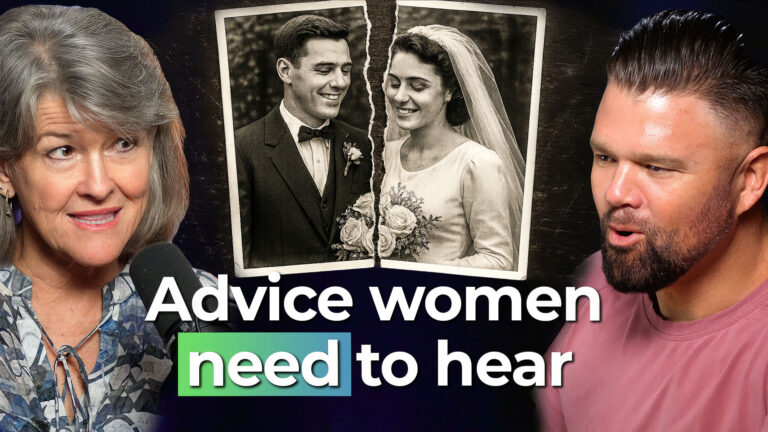
What if the fight you keep having with your partner is not about them at all, but about a wound that formed in your childhood?
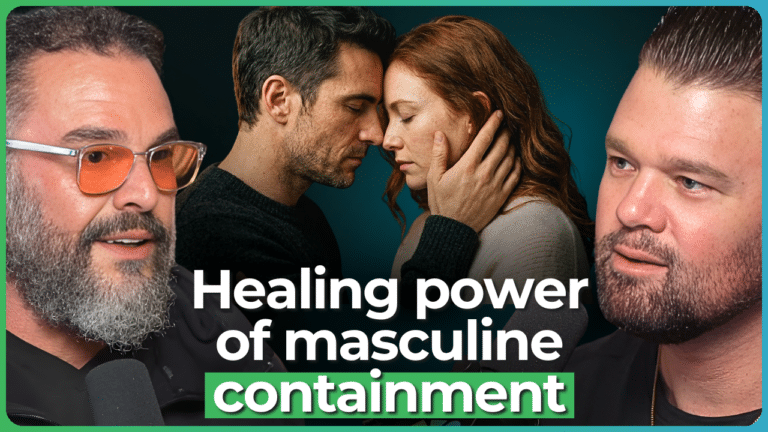
Josh Trent welcomes Kim Polinder, relationship therapist and author of Why We Fight, to the Wellness + Wisdom Podcast, episode 834, to explore why every recurring argument is a psychodrama from your earliest wounds playing out in the present, why self-awareness alone is never enough to change behavior in conflict, and how a five-step apology framework can turn the most exhausting fight into the most honest conversation you have ever had with the person you love most.


In This Episode, Kim Polinder Uncovers:

[01:15] The Fight Beneath the Fight

  • Why the same fight keeps happening over and over is one of the most universal relationship experiences.
  • How every recurring conflict is a psychodrama of your younger years playing out in the present.
  • What core wounds are and how they form the lens through which you see love, yourself, and the other person.
  • How the initial reactivity that comes from a core wound is absolutely changeable even if the wound itself stays.
  • Why remorse turns an apology from a performance into actual repair.
  • How you can feel the difference between authentic remorse and performative remorse before a single word is analyzed.

Resources:

[08:20] Why Gratitude Opens the Door to Repair

  • How the first step in a proper apology is gratitude because the way you open a conversation sets the entire tone.
  • Why research shows the first two to three minutes of a difficult conversation will determine how it goes.
  • What gratitude in an apology actually sounds like: thank you for being willing to hear me out.
  • Why harshness creates compression not expansion, and why that applies to every area of life not just relationships.
  • How ruling from force might get things done in the short term while building resentment in the long term.
  • Why someone who feels genuinely empowered is far more able to receive feedback without going defensive.

[12:10] The Anatomy of a Trigger

  • How the amygdala senses danger and sends signals that flood the body with adrenaline and cortisol.
  • Why regions of the brain needed for rational listening and executive function actively shut down during conflict.
  • How the brain’s number one job is to survive, not to love, and why everything can be explained through protectiveness.
  • Why people with tremendous self-awareness still get stuck because knowing why you do something is different from changing the behavior.
  • What actually helps when the prefrontal cortex goes offline: somatic approaches, breath, walking, bilateral stimulation.
  • How the window between trigger and tool shortens over time as the repetition builds new pathways.

[16:05] The Work That Makes Repair Possible

  • Why it takes more repetition than introspection to actually change behavior in conflict.
  • How the work of processing old patterns, whether from addiction or unhealthy relating, is what eventually makes naming a behavior possible.
  • Why step two of the apology framework, naming the behavior, requires being comfortable with feedback first.
  • How different people regulate in completely opposite ways.
  • Why we are drawn to partners whose regulation style is often the exact opposite of our own.
  • How owning the mindset is the toughest step because it requires owning the ugliness and still keeping your sense of self intact.

[19:55] The Childhood Wound

  • How Kim grew up as the only Korean person in a town of 3,000 people in rural Washington and learned early to fly under the radar.
  • How being a people-pleasing hero child was the strategy she developed to avoid triggering the threat of rejection.
  • Why in her 20s she genuinely believed she might be alone for the rest of her life because conflict felt too threatening.
  • How her background in IT engineering gave her a root-cause troubleshooting framework that she later applied directly to her own conflict patterns.
  • How she discovered that anger was not a general issue but was triggered by only one or two things connected to her core wound.

[24:20] The Belief You Choose to Keep

  • Why a belief is worth keeping when it is useful and produces peace, love, and expansion rather than a clenched fist.
  • How she chose to believe the story of her mother’s love and sacrifice rather than the story of abandonment, and why that choice is what opened everything else.
  • Why Viktor Frankl described the last of the human freedoms as the right to choose how you view yourself in any situation.
  • How Gabor Maté frames complex PTSD as not what happened to you but what you came to believe about yourself as a result.

[28:35] Own the Mindset

  • Why step three of the apology framework, owning your mindset, requires naming the ugliness of what actually drove the behavior.
  • How the same act of owning a mistake can produce two completely different internal outcomes depending on the belief behind it.
  • How mirroring emotions requires enough humility to say out loud, “I can see that I made you feel invisible.”
  • Why when someone is in a deep trigger they are genuinely time traveling back to an earlier wound rather than responding to the present moment.
  • Why compassionate curiosity is asking not why did you get so angry, but why did you get so angry.
  • How understanding the breadcrumbs leading back to a core wound makes it possible to add compassion instead of shame.

[34:15] The Price of Not Apologizing

  • How staying in the hormonal cascade of a trigger is like being drunk on norepinephrine and cortisol, and drunk people are not great at repair.
  • Why people who skip proper apology and repair end up stuck in a relationship that cannot move forward.
  • How expecting things to always be fair and equal in a relationship will produce endless disappointment.
  • Why the goal is moving both people a little toward the middle.
  • Why patience and compassion and curiosity are essentially the same skill under different names.
  • How cognitive behavioral therapy works for changing beliefs.

[39:35] Projection and the Power of Going First

  • Why people want change but typically want the other person or the world to change first so their own change becomes easier.
  • How removing someone from the prison of your projection energetically frees them, often producing the very behavior you have always wanted.
  • Why someone has to go first and vulnerability breeds vulnerability but no one wants to make that move.
  • How the Hindu concept of equanimity across emotional states points to a healthier version of every emotion including anger.
  • How anger becomes unhealthy when it stops being a primary response and becomes a secondary emotion covering sadness.
  • Why anger that lingers hours or days after a trigger is pointing to something deeper than the incident itself.

[43:00] What Suffering Teaches About the Soul

  • Why the problem of consciousness and the question of where it comes from remains unsolved by even the greatest philosophers.
  • How growing up in a conservative Christian home and receiving “it’s God’s will” as an answer to suffering left her in a confused and angry state.
  • How those unanswered questions became the fuel for a lifelong pursuit of what suffering actually is and how it ends.
  • Why the concept of a soul and the problem of consciousness can actually be approached from a fairly logical starting place.

Resources:

[48:35] When We Make a Promise We Cannot Keep

  • What showing remorse during an apology actually gives the other person.
  • Why empathy is the ability to be affected by someone else’s pain, and why that is a life-affirming experience for both the person giving it and receiving it.
  • How couples on average wait until year five or six of conflict before seeking help, and often arrive with one foot already out the door.
  • Why the biggest mistake in repair is promising you will never do it again rather than saying you are going to try and work toward it.
  • What to look for before deciding whether to stay or go: do they agree the behavior is an issue, and if so, what concrete thing are they doing to change it.
  • Why saying “I’m going to work on myself” with no tangible action attached is another dead end.
  • How “this is just the way I am” is communicating that their protectiveness is too comfortable to disrupt.

[55:20] Raw Honesty Requires Courage

  • Why the path out of relational stagnation is honesty, even though honesty sounds simple and rarely is.
  • What raw honesty in owning a mindset sounds like.
  • Why when someone says their childhood was fine, that is almost always the signal that there is significant childhood material to explore.
  • How conflict resolution feels wildly uncomfortable and probably always will, but the relationship grows precisely because of the willingness to go through it.
  • Why healthy conflict invites feedback, but drama replays the same script.
  • How the charge in a fight about a coffee cup in the sink is always pointing back to the fight beneath the fight.

[01:01:00] The Importance of Grace and Forgiveness

  • How forgiveness is not forgetting, not condoning, not reconciling, and not approving.
  • Why the golden marker of true forgiveness is being able to genuinely wish the other person well.
  • How the adoption wound specifically blocked Kim’s ability to receive grace because it held the belief that her own mother did not love her enough to keep her.
  • How tribal rejection is perceived by the brain as death, which is why belonging feels so urgent and rejection feels so catastrophic.
  • Why people get temporarily inspired by a book or podcast and then return to old patterns because old inertia is very strong.

[01:06:50] How to Give Yourself a Little More Grace

  • How the first step is identifying the top three things you believe are unacceptable or unlovable about yourself.
  • The importance of adding curiosity instead of judgment and tracing the experiences that formed that lens.
  • Why having almost no childhood memories is not a problem but actually indicates the brain was in survival mode and could not simultaneously form memories.
  • Why it is easier to access compassion when the process is externalized.
  • How the way Josh speaks to his children, replacing “I can’t” with “I’m learning,” is exactly how he is learning to speak to the young child inside of himself.
  • Why the way we speak to ourselves unconsciously all day would horrify us if we said it to someone we loved.

[01:12:15] Self-Awareness Is Not Always Enough

  • How the people who respond best to this book already have self-awareness but are stuck in the behavioral piece.
  • Why having a good enough lab partner accelerates everything because healing in isolation from a one-sided perspective simply does not work.
  • Why every mother on the planet believes she is a bad mother and why being triggered by your children is normal and not evidence of being broken.
  • How Josh traces his own awakening directly to having children, because his soul needed to learn about his inner child through his actual children.
  • Why the deepest intention of this work is to be able to connect deeply with others without feeling threatened.
  • How every child starts out openly loving, curious, and playful, and the work is simply peeling off the layers that keep us from being that again.

[01:16:25] All Roads Lead Back to Your Inner Child

  • How all roads in relationship work, whether Imago, Gottman, Tatkin, or Schwartz, circle back to loving the child that still lives inside of us.
  • Why every single person is navigating one of the core questions beneath every fight: am I lovable, do I matter, do you still want me.
  • How paying attention to what resonates is more important than following any particular system because people connect with a person not just a method.
  • Why Kim wants to help people feel resourceful toward their healing.

Leave Wellness + Wisdom a Review on Apple Podcasts


All Resources From This Episode


Josh’s Trusted Products | Up To 40% Off

Disclosure: We may earn a commission from certain links on this site when you make a purchase, at no extra cost to you. These commissions help support Wellness + Wisdom and do not affect the products or resources we choose to recommend. Full disclosure .

Biohacking

Wellness Test Kits

Focus + Be Present

Nutrition + Gut Health

Supplements

Sleep

Natural Energy

Fitness + Physical Health

Healthy Home

Mental Health + Stress Release

Personal Care

Mindfulness + Meditation

Clothing

About

Kim Polinder
Kim Polinder is a relationship coach and therapist. Formerly a Fortune 500 tech engineer, she left it behind to follow her passion for psychology and emotional healing. Armed with master’s degrees in Clinical Mental Health and Spiritual Psychology, Kim blends techniques from Cognitive Behavioural Therapy and inner child work.

Share this Post

Start Your
Self-Liberation Journey

Get the free Self-Liberation Blueprint™ and join the Liberated Life™ Tribe—your guided entry point into identity transformation, breathwork, and embodied awareness.

About Josh Trent

Josh Trent lives in Austin, Texas with his love Carrie Michelle, son Novah, daughter Nayah + a cat named Cleo. He is the host of the Wellness + Wisdom Podcast and the creator of the BREATHE: Breath + Wellness Program. Josh has spent the past 20+ years as a trainer, researcher + facilitator discovering the physical and emotional intelligence for humans to thrive in our modern world. Helping humans LIBERATE their mental, emotional, physical, spiritual + financial self through podcasts, programs + global community that believe in optimizing our potential to live life well.

More Podcast Episodes For You....
Alex Charfen: What A Woman Needs From A Man In A Relationship
Relationship Expert: Fighting Isn't What Destroys Love! It's What You Do After
Sheleana Aiyana | Toxic Love: How Your Hormones Keep You Addicted To Bad Partners
Nate-Lewis-A-Thumb
AlisonArmstrongV1c
741AMAv1

About

Kim Polinder
Kim Polinder is a relationship coach and therapist. Formerly a Fortune 500 tech engineer, she left it behind to follow her passion for psychology and emotional healing. Armed with master’s degrees in Clinical Mental Health and Spiritual Psychology, Kim blends techniques from Cognitive Behavioural Therapy and inner child work.

Share this Episode

self-liberation blueprint
Start Your
Self-Liberation Journey

Get the free Self-Liberation Blueprint™ and join the Liberated Life™ Tribe—your guided entry point into identity transformation, breathwork, and embodied awareness.

You’re Not Stuck—You’re Missing the Right System

Unlock your free Self-Liberation Blueprint™ today.

This field is required.

If you feel like you’ve tried everything but nothing sticks, it’s not your fault. This free Self-Liberation Blueprint™ reveals the missing piece.

 What if the reason you still feel stuck isn’t because you’re broken, but because no one ever showed you how to transform your identity from the inside out? The Self Liberation Blueprint™ gives you 10 days of proven tools + expert guidance to experience that shift, right now.
This field is required.

If you feel like you’ve tried everything but nothing sticks, it’s not your fault. This free Self-Liberation Blueprint™ reveals the missing piece.

 What if the reason you still feel stuck isn’t because you’re broken, but because no one ever showed you how to transform your identity from the inside out? The Self Liberation Blueprint™ gives you 10 days of proven tools + expert guidance to experience that shift, right now.
This field is required.
Affiliate Disclosure  ·  As an Amazon Associate I earn from qualifying purchases.