

By Dr. Alex Klein, DC | Cedar Park Chiropractic Relief
Where the Connection Begins
The trigeminal nerve is the primary pain-sensing nerve of the head and face. It converges in the brainstem at a region called the trigeminal nucleus caudalis, which extends down into the upper cervical spinal cord, as far as the C2 and C3 vertebral levels. This anatomical overlap means that irritation or dysfunction in the upper neck can directly sensitize the same pathways that are involved in migraine pain. Clinicians refer to this as the trigeminocervical complex.
When the joints and soft tissues of the upper cervical spine are restricted, inflamed, or moving poorly, they generate input into this shared pathway. Over time, that input can lower the threshold for migraine activation, meaning the nervous system becomes primed to produce a migraine response with less provocation than it otherwise would. This is part of why people with chronic neck tension are disproportionately represented among chronic migraine sufferers.
The Nervous System Angle
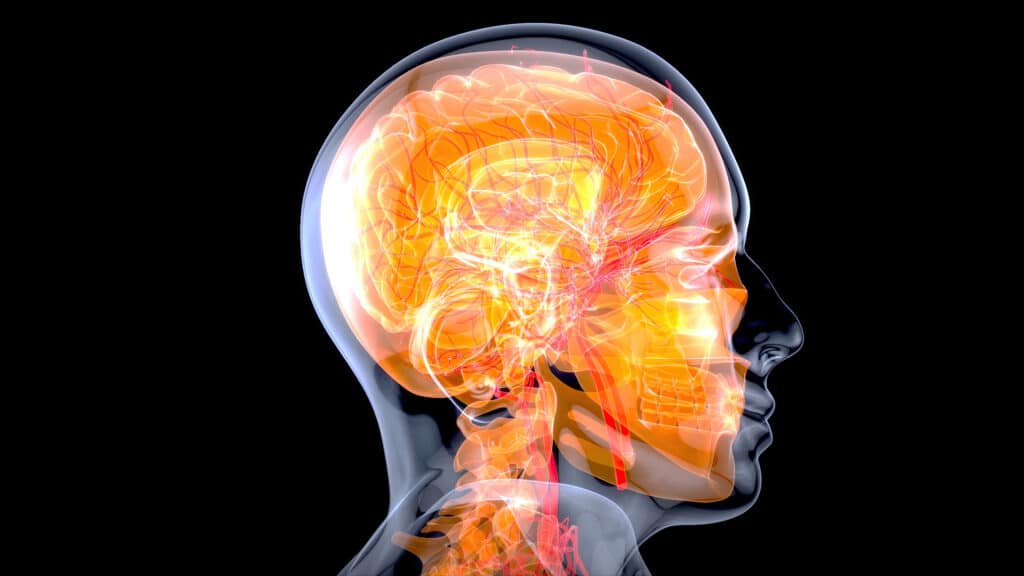
Migraines are fundamentally a neurological phenomenon. They involve a sensitized nervous system responding to triggers, whether those are hormonal, dietary, sensory, or structural, with an amplified and dysregulated pain response. The structural piece of that equation is the one most often overlooked in conventional migraine management.
Chronic tension in the suboccipital muscles, the small muscles at the base of the skull, can compress the greater occipital nerve and contribute to the characteristic pain pattern that radiates from the back of the head over the top and behind the eyes. Many people describe this as a migraine when it is technically a cervicogenic headache, which is a headache originating from the cervical spine. The distinction matters because the treatment approach is different, and getting it wrong means continuing to manage symptoms rather than addressing the source.
Even in cases of true migraine, cervical dysfunction often functions as a co-contributor that increases frequency and severity. Reducing that structural load on the nervous system does not cure migraine, but it can meaningfully reduce how often and how intensely the nervous system fires in response to other triggers.
What Chiropractic Assessment Looks For
A thorough evaluation of someone dealing with frequent migraines or headaches should include an assessment of cervical range of motion, joint mobility at each spinal level, muscle tension patterns in the neck and upper back, and postural alignment. These are not factors that typically get evaluated in a standard neurology or primary care visit focused on migraine management.
“A significant number of patients who come to me with what they call migraines have never had their cervical spine properly evaluated,” says Dr. Alex Klein, DC, owner of Cedar Park Chiropractic Relief. “When we restore normal movement to the upper cervical joints and address the chronic muscle tension that has built up around them, many of these patients see a real reduction in headache frequency. The nervous system responds to a reduction in structural stress. That is not a coincidence.”
Chiropractic adjustments to the upper cervical spine aim to restore proper joint mobility, reduce mechanical irritation to the surrounding nerves, and decrease the chronic muscle guarding that develops when the joints are not moving correctly. When that mechanical stress is reduced, the input into the trigeminocervical pathway decreases, and for many patients, so does migraine frequency.
The Role of Posture and Daily Habits
Forward head posture is one of the most common structural findings in people with chronic headaches and migraines. As the head shifts forward of its natural center of gravity, the suboccipital muscles shorten and tighten to hold the head up, the upper cervical joints compress, and the tissues around the base of the skull are placed under constant low-grade stress. This is not an acute injury. It is a postural pattern that develops over years of screen time, driving, and desk work, and it creates exactly the kind of persistent cervical dysfunction that feeds into the trigeminocervical system.
Sleep position matters as well. Sleeping on the stomach rotates the neck for hours at a time and is one of the more reliable ways to generate upper cervical joint restriction and muscle tension. Side or back sleeping with appropriate pillow support keeps the cervical spine in a more neutral position and reduces the structural load it is carrying overnight.
Working with Other Approaches
Chiropractic care for migraines works best as part of a broader approach rather than in isolation. Identifying and managing dietary and hormonal triggers, addressing sleep quality, managing stress, and staying well hydrated are all legitimate contributors to migraine management. The structural piece does not replace any of that. It addresses a layer that those interventions cannot reach.
For people who have been managing migraines primarily through medication, adding cervical assessment and care does not require stopping anything that is working. It is an additive intervention that reduces the overall load on a nervous system that has been chronically overloaded. Many patients find that as their cervical function improves and headache frequency decreases, their reliance on acute medications decreases as well.
Knowing When to Get Evaluated

Anyone dealing with headaches that occur more than two or three times per month, headaches that are consistently located on one side of the head, or headaches that are accompanied by neck stiffness or pain would benefit from a cervical spine evaluation. A headache that begins in the neck and radiates forward is a particularly strong indicator of a cervicogenic component that is worth addressing directly.
Migraines are complex, and no single intervention resolves them for everyone. But for the large proportion of migraine sufferers who have a structural contributor they have never addressed, getting the cervical spine evaluated and treated can be one of the most impactful steps they take toward actually reducing how much migraines run their life.
For more articles and resources on whole-body wellness and nervous system health, visit wellnessandwisdom.com or subscribe to the Wellness and Wisdom podcast.
About the Author
Dr. Alex Klein, DC, is a chiropractor with over 17 years of clinical experience and the founder of Cedar Park Chiropractic Relief in Cedar Park, TX. He holds a Doctor of Chiropractic from Parker College and undergraduate degrees in Biology, Anatomy, and Health & Wellness from Texas State University.
Disclosure: We may earn a commission from certain links on this site when you make a purchase, at no extra cost to you. These commissions help support Wellness + Wisdom and do not affect the products or resources we choose to recommend. Full disclosure .