
What Holistic Addiction Recovery Means
Holistic addiction recovery is a treatment philosophy that addresses the whole person and the initial causes of the condition rather than just the substance. Where conventional programs often focus on stopping use and managing cravings, a holistic model looks at the full range of factors that contributed to addiction and the ones that make lasting recovery possible.
Mental health sits at the center of that model, not the margins. Trauma, anxiety, depression and unresolved emotional pain frequently underlie addictive patterns. When those conditions go untreated, relapse risk stays elevated even after the detox is complete.
Holistic treatment also recognizes that identity and purpose are part of recovery. People don’t just need to stop using, they need a reason to stay well. Programs built on this model offer therapy alongside physical care and experiential work that helps rebuild a sense of self.
Why a 12-Step Model Isn’t Always the Right Fit
The 12-step model has helped many people sustain long-term recovery. It offers structure, community and a clear set of principles. For a meaningful portion of the population, that framework works well.
But it doesn’t work for everyone. The 12-step approach focuses primarily on abstinence and group accountability. It doesn’t consistently address underlying trauma or co-occurring mental health conditions. It can also feel misaligned for people whose relationship to spirituality, community or group process differs from the model’s core assumptions.
For those who haven’t found lasting results through traditional programs or who are working through complex mental health alongside addiction, a more personalized, whole-person approach may offer a stronger foundation for recovery.
What a Whole-Person Treatment Plan Looks Like
Holistic recovery programs vary in structure, but most share a set of core commitments. Here’s what that care typically looks like across three dimensions.
Mental and Emotional Health
Trauma is one of the most common drivers of addiction and one of the most undertreated. Whole-person programs address it directly, offering modalities like Eye Movement Desensitization and Reprocessing (EMDR), somatic therapy and trauma-focused cognitive behavioral therapy. These approaches work with the nervous system rather than relying solely on cognitive reframing.
When mental health conditions co-occur with substance use, including depression, anxiety and PTSD, treating them in parallel rather than sequentially changes the outcomes. Integrated care means a person doesn’t have to complete addiction treatment before accessing mental health support. Both are addressed simultaneously by clinicians working together.
Physical Healing and the Body
Addiction takes a measurable toll on the body. It disrupts sleep, nutrition suffers and the nervous system becomes dysregulated in ways that often outlast active use.
A whole-person approach treats physical recovery as a foundation for emotional healing rather than an afterthought. Programs grounded in this philosophy offer nutritional support, structured movement, breathwork and sleep restoration alongside clinical treatment. The goal is to help the body regulate itself again. Without that baseline, deeper therapeutic work is harder to access and hold on to.
Purpose, Identity and Connection

The Sanctuary at Sedona is a private, luxurious recovery experience
Recovery specialists consistently point to this third dimension as critical. People need more than sobriety. They need a clearer sense of self and who they are outside of addiction.
Some centers, such as The Sanctuary at Sedona, offer residential programs that integrate this layer directly into treatment. Working with small groups, the Sanctuary at Sedona accepts only 14 clients at a time, allowing staff who remain on-site throughout treatment to offer a depth of support that’s difficult to replicate in larger settings. Mindfulness practices, creative therapies and nature-based work sit alongside traditional clinical care.
The focus is on helping people rediscover meaning, rebuild identity and develop the internal resources that make lasting recovery possible.
Who Can Benefit from Holistic Recovery?
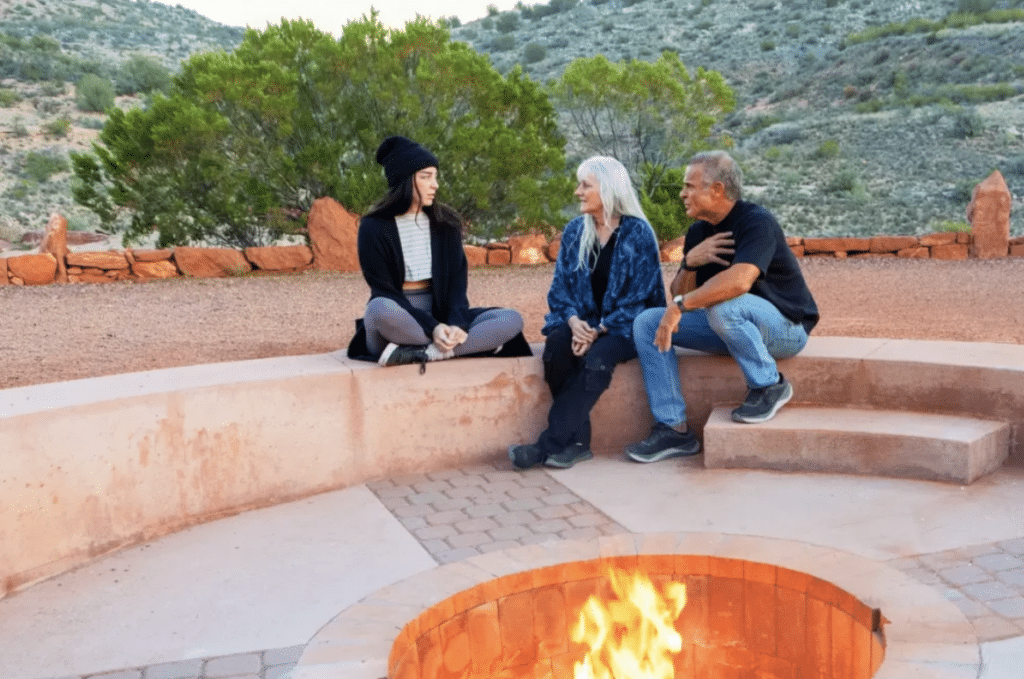
The Sanctuary at Sedona offers different therapy types
Holistic programs are often associated with substance use, but that framing is narrower than reality. You don’t need to have a substance use disorder to benefit from holistic mental health recovery. Many residential programs, including The Sanctuary at Sedona, work with people managing depression, anxiety, trauma and burnout with or without substance use in the picture.
That said, whole-person treatment is particularly well-suited for people who haven’t found lasting results through conventional approaches, who are managing co-occurring mental health conditions or who are navigating addictions that require more than abstinence-based support. Newer addictions the team treats, including ketamine dependency, are increasingly addressed within holistic residential settings that address both the physical and psychological dimensions of dependence.
When evaluating programs, look for licensed clinical staff, integrated mental health support, a clear treatment philosophy and a structure that offers genuine privacy and individualized care.
FAQs
Holistic addiction recovery raises a lot of questions, especially for people new to this model of care or weighing it against more conventional options. Here are some of the most common.
Is holistic addiction recovery evidence-based?
Many of the modalities in holistic programs are supported by clinical research. EMDR, somatic therapy and trauma-focused cognitive behavioral therapy all have established evidence bases. What distinguishes holistic programs is how those approaches are combined in an integrated, whole-person framework rather than used in isolation. The credentials of the clinical team matter just as much as the model itself.
Can holistic treatment help with mental health conditions, even without substance use?
It can. Holistic recovery is not limited to people with substance use disorders. Residential programs often work with people managing depression, anxiety, trauma and burnout as stand-alone conditions.
The Sanctuary at Sedona offers holistic mental health recovery to people who may have no history of substance use at all. If conventional outpatient care hasn’t produced lasting results, a structured residential program may be worth exploring.
How is residential holistic treatment different from outpatient care?
Outpatient care allows you to attend therapy while continuing your daily life at home, which works well for many people. Residential treatment offers full immersion. You step away from the environment that may be sustaining your symptoms and receive continuous support from a clinical team. Programs that keep enrollment small preserve individualized care that larger settings can’t reliably offer. For complex or treatment-resistant conditions, that depth of access often makes a meaningful difference in outcomes.
Whole-Hearted Healing
Recovery is built across many dimensions at once. Mental, physical, emotional and purposeful are all involved. The holistic model doesn’t promise a shortcut, but offers a more complete picture of what healing actually requires.
Disclosure: We may earn a commission from certain links on this site when you make a purchase, at no extra cost to you. These commissions help support Wellness + Wisdom and do not affect the products or resources we choose to recommend. Full disclosure .