
By Josh Trent | Wellness + Wisdom Podcast Host & Identity Transformation Architect
“Carrying guilt for what is already done does not change the past, it only steals your present. When you learn to forgive yourself, you set down a weight you were never meant to carry forever.”
Josh Trent
Learning how to forgive yourself is one of the most liberating gifts you can give your own heart, because carrying guilt and shame for past mistakes keeps you chained to a moment that is already gone. So many of us endlessly replay our regrets, punish ourselves for old choices, and hold ourselves to a standard of perfection we would never dream of demanding of anyone else. Learning to forgive yourself gently releases all of that weight, teaching you to make real peace with your past, to learn from it, and to free yourself to live fully in the present moment. This liberating practice lives at the heart of the L.I.F.E. Method™.
Here is the joy forward truth at the center of it all. Self forgiveness is never about excusing what happened or pretending it did not matter, it is about releasing the crushing weight of guilt so that you can finally grow, heal, and move forward. When you learn to truly forgive yourself, you free the energy that endless self punishment consumes and open the door to genuine change, growth, and joy. When you learn how to forgive yourself, you finally set yourself free from a burden you were never meant to carry forever. Let us explore exactly how.
Table of Contents
- What Self Forgiveness Really Is
- Guilt Versus Shame
- Why Forgiving Yourself Feels So Hard
- The Science of Self Forgiveness
- How to Forgive Yourself
- Self Forgiveness and Accountability
- Self Forgiveness and the L.I.F.E. Method
- Celebrating Your Fresh Start
- When Forgiveness Feels Out of Reach
- Self Forgiveness Is a Lifelong Practice
- Frequently Asked Questions
- Studies and External Resources
- About Josh Trent
What Self Forgiveness Really Is
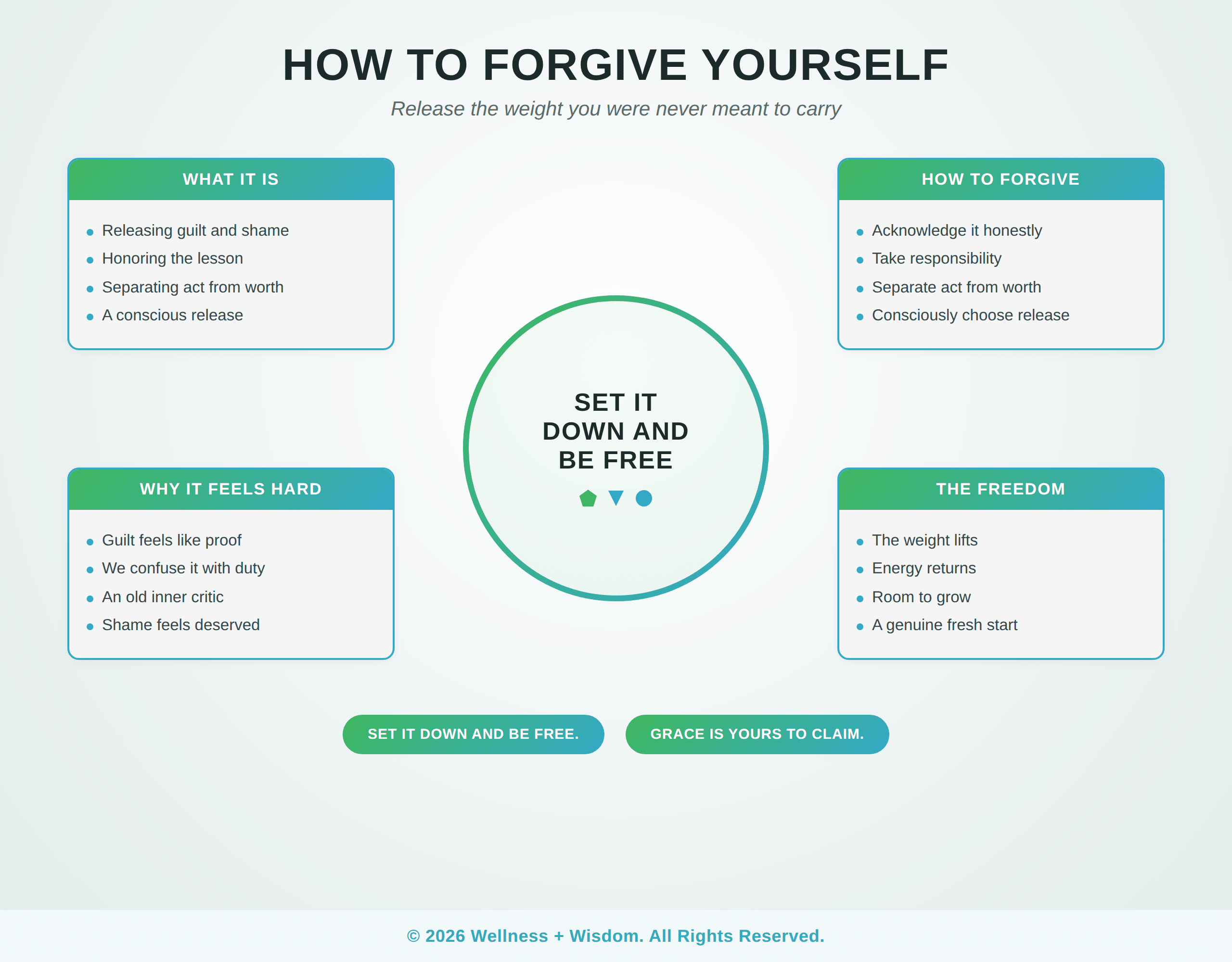
Self forgiveness is the practice of releasing guilt, shame, and self blame for past mistakes while still honoring the lessons they taught you. It means honestly acknowledging what happened, taking real responsibility where it is truly yours, and then consciously choosing to let go of the ongoing self punishment rather than carrying it with you forever. Self forgiveness is simply a conscious release of the heavy weight you have been carrying inside.
This is a genuinely compassionate and powerful practice, never a way of excusing yourself or avoiding responsibility. Forgiving yourself actually involves facing what happened honestly, making amends wherever you can, and then extending yourself the very same grace you would readily offer a friend who made the same mistake. It is the real difference between endless self punishment and genuine growth and healing.
Self forgiveness also honors your shared humanity, recognizing that making mistakes is simply part of being human and that a single choice does not define your entire worth as a person. When you truly forgive yourself, you clearly separate what you did from who you actually are, allowing you to learn and grow without ever being crushed by shame. Learning this gentle release is a true cornerstone of emotional freedom, a theme we return to often on the Wellness + Wisdom Podcast.
Guilt Versus Shame
An important distinction in learning how to forgive yourself is the difference between guilt and shame, because they feel similar but call for very different responses. Guilt says that I did something wrong, while shame says that I am something wrong, and truly understanding this one difference is genuinely freeing. One points to a behavior you can address, while the other attacks your very worth.
Guilt, in its healthy form, can actually be quite useful, because it points to a specific action that does not align with your values and gently invites you to make amends and grow. It focuses on what you actually did and motivates repair, and once you have taken responsibility, that healthy guilt can be fully released. This kind of healthy guilt is simply a passing signal, never a life sentence to be served forever.
Shame, by contrast, is far heavier and rarely helpful at all, because it attacks your whole identity rather than a single specific behavior. Shame whispers that you are somehow fundamentally bad, unworthy, or unlovable, and it tends to keep you stuck rather than ever motivating genuine change. Learning to recognize shame for exactly what it is, and to separate it clearly from healthy guilt, is essential to real self forgiveness.
When you can clearly distinguish healthy guilt from toxic shame, self forgiveness becomes far more possible than before. You can honor your healthy guilt by taking responsibility and making amends, and you can then gently release the toxic shame that only crushes you down. Learning to gently separate these two is a genuinely powerful act of self compassion, and it draws on real emotional courage as you meet your past with honesty.
Why Forgiving Yourself Feels So Hard
Forgiving yourself feels hard because many of us believe, deep down, that we must keep punishing ourselves to prove we are truly sorry or to make sure we never repeat a mistake. We quietly confuse ongoing guilt with responsibility, as if suffering enough will somehow undo the past or finally earn our redemption. This one deep belief quietly keeps us trapped in exhausting, endless cycles of self blame.
On top of all this, many of us carry an inner critic and old shame that make self forgiveness feel completely undeserved, especially if we learned early in life that love and acceptance were somehow conditional on always being good. We hold ourselves to impossible standards and treat our own mistakes as unforgivable, even as we readily forgive the very same things in others. Understanding that this harshness was learned, rather than the truth of what you deserve, replaces self judgment with compassion, which is where real change begins, much like the gentle work of reparenting yourself.
Seeing why forgiving yourself feels hard is genuinely freeing, because it means your endless guilt is not actually helping anyone, including the people you may have hurt. The belief that endless self punishment somehow equals responsibility was learned long ago, and like any learned pattern, it can be gently released over time and practice. You can honor your genuine remorse and your real desire to do better in the future while gently teaching yourself that ongoing self punishment is simply not the same as true growth, which is deeply connected to healing our inherited beliefs.
The Science of Self Forgiveness
The science of emotion and release offers real support for the practice of forgiving yourself. In influential research by James Pennebaker, published in the Journal of Consulting and Clinical Psychology, people who expressed and processed difficult experiences through writing showed measurable benefits to their immune function. Facing and truly releasing what weighs on us, rather than holding it all in, genuinely supports the health of the body itself.
Naming your feelings helps directly too. Research by Matthew Lieberman and colleagues, published in Psychological Science, found that putting feelings into words reduces activity in the brain's alarm center. When you name your guilt and shame honestly out loud, rather than being silently ruled by them from beneath the surface, you help your own system settle and soften, supporting the kind of neural system regulation that self forgiveness nurtures.
There is an uplifting dimension too. Barbara Fredrickson's research, published in American Psychologist, shows that positive emotions broaden our awareness and build lasting personal resources over time, while chronic guilt and shame only narrow and deplete us. When you release self punishment and open instead to genuine self compassion, you free up real energy for growth, connection, and joy. Self forgiveness, in this very real sense, clears the way for far more life to flow through you, and it draws on genuine emotional intelligence.
How to Forgive Yourself
Learning how to forgive yourself is a gentle, gradual practice of facing your own past honestly and then consciously choosing to release the heavy weight of self punishment. It grows more possible with steady practice over time, and every single step toward release lightens your heart a little more. Here are practices that help.
1. Acknowledge What Happened Honestly
Rather than minimizing or endlessly obsessing over your mistake, look at it honestly and with real, steady compassion, naming what happened and its true impact. Honest acknowledgment, without either excusing yourself or exaggerating the harm involved, is the necessary first step toward genuine self forgiveness.
2. Take Responsibility and Make Amends
Where your actions genuinely caused real harm, take full responsibility and make amends wherever you can, since this honors both the situation and your own integrity. Making amends frees you to release the guilt at long last, because you have done what is genuinely within your power to do.
3. Separate Your Actions From Your Worth
Remember that making a mistake does not make you a bad person, and that your fundamental worth is never erased by your choices. Separating clearly what you did from who you truly are allows you to learn and grow freely without ever being crushed by shame.
4. Speak to Yourself With Compassion
Offer yourself the same understanding you would readily give a dear friend who made the very same mistake, replacing harsh self talk with real kindness. Speaking to yourself with real, steady compassion softens the shame and opens the door to genuine release, which is closely tied to learning to practice self compassion.
5. Consciously Choose to Release
At some point, make a conscious choice to finally set down the guilt you have carried for so long, perhaps through writing, a small ritual, or simply a firm decision to let go. Choosing to release, again and again if that is truly what it takes, is how you finally free yourself from the heavy weight of the past.
Begin with whatever practice feels most accessible and be patient and kind with yourself, since self forgiveness after carrying guilt for a long time takes time. Every single step you take toward release brings a little more freedom and quiet peace into your daily life. When you want community and support for this journey, the Liberated Life Tribe is here for you.
Self Forgiveness and Accountability
One of the most important truths about self forgiveness is that it works hand in hand with accountability, rather than against it, since real forgiveness includes taking responsibility. Far from letting yourself off the hook, genuine self forgiveness actually asks you to face what happened honestly and to grow from it.
Many of us quietly fear that forgiving ourselves means excusing our behavior or pretending it did not matter, but the honest opposite is true. Real self forgiveness begins with honest accountability, acknowledging the true impact of our actions and making amends where we can, and only then releasing the ongoing self punishment that ultimately helps no one. Accountability and self forgiveness are true partners, not opposites, working together to help you genuinely grow.
This is actually how genuine change happens in a person, because someone crushed by shame is far less able to grow than one who has taken responsibility and then extended themselves real grace. When you truly forgive yourself, you are never avoiding accountability, you are actually completing it, moving from endless guilt into genuine learning and lasting change. This is the whole difference between being stuck in the past and using it to become wiser and more compassionate, which is a beautiful part of your whole self growth journey.
Self Forgiveness and the L.I.F.E. Method
Learning to forgive yourself is a beautiful expression of the Liberation pillar within the L.I.F.E. Method™, our system for identity transformation built on four pillars: Liberation, Integration, Frequency, and Embodiment. The guilt and shame you carry are among the very heaviest burdens of who you are not, and releasing them through self forgiveness is a genuine act of liberation.
Liberation frees you from the old belief that you must punish yourself forever in order to atone for the past. As that burden lifts, the other pillars come alive: Integration helps you welcome and accept even the parts of you that made mistakes, Frequency raises your inner state from guilt and shame toward peace and compassion, and Embodiment lets you feel that release as genuine lightness in your body rather than just an idea in your mind.
This is why we hold self forgiveness as genuine liberation work rather than a simple feel good practice. You are not merely letting go of old guilt, you are reclaiming your freedom and your worth as a beloved creation in your Connection to Creator and God, genuinely worthy of grace despite your imperfections. That is a deep and joyful freedom, one that transforms your relationship with your past and your whole authentic identity.
Celebrating Your Fresh Start
The joyful heart of self forgiveness is celebrating the fresh start it makes truly possible, honoring your courage to release the past and step into a lighter, freer future. When you truly forgive yourself, you give yourself full permission to begin again, and that new beginning is genuinely worth celebrating.
Celebrating your fresh start means truly recognizing the strength it takes to face your past, take responsibility, and then choose freedom over endless self punishment. This is genuine growth, and honoring it reinforces your own capacity for compassion and lasting change. Rather than staying endlessly weighed down by who you used to be, you get to celebrate who you are now becoming, which is a beautiful part of learning to celebrate yourself.
And here is the beautiful part. When you forgive yourself and truly embrace your fresh start, you become more compassionate and forgiving toward others too, since the grace you give yourself naturally overflows onto everyone around you. Your own self forgiveness also quietly gives others permission to release their own guilt and begin again, gently modeling a kinder, freer way of being human. In this beautiful way, learning how to forgive yourself becomes a gift that ripples far beyond yourself, bringing more grace and freedom to every relationship you touch, which is a spirit we cherish in learning to celebrate the people you love.
When Forgiveness Feels Out of Reach
If forgiving yourself feels out of reach right now, you are in very good company, and it is completely understandable, especially if your guilt runs deep or involves serious harm. Self forgiveness does not mean forcing yourself to feel okay before you are truly ready, it simply means gently moving toward release at your own pace, one honest step at a time.
When forgiveness feels far away, it genuinely helps to start small, perhaps by simply softening your self talk or acknowledging that you are a human being who made a very human mistake. You do not have to forgive yourself completely all at once, you simply take one small step toward compassion, and then another, quietly trusting that real release can genuinely come with time. Meeting your own guilt with real gentleness, rather than yet more harshness, is itself the quiet beginning of forgiveness, and it takes real emotional courage.
It is also genuinely worth remembering that if guilt, shame, or self blame weigh heavily on you, or if they connect to painful past experiences, working with a qualified therapist can offer truly invaluable support. There is real and genuine strength in seeking help, and a skilled professional can help you process what you carry and move gradually toward genuine self forgiveness. Wherever you happen to be, be patient and kind with yourself, honor your own pace, and trust that releasing the past is a beautiful journey of coming home to your own heart, one that deepens as you keep coming home to yourself.
Self Forgiveness Is a Lifelong Practice
Learning how to forgive yourself is not a single moment you complete just once, but a lifelong practice of releasing guilt and extending yourself grace across all the changing seasons of your life. Self forgiveness is far less a one time event and more a steady willingness to set down the weight again whenever you notice you have quietly picked it back up. This is genuinely wonderful news, because it means you can always return to release no matter how heavy the guilt has felt in the past.
This understanding takes the pressure off getting it perfect. You will certainly have moments when old guilt resurfaces, when shame quietly returns, or when you struggle to let go, and all of that is completely human. What matters most is the gentle returning, the steady practice of choosing release and compassion once again whenever the past reaches for you.
Understanding self forgiveness as an ongoing practice also keeps it compassionate. Each time guilt arises again, you have a fresh new opportunity to acknowledge it, learn whatever it has to teach you, and then gently release it once more. Over time, self forgiveness becomes far less a struggle and more simply how you naturally relate to your own human imperfection, with honesty and grace.
So approach your own journey here with real patience and warmth toward yourself. There is no finish line, only the ongoing, liberating practice of releasing the past and choosing grace, and celebrating the freedom that emerges each time you do. This steady release supports every dimension of your wellbeing and deepens your whole spiritual wellness, growing richer with time.
Frequently Asked Questions
What is self forgiveness?
Self forgiveness is the practice of releasing guilt, shame, and self blame for past mistakes while still honoring the lessons they taught you. It means acknowledging what happened, taking responsibility where it is yours, and then choosing to let go of ongoing self punishment. Self forgiveness is a conscious release of the weight you have been carrying.
Why is it so hard to forgive myself?
Because many of us believe we must keep punishing ourselves to prove we are sorry or to avoid repeating a mistake, confusing ongoing guilt with responsibility. An inner critic and old shame make self forgiveness feel undeserved. Understanding that this harshness was learned, rather than the truth of what you deserve, opens the way to release.
How do I start forgiving myself?
Acknowledge what happened honestly, take responsibility and make amends where you can, separate your actions from your worth, speak to yourself with compassion, and consciously choose to release the guilt you have carried. Start with whatever feels most accessible and be patient, since self forgiveness after carrying guilt for a long time takes time.
Isn't forgiving myself just making excuses?
No. Self forgiveness works hand in hand with accountability, not against it. Real forgiveness begins with facing what happened honestly and making amends where you can, and only then releasing the ongoing self punishment that helps no one. A person crushed by shame grows far less than one who takes responsibility and then extends grace.
Does self forgiveness actually help?
Yes. Research shows that facing and releasing difficult experiences supports immune function, and naming your feelings calms the brain's alarm center. Positive emotion builds lasting resources while chronic guilt depletes us. Releasing self punishment frees energy for growth, connection, and joy, making self forgiveness a genuine investment in your wellbeing.
What if I just can't forgive myself?
That is understandable, especially if guilt runs deep. You do not have to forgive yourself completely all at once. Start small, softening your self talk and taking one step toward compassion at a time. If guilt or shame weigh heavily, or connect to painful past experiences, working with a qualified therapist offers invaluable support.
Studies and External Resources
The science in this article rests on peer reviewed research. These are the sources referenced throughout.
- Pennebaker JW, et al. (1988). Disclosure of Traumas and Immune Function: Health Implications for Psychotherapy. Journal of Consulting and Clinical Psychology. PubMed: 3372832
- Lieberman MD, et al. (2007). Putting Feelings Into Words: Affect Labeling Disrupts Amygdala Activity in Response to Affective Stimuli. Psychological Science. PubMed: 17576282
- Fredrickson BL. (2001). The role of positive emotions in positive psychology. The broaden-and-build theory of positive emotions. American Psychologist. PubMed: 11315248
About Josh Trent
Josh Trent is an Identity Transformation Architect and the award winning host of the Wellness + Wisdom Podcast, with over 15 million downloads since 2015. He is the creator of the L.I.F.E. Method™ Identity Transformation System and steward of the Emotional Epigenetics™ and BREATHE: Breath + Wellness™ systems of self mastery, impacting over 1,000 students worldwide. Join the Liberated Life Tribe and receive your 10 day Self Liberation Blueprint at liberatedlife.com. Josh lives in Austin, Texas with his wife Carrie, daughter Nayah, and son Novah. Peace and power.
Disclosure: We may earn a commission from certain links on this site when you make a purchase, at no extra cost to you. These commissions help support Wellness + Wisdom and do not affect the products or resources we choose to recommend. Full disclosure .