
By Josh Trent | Wellness + Wisdom Podcast Host & Identity Transformation Architect
“The cold and the heat are honest teachers. They ask you to stay calm inside intensity, to breathe when everything says panic. That is not just a plunge. That is training for life.”
Josh Trent
Cold exposure epigenetics is the fascinating idea that deliberately exposing your body to cold and heat sends powerful adaptive signals that ripple through your biology, all the way down to how your cells respond and express themselves. Humans have used cold plunges, ice baths, saunas, and sweat lodges for thousands of years, and modern science is now catching up to why these practices make us feel so alive and resilient. When used wisely, brief and intentional stress from cold and heat can strengthen both body and mind in remarkable ways. This connects beautifully to the science of Emotional Epigenetics™ and the whole person view of the Wellness Pentagon™.
Here is my joy forward and honest promise. Cold and heat therapy are genuinely powerful, accessible tools that can build resilience in both body and mind, and the science behind their health benefits is real and growing. At the same time, I will be clear about what the evidence strongly supports and where popular claims run ahead of it, and I will share the safety basics that matter, because these practices deserve respect. Let us explore how a little intentional cold and heat can make you stronger.
Save 10% on your FjØRD Cold Plunge with “JOSH”
Table of Contents
- What Cold Exposure and Heat Therapy Do
- Hormesis: Why a Little Stress Makes You Stronger
- The Science of Cold Exposure
- The Science of Heat Therapy
- Contrast Therapy: Combining Cold and Heat
- Cold Exposure Epigenetics and Gene Expression
- Cold, Heat, and Whole Person Wellness
- The Mental Resilience You Build in the Cold
- How to Practice Cold and Heat Safely
- Where the Science Is Solid and Where It Overreaches
- Frequently Asked Questions
- Studies and External Resources
- About Josh Trent
What Cold Exposure and Heat Therapy Do
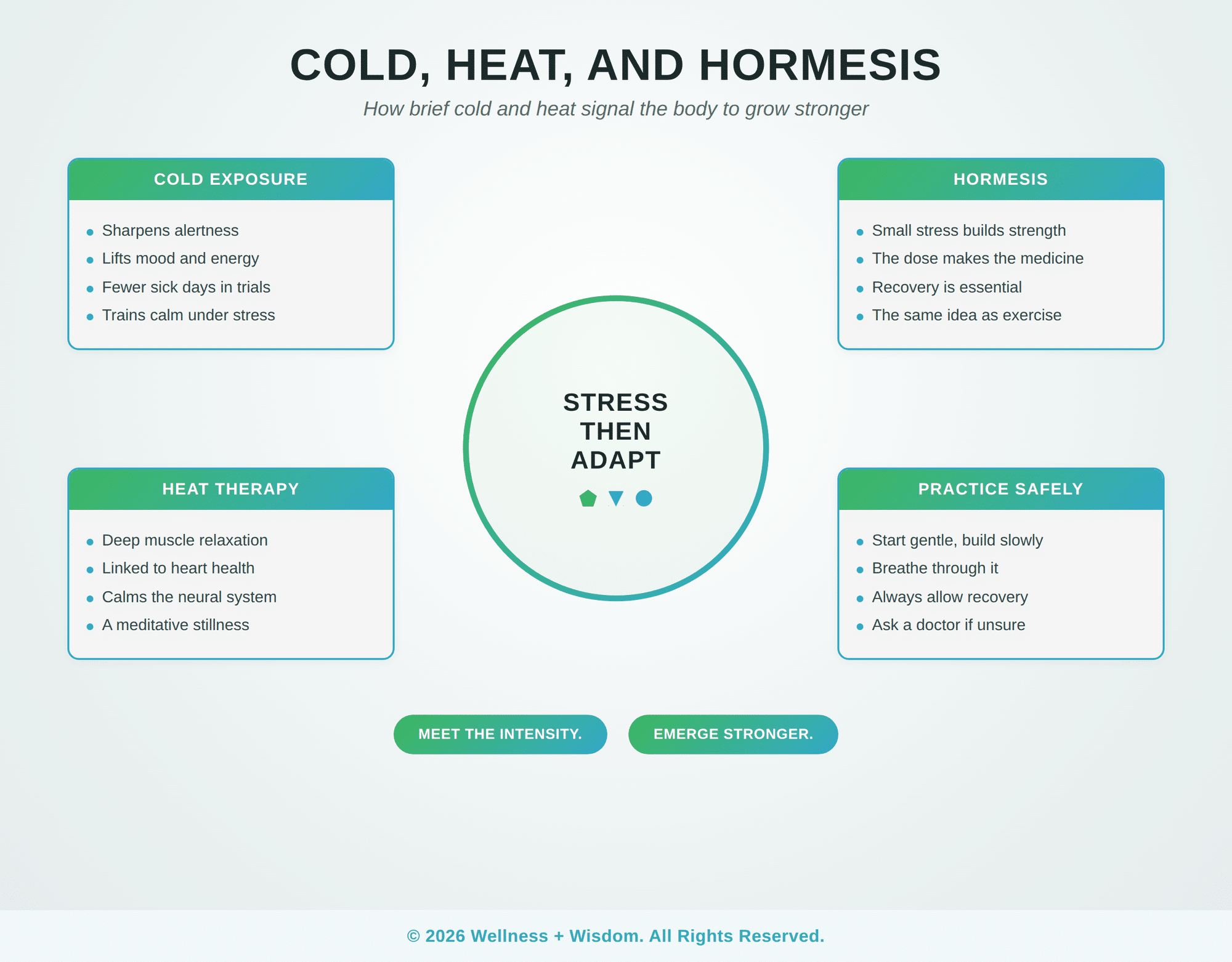
Cold exposure and heat therapy work by deliberately placing the body under brief, controlled stress, which prompts a cascade of adaptive responses that leave you stronger. Cold exposure includes practices like cold showers, ice baths, and cold water immersion. Heat therapy includes saunas, steam rooms, and hot baths. In both cases, the temperature challenge asks your body to respond, adapt, and grow more resilient.
When you step into cold, your body responds vigorously to preserve warmth and function, activating circulation, releasing invigorating chemistry, and sharpening your alertness. When you sit in heat, your body works hard to cool itself, and this gentle challenge triggers its own set of beneficial adaptations. In each case, you are giving your body a manageable dose of stress that it rises to meet, and in meeting it, becomes stronger. The discomfort is not the enemy here. It is the very signal that prompts the body to adapt.
Beyond the physical, both practices are powerful trainers of the mind and the neural system. Staying calm and breathing steadily inside the intensity of cold or heat is a genuine practice in self regulation, one that carries directly into how you handle stress in the rest of your life. This is why we see cold and heat not just as physical tools but as training grounds for the same steadiness we build through breathwork and neural system regulation.
Hormesis: Why a Little Stress Makes You Stronger
The core principle behind cold exposure epigenetics is hormesis, the well established idea that a small, manageable dose of stress makes an organism stronger, even though a large dose would cause harm. This is the same principle behind exercise, where the controlled stress of a workout prompts the body to rebuild stronger. Cold and heat work the same way, challenging the body just enough to trigger beneficial adaptation.
The science of stress being both harmful and helpful was captured beautifully by the researcher Bruce McEwen, whose landmark paper in the New England Journal of Medicine was titled around the protective and damaging effects of stress mediators. His central insight is that the very same stress systems can either wear the body down or strengthen it, depending on the dose and the context. Chronic, unrelenting stress damages, while brief, recoverable stress can build resilience. This is the heart of hormesis, and it reframes our whole relationship with stress itself.
This reframe is powerful and important. Not all stress is bad. In fact, the right kind of stress, in the right dose, followed by real recovery, is exactly what makes living systems stronger. Cold and heat therapy are ways of deliberately dosing yourself with this beneficial, hormetic stress. The key word, always, is dose, because the same cold that strengthens in small amounts would harm in large ones, which is why respect and safety matter so much.
The Science of Cold Exposure
The science of cold exposure has grown considerably, and some of it is genuinely compelling. In a notable randomized controlled trial by Geert Buijze and colleagues, published in the journal PLoS One, people who added a period of cold water to the end of their daily shower experienced a meaningful reduction in sickness related absence from work compared to those who did not. A simple, brief dose of cold appeared to offer real benefit.
Cold exposure has been associated with a range of effects that people find valuable, including increased alertness, a lift in mood and invigorating chemistry, and a bracing sense of resilience. Many people describe feeling remarkably clear, energized, and calm after cold exposure, an effect that keeps them coming back day after day. That afterglow is often what turns a dreaded practice into a genuinely cherished one. The practice also directly trains the ability to stay composed under intensity, which is a genuine skill.
It is worth being measured here, because cold exposure is a young and evolving area of research, and not every popular claim is firmly established. But the core finding, that brief cold exposure can offer real benefits for wellbeing and resilience, has meaningful support. Approached wisely, a short daily dose of cold is one of the simplest and most accessible resilience practices available, and it pairs naturally with a strong morning routine.
The Science of Heat Therapy
The science of heat therapy, and sauna use in particular, is especially strong, with some of the most impressive long term health data in this whole field. In a large, long running study by Jari Laukkanen and colleagues, published in JAMA Internal Medicine, frequent sauna bathing was associated with a significantly lower risk of fatal cardiovascular events and lower all cause mortality over many years of follow up. The more often people used the sauna, the stronger the association became.
This is remarkable data, because it links a pleasant, accessible practice to some of the most important health outcomes there are. While an association in observational research does not by itself prove cause, the strength and consistency of the sauna findings have made heat therapy one of the more respected practices in this area. Regular heat exposure appears to support cardiovascular health, recovery, and a deep sense of relaxation that carries into the rest of the day.
Heat therapy also offers immediate, tangible benefits that people treasure, including profound muscle relaxation, a calming of the neural system, and a meditative stillness that comes from simply sitting in the warmth. Like cold, the sauna is both a physical practice and a training ground for presence. Combined thoughtfully with cold, it forms a time honored rhythm of heating and cooling that many cultures have treasured for centuries as both medicine and ceremony, and that fits naturally into a life of good rest and recovery.
Contrast Therapy: Combining Cold and Heat
One of the most time honored ways to use temperature is contrast therapy, the practice of alternating between heat and cold in a deliberate rhythm. Cultures around the world discovered this independently, from the Nordic tradition of sauna followed by a plunge into an icy lake, to the sweat lodge followed by cool water. There is something deeply satisfying, almost primal, about moving between the two extremes.
The basic rhythm is simple. You warm the body thoroughly in heat, then expose it briefly to cold, then often return to the heat, repeating the cycle a few times. The heat opens and relaxes the body, the cold invigorates and tightens it, and the alternation creates a pumping, refreshing effect that many people find leaves them feeling extraordinarily alive and clear afterward.
Beyond how good it feels, contrast therapy is a beautiful embodiment of the hormesis principle in motion. You are giving the body two different challenges and, crucially, weaving recovery right into the practice as you move between them. The result is a session that trains adaptability itself, teaching your system to shift states smoothly and return to balance, which is a wonderful metaphor for a resilient life.
If you want to try it, always begin from the same place of respect and safety, especially since moving between extremes is demanding on the heart and circulation. Start with gentle versions, keep the cold portions brief, breathe steadily throughout, and never push past genuine discomfort into distress. Practiced wisely, this ancient rhythm of heating and cooling is one of the most enjoyable resilience practices there is, and it fits naturally into the kind of intentional life we explore across the Wellness + Wisdom Podcast.
Cold Exposure Epigenetics and Gene Expression
The deeper idea behind cold exposure epigenetics is that these temperature challenges do not just affect you in the moment, but send adaptive signals that influence how your cells function and respond over time. When the body meets a hormetic stressor like cold or heat, it activates ancient cellular defense and repair pathways, mobilizing the machinery that helps cells adapt and become more resilient.
Within the framework of Emotional Epigenetics™, which holds that our environment and experiences shape gene expression, deliberate cold and heat are intentional environmental inputs. Just as chronic negative stress is an input that can push gene expression in an unhelpful direction, brief and recoverable hormetic stress is an input that can support adaptive, resilient functioning. You are, in a real sense, using temperature to send your biology a signal of strength and adaptability.
I want to be honest and grounded about the language here, because this is where popular claims sometimes outrun the science. The strongest evidence for cold and heat is in their effects on health outcomes, resilience, and the body's adaptive stress pathways. The precise details of how these practices influence the epigenome specifically are still an active and emerging area of research, not a settled one. It is fair and accurate to say cold and heat are powerful environmental signals to the body, while staying humble about the exact cellular mechanisms, an honesty we bring to all of our teaching on how environment shapes biology.
Cold, Heat, and Whole Person Wellness
Cold and heat therapy touch several dimensions of the Wellness Pentagon™ at once, which is part of why they feel so profoundly good. Physically, they build resilience, support circulation and recovery, and challenge the body in beneficial ways. But their gifts reach well beyond the physical.
Mentally and emotionally, cold and heat are powerful trainers of self regulation. Learning to stay calm and breathe steadily inside the shock of cold or the intensity of heat builds a genuine, transferable capacity to remain grounded when life turns intense. Many people find that the composure they practice in the plunge or the sauna shows up later in difficult conversations and stressful moments. The neural system you train in the cold is the same one you rely on everywhere else.
There is even a spiritual dimension to these practices. Sitting in intensity, staying present with discomfort, and emerging renewed has a genuinely ceremonial quality, one that cultures across history have recognized in their sweat lodges and cold rituals. For many people, cold and heat become a kind of moving meditation, a way to feel fully alive and connected, deepening their Connection to Creator and God. Explore more of these whole person practices through our wellness tools and the Wellness + Wisdom Podcast.
The Mental Resilience You Build in the Cold
Perhaps the most underrated benefit of cold exposure has nothing to do with the body at all. It is the mental resilience you build every time you choose to step into something difficult and stay. The cold is a daily, willing confrontation with discomfort, and meeting it on purpose builds a kind of quiet inner strength that spills into everything else.
When you stand in the cold and your whole system is screaming to get out, you have a choice. You can panic and flee, or you can slow your breath, soften, and stay present with the intensity. Practicing that choice, again and again, trains a genuine capacity to remain calm and grounded when life gets hard. It is the very same inner muscle, whether the intensity is icy water or a difficult conversation.
This is why so many people describe cold exposure as training for life. The discipline of doing a hard thing you said you would do, first thing in the morning, sets a tone of self trust for the entire day. You prove to yourself, in your body and not just your mind, that you can do difficult things, that discomfort will not destroy you, and that you can meet intensity with steadiness. That is a powerful form of emotional courage.
There is real beauty in choosing a small, safe hardship on purpose in a world that constantly offers us comfort and escape. Voluntary discomfort, practiced wisely and safely, builds a resilience that no amount of ease ever could. In this way, the few minutes you spend in the cold become a training ground for meeting all of life with more presence and strength, helping you move from merely surviving toward truly thriving.
How to Practice Cold and Heat Safely
Cold and heat are powerful, which means they deserve respect and a few sensible safety practices. Here is how to begin wisely and get the benefits without unnecessary risk.
An important safety note first. Cold plunges and saunas place real demands on the heart and circulation. If you have any heart condition, high or low blood pressure, are pregnant, or have any other health concern, please talk with a qualified doctor before starting cold or heat practices. These are genuine physiological stressors, not just wellness trends, and individual circumstances matter a great deal here.
1. Start Gently
You do not need an ice bath to begin. End a warm shower with thirty seconds of cool water, and build from there over time. With heat, start with shorter sessions at moderate temperatures. Let your body adapt gradually rather than shocking it.
2. Breathe Through It
The single most important skill is calm, steady breathing. When the cold hits, the instinct is to gasp and tense. Instead, slow your exhale and soften. This is where the real training happens, and it is the heart of the BREATHE™ approach.
3. Always Allow Recovery
Hormesis only works with real recovery. Never push to exhaustion, and always give your body time to return to baseline afterward. The benefit comes from the challenge followed by the rest, not from enduring as much as possible.
4. Never FjØRD Cold Plunge Alone in Deep Water
Cold water immersion can cause an involuntary gasp and shock response. Never immerse alone in open or deep water, and ease in rather than jumping. Safety always comes before intensity.
Save 10% on your FjØRD Cold Plunge with “JOSH”
5. Listen to Your Body
Numbness, dizziness, or real distress are signals to stop. The goal is invigoration and adaptation, never harm, and your body will usually tell you clearly which one it is experiencing. Learning to tell the difference between healthy intensity and genuine danger is part of the practice itself.
Begin gently, breathe, and let your body adapt over time. Practiced with respect, cold and heat become sustainable, joyful sources of resilience. When you want guidance and community for these practices, the Liberated Life Tribe and our latest episodes are here for you.
Where the Science Is Solid and Where It Overreaches
Because truth matters as much as enthusiasm, here is a clear and honest picture of the evidence. The strong ground includes the sauna and cardiovascular data, which is genuinely impressive, and the finding that brief cold exposure can support wellbeing and resilience, which has real research behind it. The principle of hormesis, that appropriate stress followed by recovery builds resilience, is well established across biology.
The areas that call for humility include the more specific and dramatic claims. Assertions that cold plunges dramatically rewrite your epigenome, melt away disease, or work miracles on their own run ahead of what the evidence currently shows. Cold and heat are genuine, valuable tools, but they are part of a healthy life, not magic bullets, and the precise cellular mechanisms remain an active area of study rather than settled fact.
This honest framing keeps the practice both powerful and safe. You do not need any exaggerated claim to benefit from cold and heat, because the documented reality, real support for cardiovascular health, resilience, mood, and self regulation, is more than enough. Approached with respect, discernment, and appropriate medical guidance, these ancient practices offer genuine and lasting gifts, which is exactly how we hold every tool across the Wellness Pentagon™.
Frequently Asked Questions
What is cold exposure epigenetics?
Cold exposure epigenetics is the idea that deliberately exposing the body to cold and heat sends adaptive signals that influence how your cells function and respond over time. When the body meets a hormetic stressor like cold or heat, it activates ancient cellular defense and repair pathways. It reflects the view that temperature is a meaningful environmental input to your biology.
What are the benefits of cold plunges?
Cold exposure has been associated with increased alertness, a lift in mood and invigorating chemistry, and greater resilience. A randomized trial by Buijze and colleagues found that ending a daily shower with cold water reduced sickness related work absence. Cold exposure also trains the ability to stay calm and composed under intensity, a genuinely transferable skill.
Is sauna use actually good for you?
The evidence for sauna is especially strong. A large study by Laukkanen and colleagues found that frequent sauna bathing was associated with significantly lower risk of fatal cardiovascular events and lower all cause mortality over years of follow up. Sauna also offers deep muscle relaxation and a calming of the neural system, making it one of the more respected practices in this field.
How does hormesis work?
Hormesis is the principle that a small, manageable dose of stress makes an organism stronger, even though a large dose would cause harm. It is the same principle behind exercise. Cold and heat challenge the body just enough to trigger beneficial adaptation, as long as the dose is appropriate and followed by real recovery. The key word is always dose.
Is cold plunging safe for everyone?
No. Cold plunges and saunas place real demands on the heart and circulation. If you have any heart condition, high or low blood pressure, are pregnant, or have other health concerns, talk with a qualified doctor before starting. Never immerse alone in deep water, start gently, allow full recovery, and stop if you feel dizziness or real distress.
Do cold and heat really change gene expression?
Cold and heat are genuine environmental signals that activate the body's adaptive stress and repair pathways, and within the Emotional Epigenetics™ framework they are intentional inputs that support resilient functioning. The strongest evidence is in health outcomes and adaptive pathways. The precise details of how these practices influence the epigenome specifically remain an active, emerging area of research.
Studies and External Resources
The science in this article rests on peer reviewed research. These are the sources referenced throughout.
- Buijze GA, et al. (2016). The Effect of Cold Showering on Health and Work: A Randomized Controlled Trial. PLoS One. PubMed: 27631616
- Laukkanen T, et al. (2015). Association Between Sauna Bathing and Fatal Cardiovascular and All-Cause Mortality Events. JAMA Internal Medicine. PubMed: 25705824
- McEwen BS. (1998). Protective and damaging effects of stress mediators. New England Journal of Medicine. PubMed: 9428819
About Josh Trent
Josh Trent is an Identity Transformation Architect and the award winning host of the Wellness + Wisdom Podcast, with over 15 million downloads since 2015. He is the creator of the L.I.F.E. Method™ Identity Transformation System and steward of the Emotional Epigenetics™ and BREATHE: Breath + Wellness™ systems of self mastery, impacting over 1,000 students worldwide. Join the Liberated Life Tribe and receive your 10 day Self Liberation Blueprint at liberatedlife.com. Josh lives in Austin, Texas with his wife Carrie, daughter Nayah, and son Novah.
Disclosure: We may earn a commission from certain links on this site when you make a purchase, at no extra cost to you. These commissions help support Wellness + Wisdom and do not affect the products or resources we choose to recommend. Full disclosure .