
By Josh Trent | Wellness + Wisdom Podcast Host & Identity Transformation Architect
“Play is not something we grow out of. It is something we forget. The moment you remember how to play, life starts laughing with you again.”
Josh Trent
Learning how to be more playful might be the most fun self growth work you ever do. Watch children at a park and you will see pure play in action: running for no reason, inventing games, laughing at silly faces, turning a stick into a sword and a puddle into an ocean. Somewhere between school, bills, careers, and responsibilities, many adults decide play is something they no longer have time for. Life becomes serious, efficient, and productive, and a little bit gray. The good news is that playfulness never truly leaves us. It waits quietly for us to invite it back. Researchers now describe playfulness as a real personality trait in adults, one that is linked with happiness, better coping, and richer relationships. And because so many of us learned to put play away early in life, this work connects beautifully with Emotional Epigenetics™.
Here is the joy forward truth at the center of it all. Play is not a waste of time. It is one of the fastest ways back to joy, connection, creativity, and lightness. You do not have to earn it, and you are never too old for it. Let us explore what the science says and exactly how to bring more play into your everyday life.
Table of Contents
- What Playfulness Really Is
- Why Play Matters for Adults
- The Gift of a Lighter Heart
- The Science of Playfulness
- How to Be More Playful
- Playfulness Versus Distraction
- How to Be More Playful With Emotional Epigenetics™
- Celebrating Moments of Fun
- Play in Relationships, Parenting, and Work
- When Play Feels Hard
- Frequently Asked Questions
- Studies and External Resources
- About Josh Trent
What Playfulness Really Is
Playfulness is the tendency to frame or reframe everyday situations so they feel fun, interesting, light, or entertaining. It is less about specific games and more about an attitude: a willingness to be curious, silly, imaginative, and present in the moment.
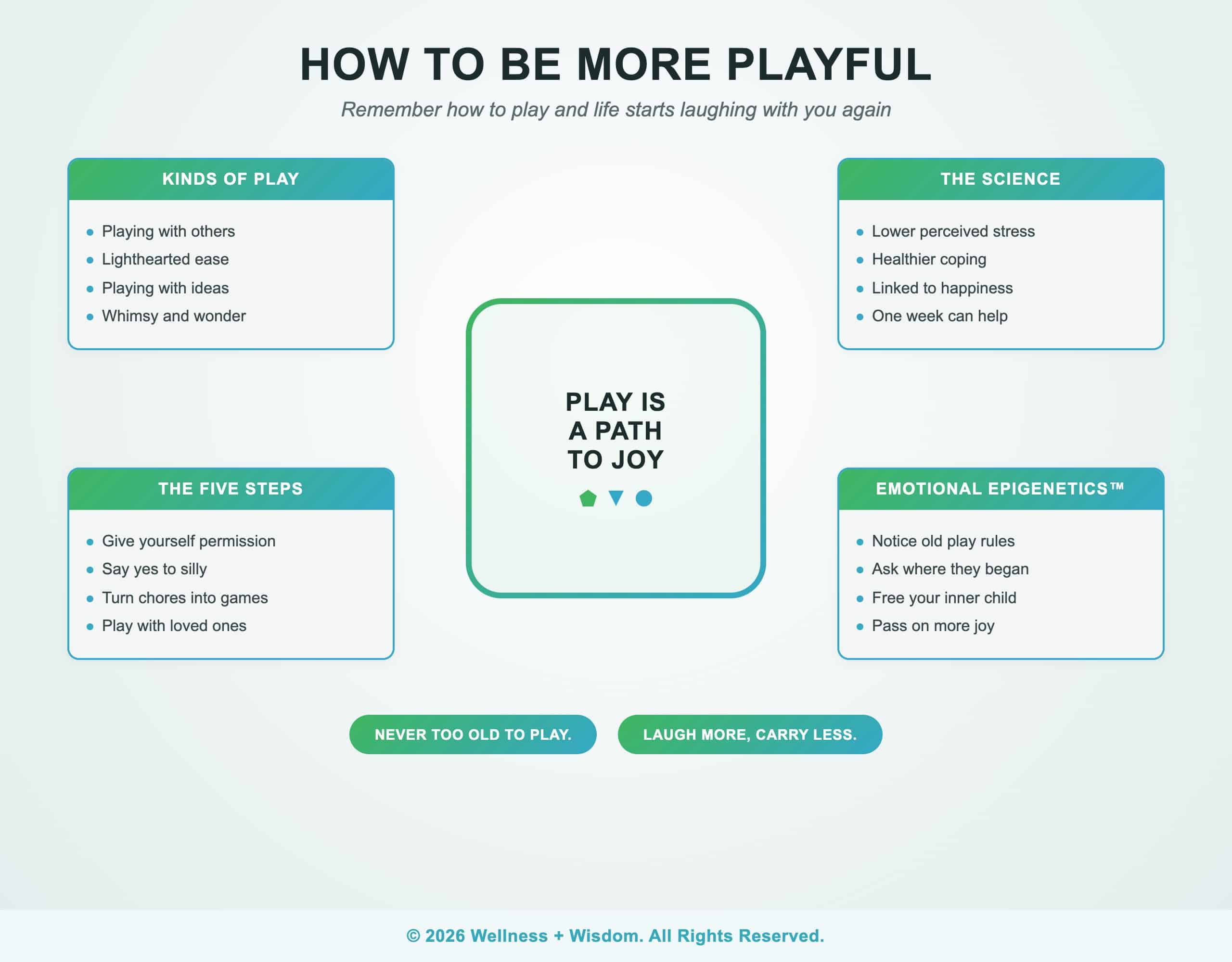
Researchers who study adult playfulness, including Rene Proyer and his colleagues, describe several flavors of it. Other directed playfulness is enjoying play with people, like teasing gently, joking with friends, or playing games together. Lighthearted playfulness is not taking life too seriously and approaching each day with ease. Intellectual playfulness is playing with ideas, words, puzzles, and possibilities. Whimsical playfulness is delighting in the odd, quirky, and unusual. Most people have a mix of these, and each one adds color to life.
Playfulness can show up anywhere. A dance in the kitchen while making dinner. A funny voice while reading to your kids. A silly nickname for your partner. A spontaneous detour on a walk. A creative twist on a boring task. These themes come up often on the Wellness + Wisdom Podcast, where guests share how rediscovering play transformed their energy and their relationships.
Playfulness is also a skill you can grow. Some people seem naturally light and fun, but research suggests playfulness can be stimulated with simple daily practices. Learning how to be more playful is less about becoming a different person and more about giving yourself permission to enjoy being alive.
Why Play Matters for Adults
Play matters for adults because it eases stress, sparks creativity, strengthens relationships, and brings joy back into ordinary days. Play reminds the mind and body that life is not only about getting things done. It is also about delight.
Many adults live in a constant state of seriousness. Work, parenting, finances, and responsibilities can fill every waking hour. Over time, that intensity can lead to burnout, irritability, and a sense that life has lost its spark. Play offers a reset. When you play, your attention shifts from pressure to presence. Laughter loosens tension. Creativity flows more easily. Problems often look smaller after a good laugh.
Play also deepens connection. Couples who laugh together tend to feel closer. Friends who play together build lasting bonds. Parents who play with their children create memories and trust that last a lifetime. In many ways, play is a language of love. If your days feel heavy and drained, the ideas in how to recover from burnout pair beautifully with bringing back play.
The Gift of a Lighter Heart
The gift of a lighter heart is resilience. When you can find lightness and humor in life, hard things feel more bearable, ordinary things feel more interesting, and joy has more room to grow.
A lighter heart does not mean ignoring problems or pretending everything is fine. It means holding life with a looser grip. Playful people still care deeply, work hard, and face challenges. They simply bring a sense of ease and humor along for the ride. That ease helps them recover from setbacks faster and stay open to new possibilities.
Lightness is also attractive. People are drawn to those who can laugh at themselves, enjoy the moment, and make others smile. A playful spirit can turn a tense meeting into a productive one, a long drive into an adventure, and a rainy afternoon into a cherished memory. If joy feels hard to access, the ideas in how to let joy in are a gentle companion.
The Science of Playfulness
The science of playfulness shows that playful adults tend to report lower stress and use healthier coping strategies, that playfulness is linked with happiness across the lifespan, and that simple one week playfulness exercises can increase wellbeing and ease depressive symptoms. Play is good medicine for grown ups.
Start with stress. In research published in Leisure Sciences, Cale Magnuson and Lynn Barnett studied playfulness in college students and found that more playful people reported lower levels of perceived stress. They were also more likely to use stressor focused coping strategies, which address the source of stress directly, and less likely to rely on avoidant or escape based coping. Playfulness appeared to work like an inner resource for handling pressure.
Playfulness also travels with happiness at every age. In an online study of more than 4,100 adults published in the Zeitschrift fur Gerontologie und Geriatrie, Rene Proyer found that playfulness was relatively stable across the lifespan and was positively related to happiness, especially to living a pleasurable life. A later study by Kay Brauer, Hannah Stumpf, and Proyer in Aging and Mental Health found that among adults aged 50 to 98, playfulness was linked with life satisfaction, flourishing, and character strengths. Other directed playfulness, the kind we share with people, stood out in particular.
The most encouraging part is that playfulness can be stimulated. In a randomized placebo controlled study published in Applied Psychology: Health and Well Being, Proyer and colleagues assigned 533 adults to simple one week playfulness exercises, such as writing down three playful things that happened each day or using playfulness in a new way. Compared with a placebo exercise, all of the playfulness interventions increased playfulness, had short term effects on wellbeing, and reduced depressive symptoms. A few minutes of intentional play each day made a measurable difference.
How to Be More Playful
You learn how to be more playful by giving yourself permission, saying yes to small silly moments, turning ordinary tasks into games, playing with the people you love, and trying something new just for fun. These five practices invite play back into everyday life. Here is how I practice and teach them.
1. Give Yourself Permission
Many adults carry an unspoken rule that play is childish or unproductive. Start by questioning that rule. Tell yourself, “I am allowed to have fun. Play is good for me and the people I love.” Permission is the doorway. If you tend to feel guilty when you are not being productive, the ideas in how to let go of perfectionism can help you loosen that grip.
2. Say Yes to Small Silly Moments
Play often hides in tiny moments. Dance to a song you love while folding laundry. Make a funny face at your toddler. Skip a few steps on your walk. Use a goofy voice to read the grocery list. These small moments add up. Each time you say yes to silliness, you strengthen your playful muscle. Music is a wonderful helper here, as explored in how to use music for stress relief.
3. Turn Ordinary Tasks Into Games
Almost any chore can become a game. Race the timer to clean the kitchen. Make up a story while driving. Turn a work brainstorm into a creative challenge. Give yourself points for every healthy choice you make in a day. Gamifying ordinary tasks makes them lighter and often more enjoyable. You might be surprised how much faster the dishes go when there is a playlist and a challenge involved.
4. Play With the People You Love
Other directed playfulness is one of the strongest links to wellbeing in the research. Plan a game night. Have a water balloon fight. Tell jokes at dinner. Build a fort with your kids. Tease your partner gently and lovingly. Shared play builds connection and creates memories you will cherish. The practices in how to connect with your kids show how powerful play can be in families.
5. Try Something New Just for Fun
Take a dance class, learn to juggle, try improv, paint badly, play a new sport, or build something with your hands. Choose activities where the goal is enjoyment, not achievement. Being a beginner is a playful act in itself, because it frees you from the pressure to be good at things. Let yourself laugh at your mistakes and enjoy the process.
Start with one or two of these practices this week. Play grows quickly once you invite it in. And if you would love a supportive community on your journey, the Liberated Life Tribe is a warm place to begin.
Here is a simple daily rhythm if you are wondering how to be more playful on a busy schedule. In the morning, put on a song that makes you want to move and let yourself dance for one minute. At midday, look for one thing that makes you laugh or smile, and share it with someone. In the evening, play something with your family, partner, or friends, even if it is just a quick card game or a silly story. Before bed, write down three playful moments from your day, just like the participants in the research. These tiny habits can shift your whole emotional landscape.
Your environment can invite play too. Keep a deck of cards, a ball, or a puzzle within reach. Put up a funny photo or a whimsical piece of art. Add a few colorful items to your workspace. Create a playlist of songs that make you smile. When play is easy to access, you are much more likely to engage in it.
Nature is one of the best playgrounds ever made. Splash in puddles, climb a tree, skip stones on a lake, roll down a grassy hill, or build a sandcastle. Outdoor play combines movement, fresh air, and lightness in a way few other activities can. Many adults find that a playful hour outside brings back a sense of freedom they had not felt in years. Moments outdoors often spark wonder too, which is why the ideas in how to experience awe pair so well with play.
Humor is a form of play you can carry anywhere. Look for the funny side of everyday frustrations. Laugh at yourself when you trip over words or spill your coffee. Watch a comedy, read a funny book, or swap silly stories with friends. Humor does not make problems disappear, but it often makes them lighter to carry.
Playfulness Versus Distraction
Playfulness and distraction can both offer a break, but they feel very different. Distraction pulls you away from the present moment, often leaving you drained. Playfulness pulls you into the present moment, often leaving you energized and connected.
Scrolling social media, binge watching shows, or zoning out can feel like rest, but they rarely bring the lightness and joy of real play. Play is active and engaged. It involves your body, your imagination, or other people. Distraction tends to numb. Play tends to wake you up.
A helpful question to ask is, “Am I playing or am I escaping?” Escaping is sometimes necessary, and there is no shame in a quiet night of television. But if you notice that most of your free time is spent zoning out, try swapping one evening a week for something genuinely playful. If screens tend to crowd out play in your home, the ideas in how to reduce screen time can help you make room for more fun.
Play also differs from competition. Some games can become so focused on winning that the fun disappears. Real playfulness is about enjoyment, connection, and curiosity, not proving anything. If you notice yourself getting tense or keeping score, gently return to the joy of the activity itself.
How to Be More Playful With Emotional Epigenetics™
Emotional Epigenetics™ offers a powerful lens for playfulness, because our relationship with play is often shaped in childhood. When you understand where your beliefs about play came from, you can choose to reclaim the joy that was always yours.
Maybe you grew up in a home where play was seen as frivolous, where you were told to “grow up” or “be serious.” Maybe you became the responsible one early, taking care of siblings or parents and leaving little room for fun. Maybe play was rushed or discouraged because of stress in the family. These experiences can leave lasting patterns, like guilt when you relax or discomfort being silly in front of others. Emotional Epigenetics™ invites you to notice these patterns with curiosity and compassion: Where did I learn that play was not safe or allowed? What would it feel like to give my inner child permission to play again?
Reconnecting with play is often a deeply healing experience. Many people find that when they start playing again, they feel more like themselves. Long buried creativity, humor, and spontaneity come back to life. If you want to explore this more deeply, the practices in how to heal your inner child are a beautiful next step. To go deeper with identity level change, explore our L.I.F.E. Method™ programs.
Breaking these patterns also changes what you pass on to your children. When kids see parents who laugh, play, and have fun, they learn that joy is a natural and important part of adult life. This is Conscious Parenting at its most fun. Learning how to be more playful becomes a gift that echoes through generations.
Worrying about what others think can also keep play locked away. Many adults hold back from dancing, singing, or acting silly because they fear looking foolish. Remember that most people are far too busy thinking about themselves to judge you, and those who matter will likely be delighted to see you enjoying yourself. If approval tends to run your choices, the ideas in how to stop seeking approval can help.
Celebrating Moments of Fun
Celebrating moments of fun helps playfulness become a lasting habit, because your brain learns through reward. When you notice and savor the joy of play, you naturally want more of it.
Try the three playful things exercise from the research. Each evening, write down three playful or fun moments from your day and how they made you feel. It might be a joke your coworker told, a silly moment with your kids, or a spontaneous dance in the kitchen. Over time, this practice trains your attention to notice and create more play.
Share your playful moments with others too. Tell your partner about the funny thing that happened at work. Send a friend a silly photo. Laughing together about the day multiplies the joy. There is a whole practice around noticing these moments in celebrating small wins, and moments of fun are some of the sweetest wins of all.
Play in Relationships, Parenting, and Work
Play in relationships, parenting, and work can transform each area of life. A playful spirit builds trust, softens conflict, sparks creativity, and makes the people around you feel seen and enjoyed.
In romantic relationships, play keeps love fresh. Try something new together, plan surprise dates, share inside jokes, or have a dance party in the living room. Couples who play together often find it easier to navigate stress and conflict, because laughter reminds them they are on the same team. If you want to grow in your closest relationship, the ideas in how to build a healthy relationship go deeper.
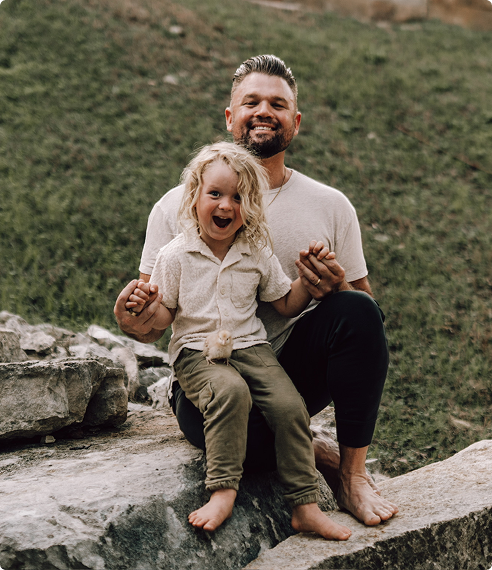
In parenting, play is one of the most powerful ways to connect with your children. Get down on the floor, follow their lead, and let them see your silly side. Turn bath time into an adventure, bedtime into a story game, and car rides into sing alongs. Carrie and I find that some of our best moments with Nayah and Novah happen when we stop managing and start playing. Play builds trust and makes kids feel truly enjoyed.
At work, playfulness boosts creativity and morale. Teams that laugh together often collaborate better. Bring a little play into meetings with creative warmups, celebrate wins with fun rituals, or approach problems as puzzles to solve. This is also where the Wellness Pentagon™ becomes helpful, reminding us that our physical, mental, emotional, financial, and spiritual lives are connected, including the joy and gratitude that flow from our Connection to Creator and God. You will find many guests sharing how play brought lightness to their lives across our latest episodes.
Friendships thrive on play too. Plan a game night, take a class together, or go on a spontaneous adventure. Shared fun is one of the fastest ways to deepen a friendship. If you would love more playful people in your life, the ideas in how to make friends as an adult may help.
When Play Feels Hard
If play feels hard right now, you are not alone, and it is completely understandable. Stress, grief, exhaustion, and heavy responsibilities can all make lightness feel out of reach. Learning how to be more playful in these seasons starts with being gentle with yourself and starting very small.
When play feels distant, look for the tiniest doorway. Smile at a dog on the street. Listen to one song you loved as a teenager. Watch a short funny video with someone you love. Doodle on a napkin. You do not need a big adventure to start. Small moments of lightness can slowly open the door. If stress is running high, the ideas in how to manage stress can help you create room for play. Supportive tools like a fun journal, a set of family game cards, or a puzzle can help too, and you can find a few we trust in our wellness tools store.
Sometimes a loss of interest in fun is connected to deeper exhaustion, grief, or depression. If you notice that nothing feels enjoyable for a long stretch, please reach out to a qualified health professional. There is real strength in asking for help. Wherever you are, trust that play can return. If you want to gently invite more happiness into your life, the ideas in how to let yourself be happy are a beautiful next step.
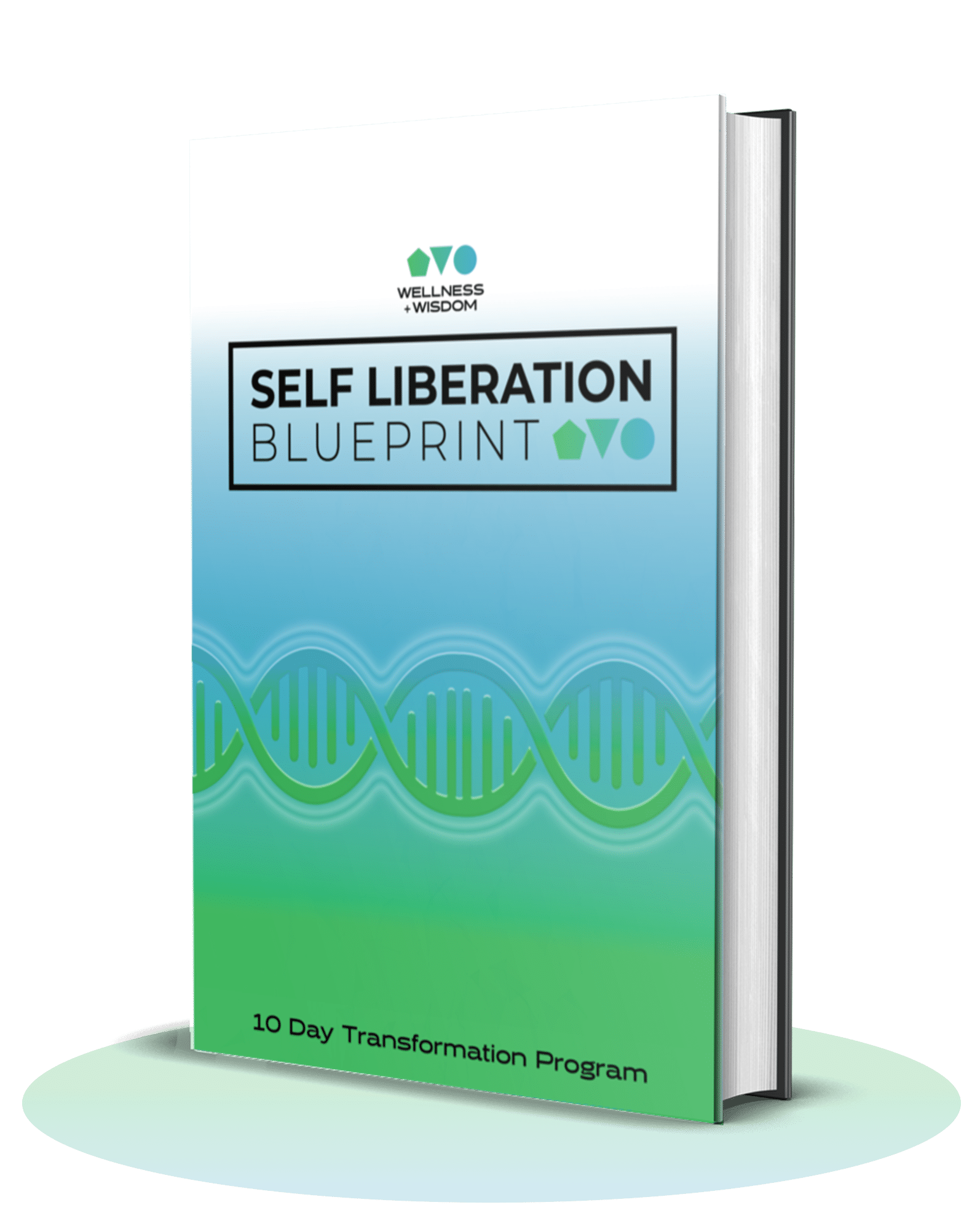
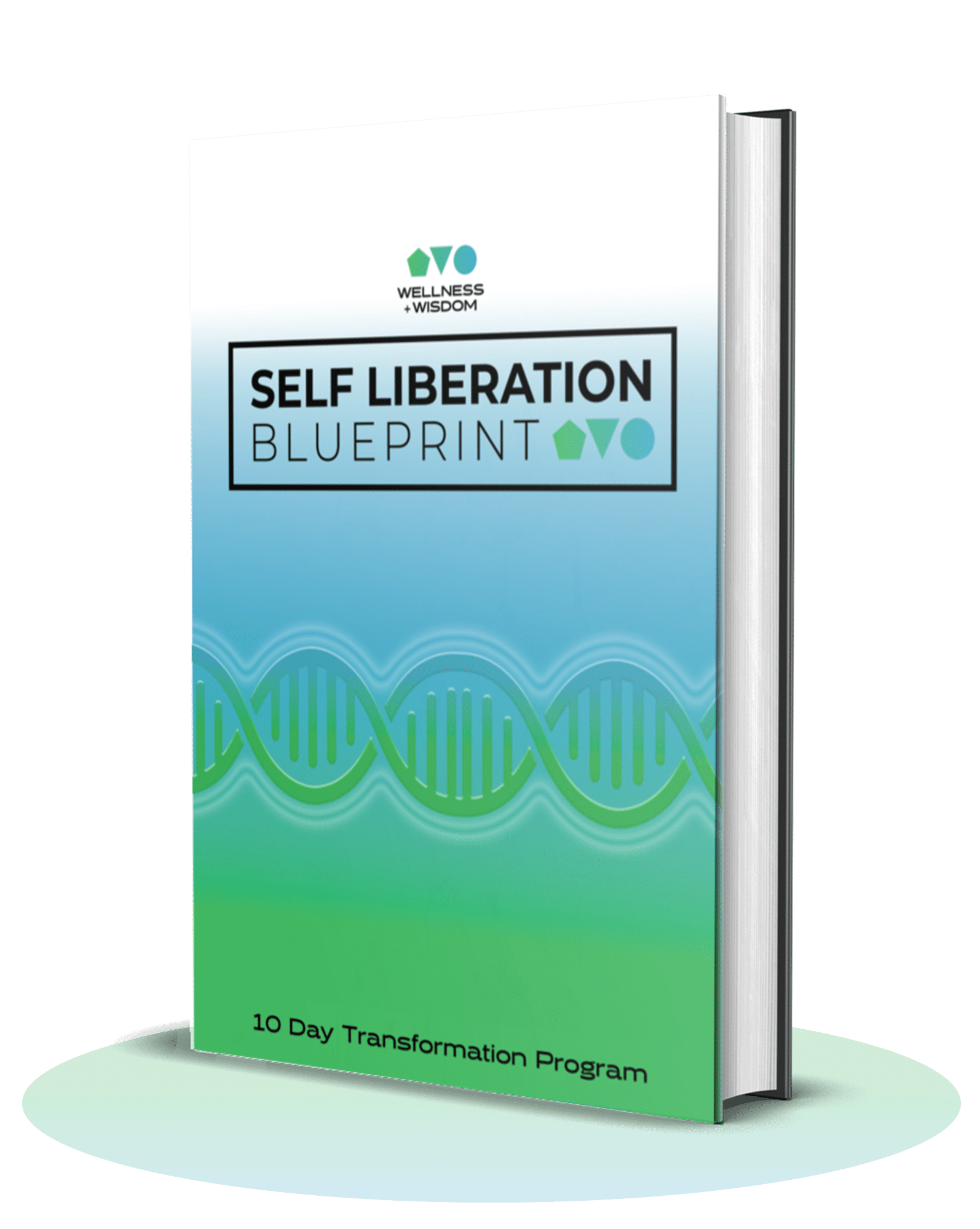
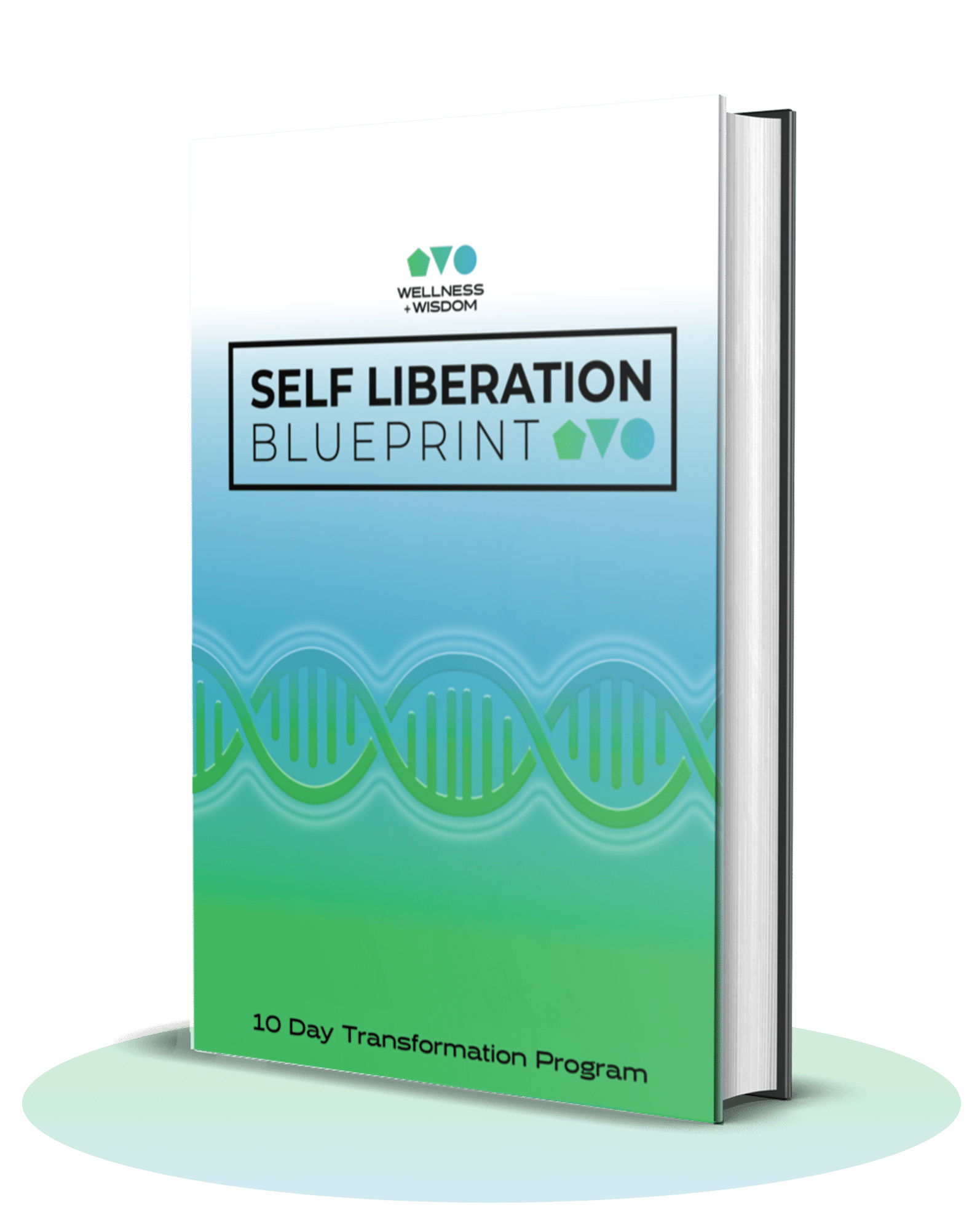
Ready to go deeper? Join the Liberated Life Tribe and receive your 10 day Self Liberation Blueprint at liberatedlife.com. It is free, it is guided, and each day offers a gentle practice to help you release old patterns and step into a lighter, more joyful version of yourself.
Frequently Asked Questions
What is adult playfulness?
Adult playfulness is the tendency to frame everyday situations so they feel fun, interesting, light, or entertaining. Researchers describe several types, including playing with others, lightheartedness, playing with ideas, and enjoying the whimsical and unusual.
What are the benefits of play for adults?
Research links playfulness with lower perceived stress, healthier coping strategies, greater happiness, and higher life satisfaction. Play also strengthens relationships and sparks creativity.
Can you become more playful?
Yes. In a randomized study of 533 adults, simple one week exercises like writing down three playful things each day increased playfulness, boosted wellbeing in the short term, and reduced depressive symptoms.
How can I be more playful in my relationship?
Try new activities together, share inside jokes, plan surprise dates, dance in the kitchen, and tease each other gently and lovingly. Shared play builds closeness and helps couples handle stress as a team.
Why is it hard for adults to play?
Many adults learned early that play is childish or unproductive, or they took on responsibility young. Stress, busy schedules, and worry about looking silly can also hold play back. Permission and small steps help.
How much play do adults need?
There is no set amount, but even a few minutes of intentional play each day can make a difference. Look for small playful moments daily and plan a longer block of fun each week.
Studies and External Resources
The science in this article rests on peer reviewed research. These are the sources referenced throughout.
- Magnuson C, Barnett LA. (2013). The playful advantage: how playfulness enhances coping with stress. Leisure Sciences. View the study via DOI
- Proyer RT. (2014). Playfulness over the lifespan and its relation to happiness: results from an online survey. Zeitschrift fur Gerontologie und Geriatrie. PubMed: 23982439
- Proyer RT, Gander F, Brauer K, Chick G. (2021). Can playfulness be stimulated? A randomised placebo controlled online playfulness intervention study on effects on trait playfulness, well being, and depression. Applied Psychology: Health and Well Being. PubMed: 32844597
- Brauer K, Stumpf HSC, Proyer RT. (2024). Playfulness in middle and older age: testing associations with life satisfaction, character strengths, and flourishing. Aging and Mental Health. PubMed: 38940664
About Josh Trent
Josh Trent is an Identity Transformation Architect and the award winning host of the Wellness + Wisdom Podcast, with over 15 million downloads since 2015. He is the creator of the L.I.F.E. Method™ Identity Transformation System and steward of the Emotional Epigenetics™ and BREATHE: Breath + Wellness™ systems of self mastery, impacting over 1,000 students worldwide. Join the Liberated Life Tribe and receive your 10 day Self Liberation Blueprint at liberatedlife.com. Josh lives in Austin, Texas with his wife Carrie, daughter Nayah, and son Novah. Peace and power.
Disclosure: We may earn a commission from certain links on this site when you make a purchase, at no extra cost to you. These commissions help support Wellness + Wisdom and do not affect the products or resources we choose to recommend. Full disclosure .