
By Josh Trent | Wellness + Wisdom Podcast Host & Identity Transformation Architect
“Burnout is not a sign that you are weak. It is a sign that you have been strong for too long without enough rest. Recovery begins the moment you decide your wellbeing matters as much as your work.”
Josh Trent
Learning how to recover from burnout is one of the most important acts of self respect you will ever practice, because burnout touches everything: your energy, your mood, your relationships, your health, and your sense of who you are. Burnout often creeps in slowly. It starts with long days and a little less sleep, then grows into a heavy exhaustion that rest on the weekend no longer fixes. Work that once felt meaningful starts to feel empty. You may feel detached, irritable, or like you are running on fumes. If this sounds familiar, please know that you are not alone and nothing is wrong with you. Burnout is a natural response to prolonged stress without enough recovery, and with the right care, you can come back to yourself. One of the gentlest doorways into recovery is your breath, which is why this work pairs so beautifully with BREATHE™.
Here is the joy forward truth at the center of it all. Burnout is not the end of your story. It is an invitation to build a life with more rest, clearer boundaries, and deeper meaning. Many people come out of burnout wiser, more grounded, and more aligned with what truly matters than they were before. Let us explore exactly how to begin.
Table of Contents
- What Burnout Really Is
- Why Burnout Happens
- The Gift on the Other Side of Burnout
- The Science of Burnout
- How to Recover From Burnout
- Rest Versus Recovery
- How to Recover From Burnout With BREATHE™
- Celebrating Every Step Back to Yourself
- Preventing Burnout Is a Lifelong Practice
- When Recovery Feels Slow
- Frequently Asked Questions
- Studies and External Resources
- About Josh Trent
What Burnout Really Is
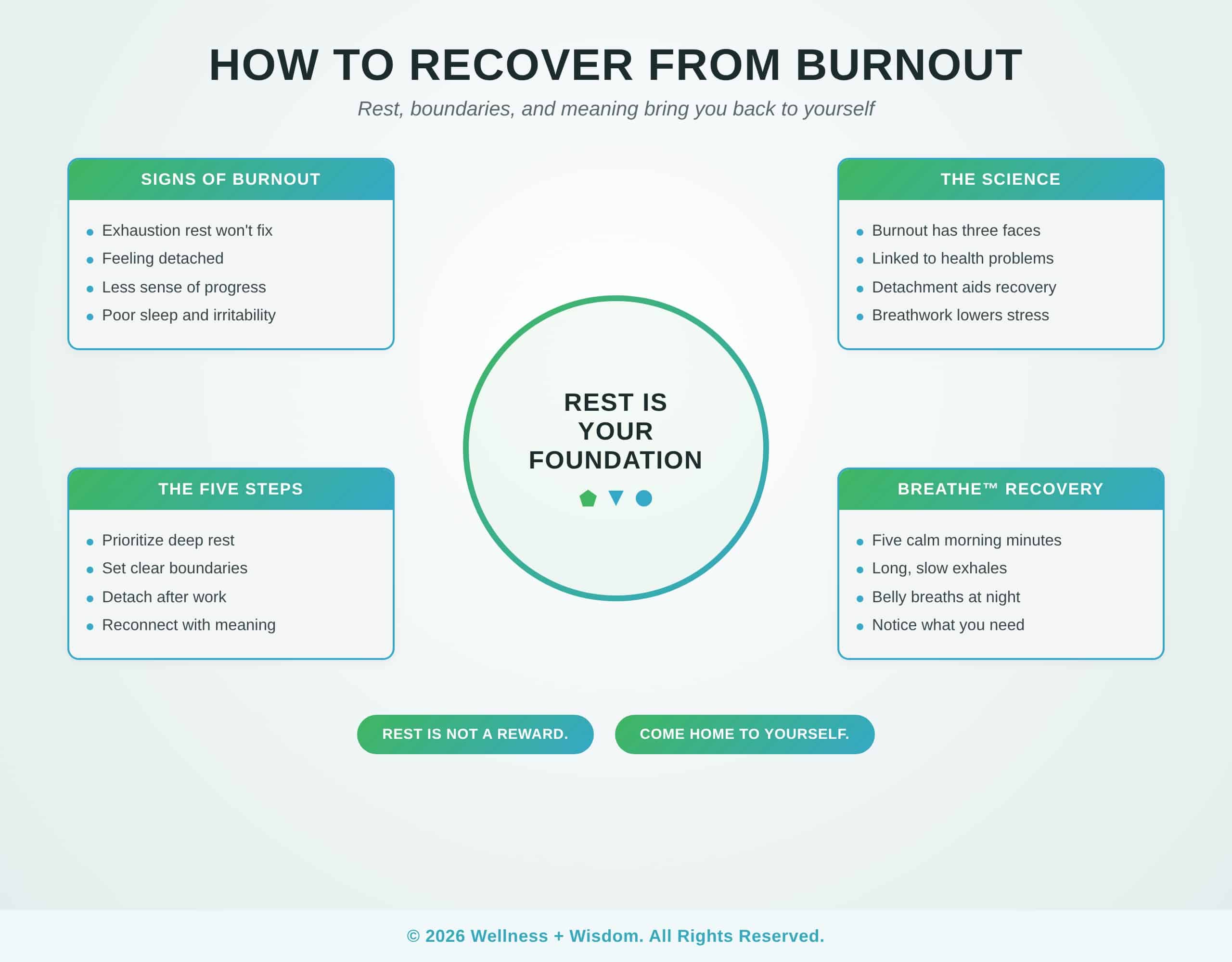
Burnout is a state of physical, emotional, and mental exhaustion caused by prolonged stress, especially at work, that leaves you feeling drained, detached, and less effective. It is more than ordinary tiredness. Ordinary tiredness lifts after a good night's sleep or a restful weekend. Burnout lingers, because it comes from a long build up of stress without enough recovery.
Researchers often describe burnout through three main experiences. The first is exhaustion, a deep sense of being emotionally and physically depleted. The second is cynicism or detachment, where you start to feel distant from your work, your colleagues, or the people you serve. The third is a reduced sense of accomplishment, where you feel less capable and less effective, even when you are working hard. You may not experience all three, but many people recognize at least one.
Burnout most often shows up in work, but it can also come from caregiving, parenting, studying, or any role that demands a lot of you for a long time. It is especially common among people who care deeply, which is part of what makes it so painful. The very dedication that makes you good at what you do can lead to burnout when it is not balanced with rest and support. These themes come up often on the Wellness + Wisdom Podcast, because so many driven, caring people have walked this path.
It also helps to know that burnout tends to arrive in stages. At first, you may notice small things: needing more coffee to get going, feeling a little shorter with the people you love, or lying awake running through tomorrow's to do list. Then the exhaustion deepens, and things that once brought you joy start to feel like chores. Catching burnout early makes recovery faster and gentler, so listening to these quiet signals is a gift you give your future self.
Why Burnout Happens
Burnout happens when the demands on you consistently outweigh the resources you have to meet them, and when there is not enough recovery to refill your tank. It is rarely about one bad week. It is about months or years of running hot without enough time to cool down.
Several factors often contribute. Heavy workloads and long hours leave little time for rest. A lack of control over your work can make stress feel inescapable. Feeling unrecognized or underappreciated drains motivation. Conflicts with colleagues or a lack of support make everything harder. And when your work feels out of line with your values, even manageable tasks can feel heavy. Many people also carry internal pressures, like perfectionism, people pleasing, or the belief that rest must be earned, which push them past healthy limits. If that resonates, the practices in how to stop people pleasing may help.
Culture plays a role too. Many of us absorbed the message that busyness equals worth and that slowing down means falling behind. That message keeps people pushing long after their bodies and minds are asking them to stop, a pattern explored in the hidden cost of hustle culture. Understanding these forces is freeing. Burnout is not a personal failing. It is a predictable response to an unsustainable situation, and that means it can be changed.
The Gift on the Other Side of Burnout
The gift on the other side of burnout is a life built on a stronger foundation, with clearer boundaries, deeper self awareness, and a more sustainable relationship with work and rest. Many people describe recovery as a turning point that helped them reconnect with what truly matters.
When you recover from burnout, you often gain wisdom that is hard to learn any other way. You learn your limits and how to honor them. You learn which commitments truly matter and which ones you can release. You learn to recognize early warning signs, like irritability, poor sleep, or a creeping sense of dread, so you can respond before exhaustion takes over again. This self knowledge becomes a lifelong gift.
Recovery also brings back the parts of life that burnout pushed aside. Energy for the people you love. Curiosity and creativity. Joy in simple things. A sense of meaning in your work, or the clarity to find work that fits you better. And here is the part I love most. Many people come out of burnout with a gentler, kinder relationship with themselves. They stop treating rest as a reward and start seeing it as a foundation. That shift is explored beautifully in how to rest without guilt.
The Science of Burnout
The science of burnout shows that it is defined by exhaustion, detachment, and reduced effectiveness, that it is linked with a range of physical and mental health consequences, that mentally detaching from work during time off supports recovery, and that breathing practices can lower stress. Burnout is real, measurable, and responsive to care.
Start with what burnout is. In a review published in World Psychiatry, Christina Maslach and Michael Leiter, leading researchers in the field, describe burnout as a response to chronic workplace stress characterized by exhaustion, cynicism, and reduced professional efficacy. They emphasize that burnout often arises from mismatches between a person and their work environment, in areas like workload, control, reward, community, fairness, and values. That means recovery often involves changing the situation, not just the individual.
The consequences are significant. A systematic review of prospective studies led by Denise Salvagioni and published in PLoS One found that burnout was linked with later physical health problems, including cardiovascular disease, type 2 diabetes, musculoskeletal pain, and insomnia, as well as depressive symptoms and absenteeism from work. Taking burnout seriously is an act of caring for your long term health.
The encouraging part is what helps. A meta analysis by Johannes Wendsche and Andrea Lohmann Haislah in Frontiers in Psychology found that psychologically detaching from work during time off was linked with less exhaustion, better wellbeing, and better sleep. And a meta analysis of randomized controlled trials by Guy Fincham and colleagues in Scientific Reports found that breathwork practices were associated with lower self reported stress. Rest that truly disconnects you from work, combined with simple calming practices, can support your recovery.
How to Recover From Burnout
You learn how to recover from burnout by prioritizing deep rest, setting clear boundaries, detaching from work during time off, reconnecting with what gives you meaning, and asking for support. These five steps address both your immediate exhaustion and the conditions that led to it. Here is how I practice and teach them.
1. Prioritize Deep Rest
Start by giving your body and mind permission to rest. Protect your sleep as if it were medicine, because it is. Go to bed earlier, keep a consistent schedule, and create a calm wind down routine. Build moments of rest into your day, like short breaks, slow walks, or quiet time without screens. Deep rest is not laziness. It is the foundation of recovery. The practices in how to sleep better can help.
2. Set Clear Boundaries
Look at your commitments and decide what you can reduce, delegate, or decline. Set a firm end to your workday. Turn off work notifications after hours. Practice saying no to new requests that would stretch you too thin. Boundaries protect the energy you need to heal. They may feel uncomfortable at first, especially if you are used to saying yes to everything, but they are essential. The skill of setting them kindly is explored in how to set healthy boundaries.
3. Detach From Work During Time Off
When you are not working, truly step away. Create a shutdown ritual at the end of the day, like closing your laptop, writing tomorrow's priorities, and taking a walk. Spend time on activities that absorb your attention in a nourishing way, like being in nature, playing with your kids, reading, cooking, or creating something. As the research shows, mental detachment from work is one of the strongest supports for recovery.
4. Reconnect With What Gives You Meaning
Burnout often disconnects you from the reasons you started. Take time to reflect on what matters most to you, in your work and beyond it. Reconnect with relationships, hobbies, faith, or causes that bring you a sense of purpose. Sometimes this reflection reveals that your work needs to change. Other times it helps you rediscover meaning in what you already do. The practices in how to reconnect with your purpose can guide you.
5. Ask for Support
You do not have to recover alone. Talk with trusted friends, family, or colleagues about what you are going through. If possible, speak with your manager about workload or adjustments. Consider working with a therapist or counselor who understands burnout. Support lightens the load and reminds you that you are not the only one who has walked this path. Asking for help is explored gently in how to ask for help.
Start with one or two of these steps, and be patient with yourself. Recovery takes time, often longer than we would like. Every small step counts. And if you would love a supportive community as you heal, the Liberated Life Tribe is a warm place to begin.
A simple weekly rhythm can help you put these steps into practice. On Sunday evening, look at the week ahead and circle one commitment you can release or shorten. Each workday, protect a clear stopping time and a short shutdown ritual. Midweek, schedule something that fills you up, like dinner with a friend, a long walk, or time at church. On the weekend, plan at least half a day with no work and no screens. These small structures turn good intentions into real recovery.
Rest Versus Recovery
Rest and recovery are related but not the same. Rest is taking a break from activity. Recovery is the deeper process of restoring your energy, health, and sense of self after a long period of depletion. A single weekend off is rest. Rebuilding your life so that burnout does not return is recovery.
Many people try to fix burnout with a vacation, only to find that the exhaustion returns within days of going back to work. That is because rest alone does not change the conditions that caused burnout in the first place. If your workload, boundaries, and habits stay the same, the stress will build up again. Rest is essential, but it is only part of the picture.
This is why knowing how to recover from burnout means looking beyond the next vacation. True recovery includes rest plus change. It means adjusting your workload where possible, setting new boundaries, building daily habits that refill your tank, addressing internal patterns like perfectionism, and reconnecting with meaning. It may also mean making bigger decisions about your work or life. Recovery is a process, not an event, and it unfolds over weeks and months. If you are working through deeper questions of balance, the ideas in how to find work life balance are a natural next step.
How to Recover From Burnout With BREATHE™
BREATHE™ offers a simple, accessible way to support burnout recovery, because your breath is one of the most direct ways to shift your neural system from stress toward rest. When you are burned out, your body often stays stuck in a state of high alert. Slow, intentional breathing helps signal that it is safe to soften.
Inside BREATHE™, I recommend a gentle daily rhythm for people recovering from burnout. In the morning, before checking your phone, take five minutes for slow breathing, inhaling for about five seconds and exhaling for about five or six. During the day, whenever you notice tension rising, take three breaths with a long, slow exhale. In the evening, lie down with one hand on your belly and practice gentle belly breathing as you wind down for sleep. These small moments add up, helping your body rediscover calm.
Breath also helps you reconnect with yourself. Burnout often leaves people feeling numb or disconnected from their own needs. Slowing down to breathe gives you a chance to notice how you actually feel, what your body needs, and what your heart is asking for. That awareness is the beginning of real recovery. For more techniques, explore how to practice breathwork. To go deeper with identity level change, explore our L.I.F.E. Method™ programs.
Movement is another gentle ally. You do not need intense workouts while you recover. In fact, pushing hard can drain an already depleted body. Instead, try easy walks, stretching, or yoga paired with slow breathing. Gentle movement helps release tension, improves sleep, and reminds your body that it can feel good again. Pair a ten minute walk with five slow breaths at the end, and you have a simple daily ritual that supports your whole system.
Celebrating Every Step Back to Yourself
Celebrating every step back to yourself helps make recovery feel hopeful rather than endless. Your brain learns through reward, so when you notice and appreciate signs of healing, you strengthen your motivation to keep caring for yourself.
Recovery often happens in small moments. The first morning you wake up feeling a little more rested. The first evening you enjoy without thinking about work. The first time you say no to an extra commitment and feel relief instead of guilt. The first spark of curiosity or joy after months of numbness. These moments deserve recognition. Write them down, share them with someone you trust, or simply pause to appreciate them.
Celebration also helps counter the inner critic that often accompanies burnout, the voice that says you should be doing more or recovering faster. When you focus on progress rather than perfection, recovery feels lighter. There is a whole practice around noticing these moments in celebrating small wins, and it is especially powerful during burnout recovery.
Preventing Burnout Is a Lifelong Practice
Preventing burnout is a lifelong practice, because work and life will keep bringing new demands. The goal is not to avoid all stress, but to build a rhythm that includes enough recovery to keep you healthy and engaged over the long run.
Many people find it helpful to check in with themselves regularly. Once a week, ask: How is my energy? How am I sleeping? Do I feel connected to the people I love? Do I still find meaning in my work? Am I taking real breaks? These questions help you notice early warning signs before they turn into burnout again. Paying attention is one of the most protective habits you can build.
This is also where the Wellness Pentagon™ becomes helpful. Burnout touches every dimension of wellbeing: physical, mental, emotional, spiritual, and financial. Caring for each one, including your Connection to Creator and God, creates resilience that helps you weather demanding seasons without burning out. Many people find that a sense of spiritual grounding offers perspective that work alone cannot provide. You will find many guests sharing their own burnout recovery stories across our latest episodes.
When Recovery Feels Slow
If recovery feels slow right now, you are in very good company, and it is completely understandable. Learning how to recover from burnout is rarely a quick process. Burnout often builds over months or years, and healing takes time too. Be patient and gentle with yourself as you move through it, a little at a time, at a pace that honors where you are.
When recovery feels slow, focus on the smallest possible steps. One earlier bedtime. One short walk outside. One boundary held. One conversation with someone who cares. These small actions add up over time, even when you cannot feel the difference yet. Supportive tools like a breath training device or a journal for tracking your energy can help, and you can find a few we trust in our wellness tools store.
It is also important to know that burnout can overlap with depression, anxiety, and physical health conditions. If you are experiencing persistent hopelessness, inability to function, thoughts of self harm, or physical symptoms that concern you, please reach out to a qualified health professional right away. There is real strength in asking for help. Wherever you are, be patient and kind with yourself, and trust that recovery is possible, one restful step at a time. If stress is still running high, the practices in how to manage stress are a gentle next step.
Ready to go deeper? Join the Liberated Life Tribe and receive your 10 day Self Liberation Blueprint at liberatedlife.com. It is free, it is guided, and each day offers a gentle practice to help you restore your energy and reconnect with yourself.
Frequently Asked Questions
What are the signs of burnout?
Common signs include deep exhaustion that rest does not fix, feeling detached or cynical about your work, reduced effectiveness, irritability, trouble sleeping, and loss of motivation or joy. Physical symptoms like headaches, frequent illness, or muscle tension can also appear.
How long does it take to recover from burnout?
Recovery time varies widely depending on how severe the burnout is and how much your situation changes. Some people feel better within a few weeks of rest and boundary setting, while others need several months. Changing the conditions that caused burnout is key to lasting recovery.
Is a vacation enough to recover from burnout?
Usually not on its own. A vacation provides rest, but if workload, boundaries, and habits stay the same, exhaustion often returns quickly. Lasting recovery combines rest with changes like setting boundaries, detaching from work in time off, and reconnecting with meaning.
What is the difference between burnout and stress?
Stress often involves feeling overwhelmed and under pressure, with a sense of urgency. Burnout is what can happen after prolonged stress without enough recovery, often involving exhaustion, detachment, and a sense that your efforts no longer matter.
Can breathing exercises help with burnout?
Breathing practices can support recovery by helping your body shift toward calm. A meta analysis found breathwork was associated with lower self reported stress. Slow breathing with a long exhale is a simple, accessible tool to use daily alongside rest and boundaries.
When should I seek professional help for burnout?
If burnout comes with persistent hopelessness, inability to function, thoughts of self harm, or concerning physical symptoms, reach out to a qualified health professional right away. A therapist or counselor can also help you navigate recovery and changes at work.
Studies and External Resources
The science in this article rests on peer reviewed research. These are the sources referenced throughout.
- Maslach C, Leiter MP. (2016). Understanding the burnout experience: recent research and its implications for psychiatry. World Psychiatry. PubMed: 27265691
- Salvagioni DAJ, et al. (2017). Physical, psychological and occupational consequences of job burnout: A systematic review of prospective studies. PLoS One. PubMed: 28977041
- Wendsche J, Lohmann Haislah A. (2016). A Meta Analysis on Antecedents and Outcomes of Detachment from Work. Frontiers in Psychology. PubMed: 28133454
- Fincham GW, et al. (2023). Effect of breathwork on stress and mental health: A meta analysis of randomised controlled trials. Scientific Reports. PubMed: 36624160
About Josh Trent
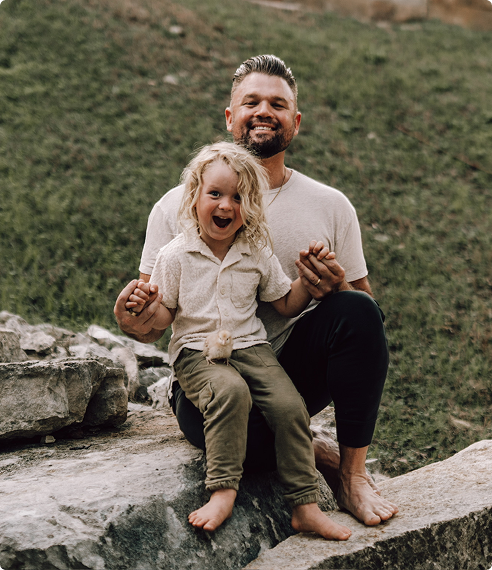
Josh Trent is an Identity Transformation Architect and the award winning host of the Wellness + Wisdom Podcast, with over 15 million downloads since 2015. He is the creator of the L.I.F.E. Method™ Identity Transformation System and steward of the Emotional Epigenetics™ and BREATHE: Breath + Wellness™ systems of self mastery, impacting over 1,000 students worldwide. Join the Liberated Life Tribe and receive your 10 day Self Liberation Blueprint at liberatedlife.com. Josh lives in Austin, Texas with his wife Carrie, daughter Nayah, and son Novah. Peace and power.
Disclosure: We may earn a commission from certain links on this site when you make a purchase, at no extra cost to you. These commissions help support Wellness + Wisdom and do not affect the products or resources we choose to recommend. Full disclosure .