By Josh Trent | Wellness + Wisdom Podcast Host & Identity Transformation Architect
“Your breath is the one tool you never leave home without. Learning how to practice breathwork is learning to use it on purpose, to come home to calm whenever life gets loud.”
Josh Trent
Learning how to practice breathwork is one of the simplest and most powerful things you can do for your body, mind, and spirit, because your breath is the bridge between what you feel and how you respond. You breathe roughly twenty thousand times a day, almost always without noticing. Yet when you begin to breathe with intention, something remarkable happens. Your heart rate can settle, your thoughts can slow, and your whole system can shift from stress toward calm. Breathwork does not require special equipment, expensive classes, or hours of free time. It requires only a few minutes and your willingness to pay attention. This is the foundation of BREATHE™, and in this guide I will walk you through exactly how to begin.
Here is the joy forward truth at the center of it all. You already have everything you need. Every breath is an opportunity to come back to yourself. When you learn how to practice breathwork, you gain a portable tool for calm, focus, and energy that you can use anywhere, from a stressful meeting to a sleepless night to a quiet morning of prayer. Let us explore exactly how.
Table of Contents
- What Breathwork Really Is
- Why Most of Us Breathe Out of Balance
- The Gift of a Conscious Breath
- The Science of Breathwork
- How to Practice Breathwork
- Calming Breathwork Versus Energizing Breathwork
- How to Practice Breathwork With BREATHE™
- Celebrating Every Conscious Breath
- Breathwork Is a Lifelong Practice
- When Breathwork Feels Hard
- Frequently Asked Questions
- Studies and External Resources
- About Josh Trent
What Breathwork Really Is
Breathwork is the intentional practice of changing your breathing pattern to influence how you feel physically, mentally, and emotionally. It includes a wide range of techniques, from slow, gentle breathing that calms the body to more active patterns that energize it. What they share is conscious attention to the breath.
Breathing is unique among the body's automatic functions. You do not have to think about breathing for it to happen, yet you can take control of it at any moment. That makes breath a rare doorway between the automatic systems of your body and your conscious choices. When you slow your breath, lengthen your exhale, or breathe deeply into your belly, you send signals to your neural system that it is safe to relax.
Breathwork has deep roots across cultures and traditions, from ancient contemplative practices to modern clinical research. Today, it is used by athletes to perform under pressure, by therapists to help clients regulate emotions, by parents to stay calm in chaotic moments, and by people of faith as a doorway into prayer and presence. It is one of the most accessible wellness practices there is, and it is a theme we return to again and again on the Wellness + Wisdom Podcast.
Why Most of Us Breathe Out of Balance
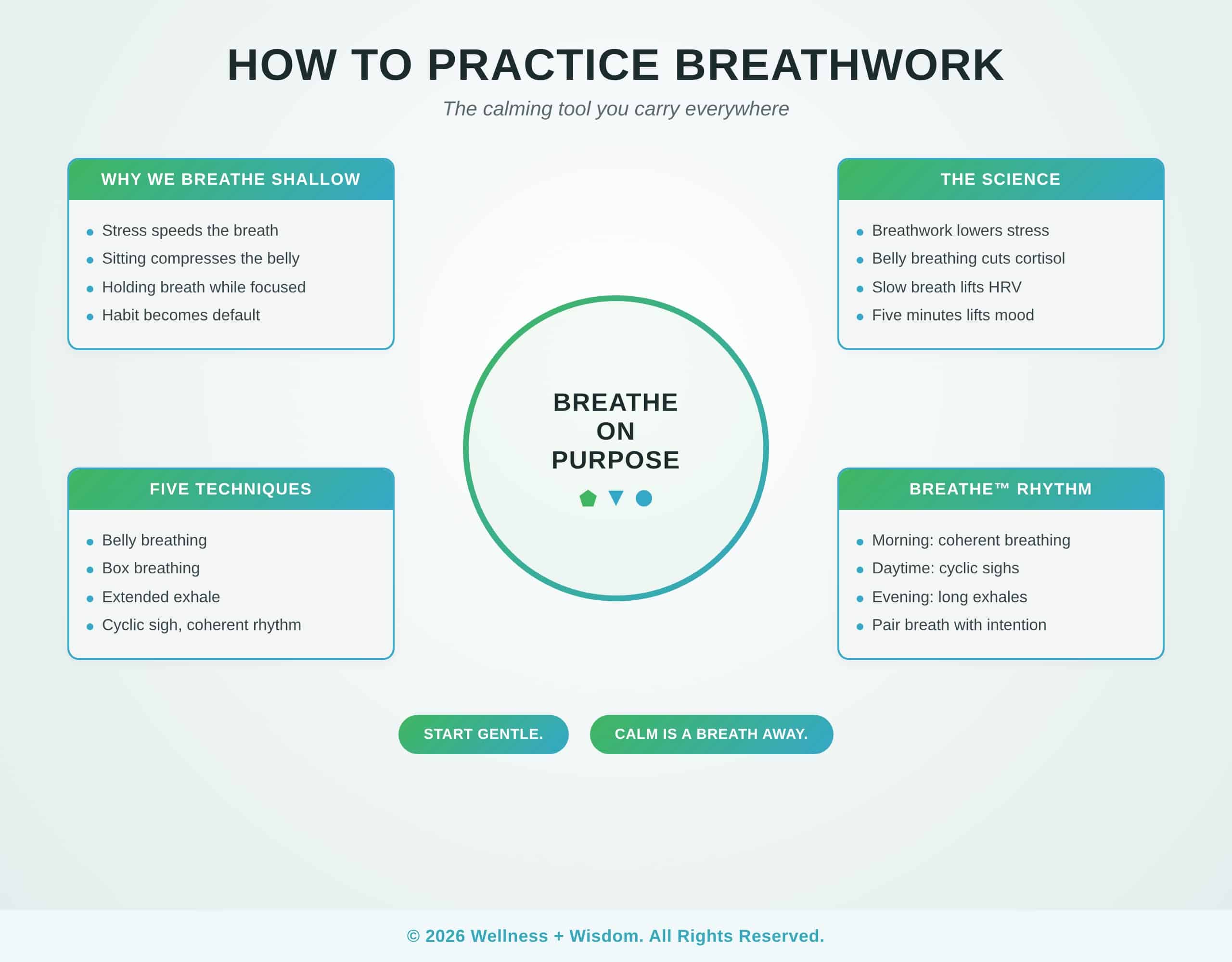
Most of us breathe out of balance because stress, posture, and modern habits push us toward fast, shallow breathing high in the chest. Over time, this pattern becomes our default, even when we are not under any real pressure.
When you are stressed, your breathing naturally speeds up and moves into your upper chest. That is part of the body's protective response. The problem is that many of us live in a near constant state of low level stress, so this shallow breathing becomes habitual. Long hours sitting hunched over desks and phones compress the belly and limit how fully the diaphragm can move. Many people also unconsciously hold their breath while reading emails or concentrating.
This kind of breathing can keep the body feeling tense and on alert. The good news is that the pattern can be retrained. Just as stress shapes your breath, your breath can reshape your stress response. With a little daily practice, slower and deeper breathing begins to feel natural again. If your body often feels on high alert, the insights in why you might always feel on alert and neural system regulation pair beautifully with this practice.
The Gift of a Conscious Breath
A conscious breath gives you calm in stressful moments, clarity when your mind is racing, energy when you feel flat, and a sense of presence that makes ordinary moments feel more alive. It is one of the few tools that works in seconds and gets more powerful with practice.
Think about how many times a day you could use a moment of calm. Before a difficult conversation. In traffic. When your child is melting down. Before a presentation. Lying awake at night. In each of these moments, a few intentional breaths can shift how you feel and how you respond. That is a remarkable gift to carry with you everywhere.
Breathwork also strengthens your relationship with your body. Many of us live mostly in our heads, disconnected from physical sensations until something hurts. Breathing with awareness brings you back into your body, helping you notice tension, emotion, and energy before they build up. And here is the part I love most. Breath is also a doorway to presence and spiritual connection. Many people find that slowing their breath opens a quiet space for prayer, gratitude, and a deeper sense of Connection to Creator and God. Your breath can become a daily invitation to come home, which is beautifully explored in how to come home to your body.
The Science of Breathwork
The science of breathwork shows that breathing practices are linked with lower stress and improvements in anxiety and mood, that regular diaphragmatic breathing can improve attention and lower stress hormones, that slow breathing increases heart rate variability and relaxation, and that just five minutes a day of certain breathing patterns can lift mood. The evidence is growing and encouraging.
Start with the big picture. A meta analysis of randomized controlled trials published in Scientific Reports by Guy Fincham and colleagues found that breathwork was associated with lower self reported stress, as well as improvements in anxiety and depressive symptoms, compared with control conditions. Intentional breathing is not just a pleasant habit. It has measurable effects on wellbeing.
Next, consider regular practice. In a study published in Frontiers in Psychology, Xiao Ma and colleagues found that adults who practiced diaphragmatic breathing over eight weeks showed improved sustained attention, lower negative emotion, and lower levels of the stress hormone cortisol compared with a control group. Consistent belly breathing changed both how people felt and what their bodies showed.
Slow breathing matters too. A systematic review by Andrea Zaccaro and colleagues in Frontiers in Human Neuroscience found that slow breathing, around six breaths per minute, was linked with greater heart rate variability, a marker of a flexible and resilient neural system, along with increased relaxation and reduced anxiety. And a randomized study from Stanford researchers published in Cell Reports Medicine found that just five minutes a day of cyclic sighing, a pattern with a long exhale, improved mood and reduced physiological arousal more than mindfulness meditation over a month. A little practice goes a long way.
How to Practice Breathwork
You learn how to practice breathwork by starting with belly breathing, adding box breathing for focus, using an extended exhale for calm, trying cyclic sighing for quick relief, and building toward coherent breathing for daily balance. These five techniques give you a simple, complete toolkit. Here is how I practice and teach them.
1. Belly Breathing
Sit or lie down comfortably and place one hand on your chest and one on your belly. Breathe in slowly through your nose, letting your belly rise while your chest stays relatively still. Exhale gently through your nose or mouth, feeling your belly fall. Practice for three to five minutes. This diaphragmatic breathing is the foundation of all other techniques, because it retrains your body to breathe deeply and efficiently.
2. Box Breathing
Breathe in for four counts, hold for four, breathe out for four, and hold for four. Repeat for several rounds. This steady, balanced pattern helps settle the mind and sharpen focus, which is why it is popular with athletes and people in high pressure roles. For a deeper walkthrough, see our box breathing beginners guide.
3. Extended Exhale
Breathe in through your nose for four counts and out slowly through your mouth for six to eight counts. A longer exhale is one of the most direct ways to signal safety to your body and shift toward calm. This is wonderful before sleep, after a stressful moment, or anytime you feel tension rising.
4. Cyclic Sighing
Take a deep inhale through your nose, then a second short inhale on top to fully fill your lungs, followed by a long, slow exhale through your mouth. Repeat for one to five minutes. As the Stanford research showed, this simple pattern can lift mood and calm the body quickly, making it a great tool for moments of acute stress.
5. Coherent Breathing
Breathe in for about five to six seconds and out for about five to six seconds, creating a smooth, even rhythm of roughly five or six breaths per minute. Practice for five to ten minutes. This slow, balanced pattern supports heart rate variability and is a beautiful daily practice for building resilience over time.
A few simple guidelines make every technique more effective. Breathe through your nose whenever you can, since nasal breathing tends to be slower and more even. Keep your shoulders soft and let the movement come from your belly and lower ribs rather than your upper chest. Never force the breath or strain to hold it, and if a count feels too long, shorten it. Comfort and ease are signs you are doing it well. Breathwork should feel like an invitation, not a workout.
Start with belly breathing for a few days, then add one new technique each week. Practice at a consistent time, like after waking or before bed, to build a habit, which is exactly the approach in how to build healthy habits. And if you would love to practice with a supportive community, the Liberated Life Tribe is a warm place to grow.
Calming Breathwork Versus Energizing Breathwork
Breathwork techniques generally fall into two families: calming practices that slow the breath and settle the body, and energizing practices that speed up or intensify the breath to increase alertness. Both have their place, and knowing the difference helps you choose the right tool for the moment.
Calming breathwork includes the techniques above: belly breathing, extended exhales, cyclic sighing, and coherent breathing. These are gentle, safe for most people, and ideal for reducing stress, preparing for sleep, or finding calm before a challenge. If you are new to breathwork, this is the best place to start, and you can practice it daily for the rest of your life.
Energizing breathwork includes faster, more forceful patterns that can increase alertness and energy. These practices can feel invigorating, but they are more intense and are not right for everyone. People who are pregnant or who have heart conditions, high blood pressure, epilepsy, a history of fainting, or certain mental health conditions should talk with a qualified health professional before trying intense breathing practices. Never practice intense breathwork while driving, in water, or in any situation where lightheadedness could be dangerous. When in doubt, choose the gentle, calming techniques. They offer remarkable benefits with very little risk. If you also enjoy intense practices like cold exposure, the safety principles in cold exposure epigenetics apply here too.
How to Practice Breathwork With BREATHE™
BREATHE™ turns breathwork from an occasional technique into a daily practice of self mastery, using the breath as a bridge between body, mind, emotion, and spirit. It is designed to help you use your breath not only to calm down, but to come home to who you truly are.
Inside BREATHE™, I encourage a simple daily rhythm. In the morning, spend three to five minutes with coherent breathing to set a calm, focused tone for the day. During the day, use a few rounds of cyclic sighing or extended exhales whenever stress rises. In the evening, practice belly breathing with a long exhale as you wind down for sleep. This rhythm weaves breath into your entire day, so calm becomes your baseline rather than an emergency response.
BREATHE™ also invites you to pair breath with intention. As you breathe in, you might silently say a word like “peace” or “strength.” As you breathe out, you might release tension, worry, or a story that no longer serves you. Many people find that combining breath with prayer, gratitude, or a simple intention makes the practice feel deeply meaningful. Over time, your breath becomes a trusted companion, always available, always ready to bring you back to center. To go deeper with breath and identity level change, explore our L.I.F.E. Method™ programs.
Celebrating Every Conscious Breath
Celebrating every conscious breath helps make breathwork a lasting habit. Your brain learns through reward, so when you notice how good it feels to breathe with intention, you strengthen the motivation to come back to it.
After each practice, take a moment to notice how you feel. Maybe your shoulders dropped. Maybe your thoughts slowed. Maybe you feel a little more present or energized. Name that shift. These small moments of awareness reinforce the value of your practice and make it more likely you will return tomorrow.
You can also celebrate the moments you remembered to breathe when it mattered. Maybe you took three slow breaths before responding to a frustrating email. Maybe you used cyclic sighing to calm down before a big meeting. These are real wins, signs that breathwork is becoming part of who you are. There is a whole practice around noticing these moments in celebrating small wins.
Breathwork Is a Lifelong Practice
If you share your home with others, consider breathing together. Children often love simple breath games, like pretending to smell a flower and blow out a candle, which teach the same extended exhale in a playful way. Couples can take a few slow breaths together before a difficult conversation or at the end of the day. Shared breathing builds connection and makes calm a family habit rather than a solo effort.
Breathwork is a lifelong practice, because your breath is with you in every season of life. Whether you are navigating a busy career, raising children, healing from loss, or simply growing older, your breath remains a constant, reliable tool for coming back to center.
You can also pair breathwork with other practices you already love. A few minutes of slow breathing before meditation helps your mind settle faster, which pairs beautifully with the approach in how to practice mindfulness. An extended exhale practice in bed can become part of your evening wind down, supporting the habits in how to sleep better. And a single conscious breath during a moment of strong emotion gives that feeling room to rise and fall, which is the heart of the 90 second emotion rule. Breath weaves naturally into almost every other wellness practice, making each one more powerful.
Over time, many people notice that their default breathing changes. They breathe more slowly and deeply throughout the day without trying. They catch themselves holding their breath and gently release it. They reach for a calming breath automatically when stress rises. This is what happens when a practice becomes part of who you are. Breath becomes not just something you do, but a way of being.
This is also where the Wellness Pentagon™ becomes helpful. Breathwork supports every dimension of wellbeing: physical health through better stress regulation and sleep, mental clarity through calmer focus, emotional balance through regulation, spiritual connection through presence, and even financial wellness through calmer, wiser decisions. You will find many breathwork experts and practitioners sharing their wisdom across our latest episodes.
When Breathwork Feels Hard
If breathwork feels hard right now, you are in very good company, and it is completely understandable. Learning how to practice breathwork does not mean every session will feel peaceful. It means you will gently build a relationship with your breath, a little at a time, at a pace that honors where you are.
Some people feel anxious when they first pay attention to their breath, especially if they have been under stress for a long time. If that happens, keep your eyes open, shorten your practice to just a few breaths, and focus on gentle, natural breathing rather than deep or long breaths. Breathing along with a guided recording can also help. Supportive tools like a breath training device can make practice easier and more consistent, and you can find a few we trust in our wellness tools store.
It is also important to stop and return to normal breathing if you feel dizzy, lightheaded, tingly, or uncomfortable during any practice. If you have a heart condition, respiratory condition, are pregnant, or have a history of panic attacks or trauma, talk with a qualified health professional about which practices are right for you. There is real strength in asking for guidance. Wherever you are, be patient and kind with yourself, and trust that learning how to practice breathwork is something you can absolutely grow, one breath at a time. If stress is a big part of your life right now, the practices in how to manage stress are a gentle next step.
Ready to go deeper? Join the Liberated Life Tribe and receive your 10 day Self Liberation Blueprint at liberatedlife.com. It is free, it is guided, and it includes simple breath practices you can weave into every day.
Frequently Asked Questions
What is the best breathwork for beginners?
Belly breathing is the best place to start. Place one hand on your chest and one on your belly, and breathe slowly through your nose so your belly rises and falls. Once that feels comfortable, try an extended exhale, breathing in for four counts and out for six to eight.
How long should I practice breathwork each day?
Even five minutes a day can make a difference. A Stanford study found that five minutes daily of cyclic sighing improved mood over a month. Consistency matters more than duration, so a short daily practice is better than an occasional long one.
Does breathwork really reduce stress?
Yes. A meta analysis of randomized controlled trials found that breathwork was associated with lower self reported stress and improvements in anxiety and depressive symptoms. Research on slow breathing also shows increased heart rate variability and relaxation.
What is cyclic sighing?
Cyclic sighing is a breathing pattern with a deep inhale through the nose, a second short inhale on top, and a long, slow exhale through the mouth. Repeated for a few minutes, it can quickly calm the body and lift mood.
Is breathwork safe for everyone?
Gentle, slow breathing is safe for most people. More intense or rapid breathing practices are not right for everyone. If you are pregnant or have heart, respiratory, seizure, or certain mental health conditions, talk with a health professional first, and never practice intense breathwork while driving or in water.
When is the best time to practice breathwork?
Morning practice sets a calm tone for the day, a few breaths during stressful moments help you reset, and evening practice supports better sleep. Choose a consistent time to build the habit, then use quick techniques whenever you need them throughout the day.
Studies and External Resources
The science in this article rests on peer reviewed research. These are the sources referenced throughout.
- Fincham GW, et al. (2023). Effect of breathwork on stress and mental health: A meta analysis of randomised controlled trials. Scientific Reports. PubMed: 36624160
- Ma X, et al. (2017). The Effect of Diaphragmatic Breathing on Attention, Negative Affect and Stress in Healthy Adults. Frontiers in Psychology. PubMed: 28626434
- Zaccaro A, et al. (2018). How Breath Control Can Change Your Life: A Systematic Review on Psycho Physiological Correlates of Slow Breathing. Frontiers in Human Neuroscience. PubMed: 30245619
- Balban MY, et al. (2023). Brief structured respiration practices enhance mood and reduce physiological arousal. Cell Reports Medicine. PubMed: 36630953
About Josh Trent
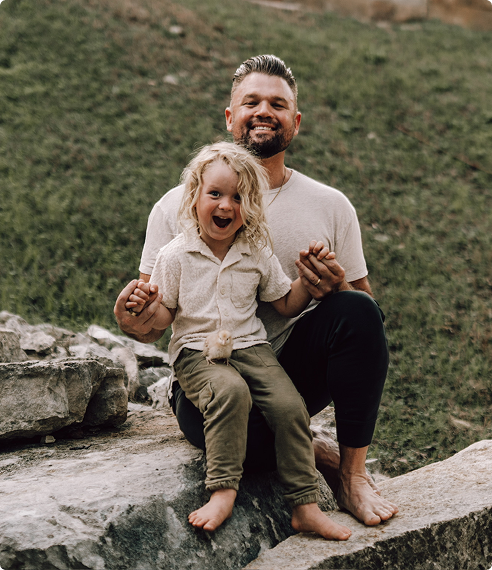
Josh Trent is an Identity Transformation Architect and the award winning host of the Wellness + Wisdom Podcast, with over 15 million downloads since 2015. He is the creator of the L.I.F.E. Method™ Identity Transformation System and steward of the Emotional Epigenetics™ and BREATHE: Breath + Wellness™ systems of self mastery, impacting over 1,000 students worldwide. Join the Liberated Life Tribe and receive your 10 day Self Liberation Blueprint at liberatedlife.com. Josh lives in Austin, Texas with his wife Carrie, daughter Nayah, and son Novah. Peace and power.
Disclosure: We may earn a commission from certain links on this site when you make a purchase, at no extra cost to you. These commissions help support Wellness + Wisdom and do not affect the products or resources we choose to recommend. Full disclosure .