
By Josh Trent | Wellness + Wisdom Podcast Host & Identity Transformation Architect
“Vulnerability is not weakness. It is the courage to be fully seen. Learning how to be vulnerable is learning that the real you was always worth showing.”
Josh Trent
Learning how to be vulnerable is one of the bravest and most rewarding things you can do, because it is the doorway to every deep connection you will ever have. So many of us learned to wear armor. We smile when we are hurting, say “I am fine” when we are not, and keep our biggest dreams and fears tucked safely away. That armor protected us once. But it also keeps out the very love, support, and closeness we long for. Vulnerability is the gentle practice of taking the armor off, a little at a time, with people who have earned the right to see the real you. Our capacity for that openness is shaped by the emotional patterns we inherited, which is the heart of Emotional Epigenetics™.
Here is the joy forward truth at the center of it all. Other people see your vulnerability far more kindly than you do. Research shows that what feels like weakness from the inside often looks like courage from the outside. When you learn how to be vulnerable with wisdom and care, your relationships deepen, your stress lightens, and you finally get to experience being loved as you truly are. Let us explore exactly how.
Table of Contents
- What Vulnerability Really Means
- Why Opening Up Feels So Risky
- The Gift of Being Truly Seen
- The Science of Vulnerability
- How to Be Vulnerable
- Wise Vulnerability Versus Oversharing
- How to Be Vulnerable With Emotional Epigenetics™
- Celebrating Every Brave Share
- Vulnerability Is a Lifelong Practice
- When Opening Up Feels Too Hard
- Frequently Asked Questions
- Studies and External Resources
- About Josh Trent
What Vulnerability Really Means
Vulnerability means allowing yourself to be emotionally seen, sharing your true feelings, needs, hopes, and imperfections, even when you cannot control how others will respond. It is the willingness to show up as you really are, without the mask.
Vulnerability looks like saying “I love you” first. It looks like admitting you made a mistake, asking for help, sharing a dream that feels too big, or telling someone they hurt you. It looks like saying “I am scared” or “I do not know” or “I need you.” Each of these moments carries a little risk, because the other person might not respond the way you hope. That uncertainty is exactly what makes vulnerability so powerful.
Importantly, vulnerability is not the same as sharing everything with everyone. It is a thoughtful, intentional openness with people who have shown they can hold what you share with care. It grows gradually, as trust grows. And it starts with being honest with yourself about what you feel and need. Vulnerability is a theme that comes up in nearly every deep conversation on the Wellness + Wisdom Podcast, because it is the foundation of real intimacy.
Why Opening Up Feels So Risky
Opening up feels risky because the human neural system is wired to protect us from rejection, and showing our true selves can feel like handing someone the power to hurt us. For most of human history, belonging to the group was essential for survival, so our bodies still treat the possibility of rejection as a serious threat.
Many of us also carry painful memories of times we were vulnerable and it did not go well. Maybe you shared a feeling and were laughed at. Maybe you asked for help and were told you were too needy. Maybe you cried and were told to stop. Each of these experiences taught your body that openness is dangerous, and it built armor to keep you safe. That armor was wise at the time. It simply may not fit the life you want now.
Culture adds another layer. Many of us, especially many men, were taught that showing emotion is weakness and that strength means never needing anyone. This belief keeps countless people isolated and exhausted from carrying everything alone. If this resonates, the conversation in why men need to feel more, not less is a beautiful companion. Seeing these patterns clearly replaces shame with compassion and opens the door to a different way of living.
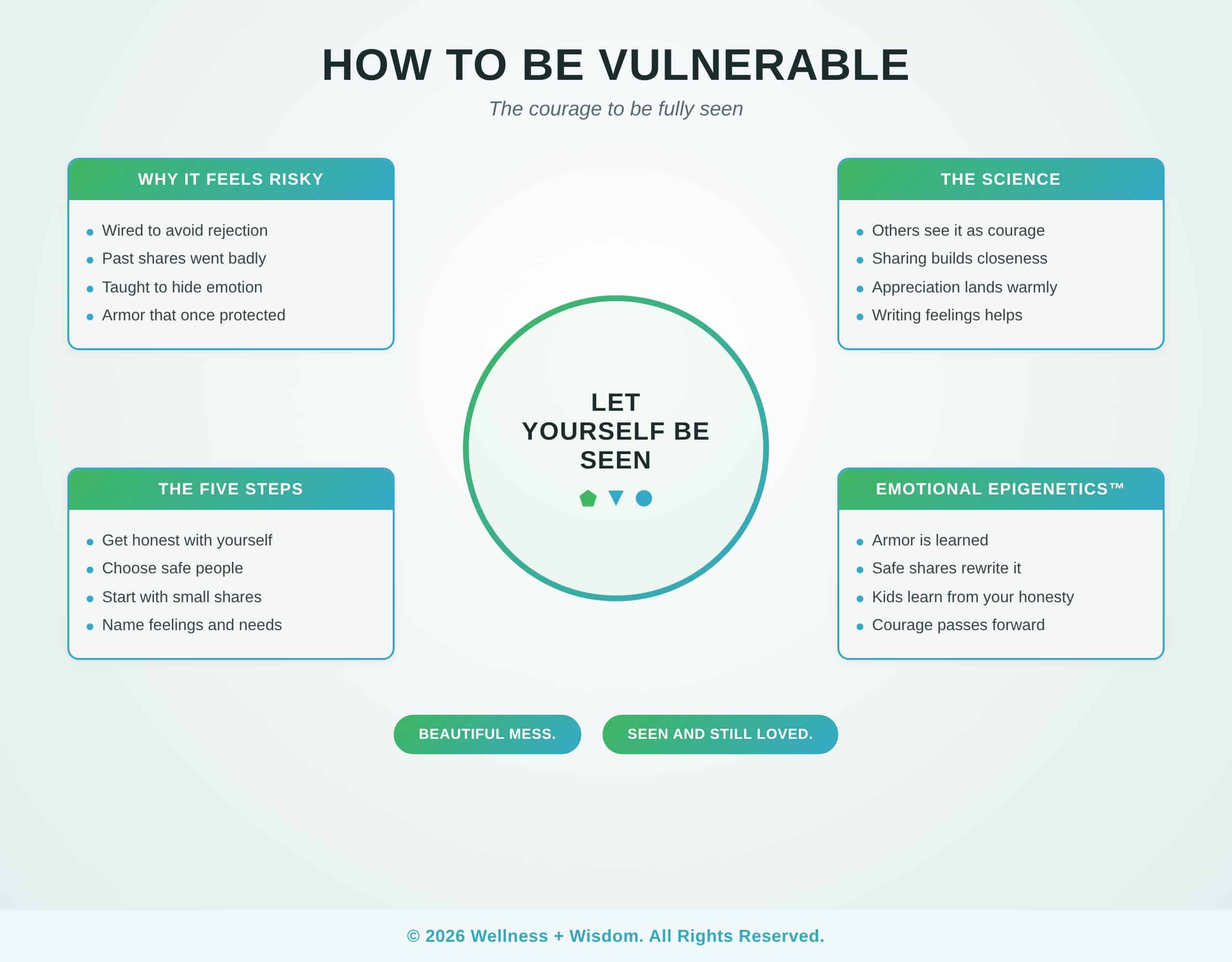
The Gift of Being Truly Seen
Being truly seen gives you deeper relationships, lighter emotional burdens, greater self acceptance, and the profound experience of being loved for who you really are, not for the mask you wear. There is no substitute for this kind of connection.
Think about the relationships where you feel most at home. Chances are, they are the ones where you can be fully yourself, messy, uncertain, and imperfect, and still feel accepted. That acceptance is only possible because, at some point, you or the other person took the risk of being vulnerable. Every deep friendship, every intimate partnership, and every strong team is built on moments like these, small moments of honesty that slowly became a foundation of trust strong enough to hold real life. It is the foundation of secure attachment in adult relationships.
Vulnerability also lightens the load you carry. When you share what you are going through, you no longer have to hold it alone. Problems feel more manageable. Feelings move through more easily. And here is the part I love most. When you show up authentically, you give others permission to do the same. Your courage becomes contagious, and relationships around you start to deepen too. Vulnerability is also deeply connected to receiving love, because you cannot truly feel loved if no one is allowed to see you.
The Science of Vulnerability
The science of vulnerability shows that others see our vulnerable moments far more positively than we do, that sharing personal information tends to build liking and closeness, that people dramatically underestimate how much others appreciate heartfelt expression, and that putting emotional experiences into words supports wellbeing. Opening up is safer and more rewarding than our fears suggest.
Start with how others see us. In a series of studies published in the Journal of Personality and Social Psychology, Anna Bruk, Sabine Scholl, and Herbert Bless asked people to imagine vulnerable situations, like admitting a mistake, asking for help, or confessing love first. People tended to see their own vulnerability as weakness, yet they viewed the same behavior in others as courageous and positive. The researchers called this the beautiful mess effect. What feels like a mess from the inside often looks beautiful from the outside.
Next, consider closeness. A meta analysis by Nancy Collins and Lynn Carol Miller in Psychological Bulletin found that people who disclose more personal information tend to be liked more, that we disclose more to people we like, and that we tend to like people more after we have opened up to them. Sharing is not just a result of closeness. It is one of the ways closeness is built.
Expressing appreciation is a form of vulnerability too, and it lands better than we think. In research published in Psychological Science, Amit Kumar and Nicholas Epley found that people who wrote heartfelt gratitude letters underestimated how surprised and positive the recipients would feel and overestimated how awkward the recipients would find it. And a review by James Pennebaker in Perspectives on Psychological Science summarized decades of research showing that putting emotional experiences into words, through expressive writing, is linked with benefits for health and wellbeing. Letting feelings out, even on paper, matters.
How to Be Vulnerable
You learn how to be vulnerable by getting honest with yourself first, choosing safe people, starting with small shares, naming your feelings and needs clearly, and treating yourself with compassion whatever the response. These five steps help you open up gradually and wisely. Here is how I practice and teach them.
1. Get Honest With Yourself First
Before you can share your truth with someone else, you need to know what it is. Take a few quiet moments to ask yourself, “What am I really feeling? What do I really need?” Writing it down can help. Many of us are so practiced at hiding our feelings that we hide them from ourselves too. This inner honesty is the first step, and it is explored beautifully in how to feel your feelings.
2. Choose Safe People
Vulnerability is not about sharing with everyone. Look for people who have shown kindness, kept confidences, and responded with care when others opened up. Start with them. Trust is built over time, and the people who earn the right to hear your deepest truths are those who have consistently shown they can hold them gently.
3. Start With Small Shares
You do not have to begin with your deepest secret. Start small. Share a minor worry, a small hope, or a moment when you felt embarrassed. Notice how the other person responds. If they meet you with warmth, you can gradually share more. This step by step approach builds trust and lets your neural system learn that openness can be safe.
4. Name Your Feelings and Needs Clearly
When you share, be direct and specific. “I have been feeling lonely lately, and I would really love to spend more time together.” “I am scared about this decision and could use your perspective.” Clear language helps others understand and respond to you. Asking for what you need is itself an act of vulnerability, and it is gently explored in how to ask for help.
5. Treat Yourself With Compassion Whatever the Response
Sometimes people will not respond the way you hope. That does not mean you were wrong to share. It means that person may not have the capacity to meet you right now. Honor your courage regardless of the outcome. Every time you open up, you strengthen your ability to live authentically. Self compassion is what makes vulnerability sustainable, as explored in how to practice self compassion.
It also helps to remember that vulnerability flows both ways. When someone shares something tender with you, the way you receive it shapes whether they will open up again. Listen without rushing to fix, judge, or compare. Thank them for trusting you. Keep what they shared in confidence. When you become a safe place for others, you naturally attract relationships where your own openness is welcomed too. Safety is built together, one honest exchange at a time, and each of those exchanges makes the next one easier for both of you.
Start with one small share this week and notice what happens. You may be surprised by how warmly people respond. And if you would love a community where authenticity is welcomed, the Liberated Life Tribe is a warm place to practice.
Wise Vulnerability Versus Oversharing
Wise vulnerability is intentional openness with people who have earned your trust, while oversharing is disclosing deeply personal information without regard for the relationship, context, or the other person's capacity to hold it. The difference lies in discernment, timing, and purpose.
Oversharing often comes from a place of urgency or anxiety. We may share too much too quickly in hopes of being understood, or to fill an uncomfortable silence. While it can look like openness, it sometimes leaves both people feeling uneasy, because trust has not yet been built to hold that level of intimacy. Oversharing can also happen online, where personal struggles are broadcast to people we barely know.
Wise vulnerability looks different. It matches the depth of what you share to the depth of the relationship. It considers whether the timing is right and whether the other person has the space to listen. It is rooted in a desire for genuine connection rather than relief from discomfort. Wise vulnerability also includes healthy boundaries, knowing what you are ready to share and what you want to keep private for now. That balance is beautifully explored in how to set healthy boundaries with love. Vulnerability and boundaries are not opposites. They work together.
How to Be Vulnerable With Emotional Epigenetics™
Emotional Epigenetics™ shows that your comfort with vulnerability was shaped by the emotional patterns you grew up with, and that you can consciously rewrite those patterns for yourself and for the generations after you. Your armor was learned, and what is learned can be gently set down.
Think about how feelings were handled in your family. Were emotions welcomed and talked about? Or were they hidden, dismissed, or met with criticism? Did the adults around you ever admit mistakes or ask for help? If vulnerability was rare or unsafe in your childhood, your neural system likely learned that hiding was the best way to stay connected and protected. That pattern may still run automatically today.
The beautiful truth is that every time you choose openness with a safe person and are met with care, you create a new emotional experience in your body. Repeated over time, these experiences reshape your patterns. If you are a parent, this is especially powerful. When your children see you admit mistakes, name your feelings, and ask for support, they learn that vulnerability is safe and human. That is how one generation's courage becomes the next generation's normal, which is explored in how to break the parenting cycle. To go deeper with identity level change, explore our L.I.F.E. Method™ programs.
Celebrating Every Brave Share
Celebrating every brave share helps reinforce your courage and makes vulnerability feel more natural over time. Your brain learns through reward, so when you notice and appreciate your openness, you strengthen your willingness to be open again.
After you share something vulnerable, take a moment to acknowledge yourself. “That took courage, and I did it.” Notice how the other person responded, and let yourself feel the connection that followed. Even if the response was not perfect, honor the fact that you showed up as yourself. That is a real victory.
You can also celebrate the vulnerability of others. When someone opens up to you, thank them. “I really appreciate you trusting me with that.” This makes the relationship a safer place for both of you and encourages deeper honesty over time. There is a whole practice around appreciating others in how to celebrate the people you love, and it pairs beautifully with this work.
Vulnerability Is a Lifelong Practice
Vulnerability is a lifelong practice, because every new relationship, life transition, and stage of growth invites you to be seen in new ways. You will never reach a point where opening up feels completely effortless, and that is okay. Courage is not the absence of fear. It is choosing to show up anyway.
Some seasons will make vulnerability feel easier, like when you are surrounded by supportive people. Other seasons, like after a betrayal or a painful loss, may bring the armor back up. That is completely normal. Be gentle with yourself during those times. You can rebuild trust slowly, starting with the safest people and the smallest shares. The process of healing after a betrayal is explored in how to rebuild trust after betrayal.
A helpful practice is to notice the moments when you instinctively reach for your armor. Maybe you make a joke when a conversation gets serious, change the subject when someone asks how you really are, or say “it is fine” when it is not. You do not need to judge these moments. Simply notice them with curiosity. Over time, that noticing creates a small pause, and in that pause, you get to choose whether to stay guarded or to let someone in a little more.
This is also where the Wellness Pentagon™ becomes helpful. Vulnerability touches every dimension of wellbeing. It deepens emotional health, strengthens relationships, reduces stress, and often opens a deeper Connection to Creator and God, since spiritual life itself invites us to come as we are. Many people find that practicing honesty in prayer or reflection makes it easier to be honest with others too. You will find many guests sharing their own journeys with vulnerability across our latest episodes.
When Opening Up Feels Too Hard
If opening up feels too hard right now, you are in very good company, and it is completely understandable. Learning how to be vulnerable does not mean you will suddenly feel comfortable sharing everything. It means you will gently build your capacity for openness, a little at a time, at a pace that honors where you are.
When vulnerability feels overwhelming, start with the smallest possible step. Write your feelings in a private journal. Share one small truth with one safe person. Tell a friend, “I am having a hard day,” without needing to explain everything. These small steps still count, and they help your body learn that openness can be safe. Calming your body before a vulnerable conversation can help too, through slow breathing like that taught in BREATHE™. Supportive tools like a quality journal or a breath training device can help, and you can find a few we trust in our wellness tools store.
It is also important to know that if past experiences of betrayal, abuse, or trauma make vulnerability feel unsafe, a qualified therapist can offer a safe and compassionate space to begin. Therapy is one of the best places to practice being seen. There is real strength in asking for help. Wherever you are, be patient and kind with yourself, and trust that learning how to be vulnerable is something you can absolutely grow, one brave share at a time. If shame makes opening up feel impossible, the practices in how to release shame are a gentle next step.
Ready to go deeper? Join the Liberated Life Tribe and receive your 10 day Self Liberation Blueprint at liberatedlife.com. It is free, it is guided, and it offers a safe, supportive community for practicing authentic connection.
Frequently Asked Questions
What does it mean to be vulnerable?
Being vulnerable means allowing yourself to be emotionally seen by sharing your true feelings, needs, hopes, and imperfections, even when you cannot control how others will respond. It includes admitting mistakes, asking for help, and expressing love or fear honestly with people who have earned your trust.
Is vulnerability a sign of weakness?
No. Research on the beautiful mess effect found that people tend to view their own vulnerability as weakness but see the same behavior in others as courageous and positive. Vulnerability takes real strength, and others usually respond to it more kindly than we expect.
How can I be more vulnerable in my relationship?
Start by getting honest with yourself about what you feel and need. Then share small things first, using clear language like “I feel” and “I need.” Notice how your partner responds and gradually go deeper as trust grows. Thank your partner when they open up to you too.
What is the difference between vulnerability and oversharing?
Wise vulnerability matches what you share to the depth of the relationship and the right timing, with people who have earned your trust. Oversharing discloses deeply personal information without regard for context or trust. Vulnerability and healthy boundaries work together.
Why is it so hard for me to open up?
Your neural system is wired to protect you from rejection, and past experiences where openness was met with criticism or dismissal can make vulnerability feel dangerous. These protective patterns are learned, and they can be gently rewritten through small, safe experiences of being seen.
Can writing help me become more open?
Yes. Research summarized by James Pennebaker shows that putting emotional experiences into words through expressive writing is linked with benefits for health and wellbeing. Writing privately is a gentle first step toward naming your feelings, which makes sharing them with others easier over time.
Studies and External Resources
The science in this article rests on peer reviewed research. These are the sources referenced throughout.
- Bruk A, Scholl SG, Bless H. (2018). Beautiful mess effect: Self other differences in evaluation of showing vulnerability. Journal of Personality and Social Psychology. PubMed: 30024240
- Collins NL, Miller LC. (1994). Self disclosure and liking: a meta analytic review. Psychological Bulletin. PubMed: 7809308
- Kumar A, Epley N. (2018). Undervaluing Gratitude: Expressers Misunderstand the Consequences of Showing Appreciation. Psychological Science. PubMed: 29949445
- Pennebaker JW. (2018). Expressive Writing in Psychological Science. Perspectives on Psychological Science. PubMed: 28992443
About Josh Trent
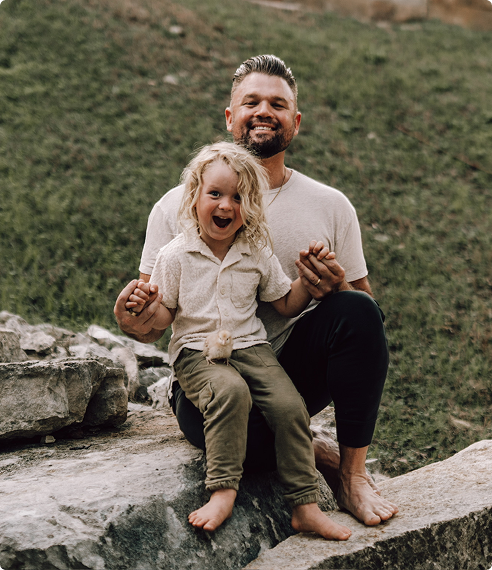
Josh Trent is an Identity Transformation Architect and the award winning host of the Wellness + Wisdom Podcast, with over 15 million downloads since 2015. He is the creator of the L.I.F.E. Method™ Identity Transformation System and steward of the Emotional Epigenetics™ and BREATHE: Breath + Wellness™ systems of self mastery, impacting over 1,000 students worldwide. Join the Liberated Life Tribe and receive your 10 day Self Liberation Blueprint at liberatedlife.com. Josh lives in Austin, Texas with his wife Carrie, daughter Nayah, and son Novah. Peace and power.
Disclosure: We may earn a commission from certain links on this site when you make a purchase, at no extra cost to you. These commissions help support Wellness + Wisdom and do not affect the products or resources we choose to recommend. Full disclosure .