By Josh Trent | Wellness + Wisdom Podcast Host & Identity Transformation Architect
“Solitude is not the absence of people. It is the presence of yourself. When you choose it with love, it becomes one of the most restoring places you will ever visit.”
Josh Trent
Learning how to enjoy solitude is a quiet superpower in a loud and busy world. Most of us rarely spend real time alone. Even when no one else is around, we fill the space with phones, podcasts, emails, and endless to do lists. Yet chosen solitude, time spent intentionally with yourself, can be deeply restoring. It gives your mind room to settle, your emotions room to breathe, and your inner voice room to be heard. Many of the most grounded, creative, and joyful people I know have learned to treasure their alone time. It helps them come back to their families, work, and communities with more patience, clarity, and love. And one of the gentlest doorways into restful solitude is your breath, which is why this work pairs so beautifully with BREATHE™.
Here is the joy forward truth at the center of it all. Solitude is not something to fear or avoid. When you choose it, it becomes a gift you give yourself, a space to rest, reflect, create, and reconnect. Let us explore what the science says and exactly how to make alone time something you look forward to.
Table of Contents
- What Solitude Really Is
- Why Solitude Matters
- The Gift of Time With Yourself
- The Science of Solitude
- How to Enjoy Solitude
- Solitude Versus Loneliness
- How to Enjoy Solitude With BREATHE™
- Celebrating Your Quiet Moments
- Balancing Solitude and Connection
- When Being Alone Feels Hard
- Frequently Asked Questions
- Studies and External Resources
- About Josh Trent
What Solitude Really Is
Solitude is the state of being alone by choice, without social interaction, in a way that allows you to rest, reflect, and reconnect with yourself. It is different from isolation or loneliness, because it is chosen and often feels peaceful rather than painful.
Solitude can take many forms. A quiet morning walk alone. Sitting with a cup of coffee before the house wakes up. Reading a book in a cozy corner. Journaling, praying, or meditating. Working on a creative project. Taking a solo hike or a drive with no destination. What makes it solitude is not just being physically alone, but being intentionally present with yourself without the constant pull of social demands.
True solitude also involves some degree of disconnection from devices. Scrolling social media while sitting alone is not quite solitude, because your attention is still pulled toward other people. Real solitude gives your mind a break from input so it can settle and wander. These themes come up often on the Wellness + Wisdom Podcast, where guests share how quiet time alone shaped their clarity and creativity.
Solitude is also a skill. If you are not used to being alone, it may feel uncomfortable at first. That is completely normal. Learning how to enjoy solitude is a gradual process of getting to know yourself, building comfort with quiet, and discovering what nourishes you.
Why Solitude Matters
Solitude matters because it gives the mind and body a chance to rest, process emotions, reflect on life, and restore energy. It helps us return to our relationships and responsibilities with more clarity, patience, and presence.
Modern life is full of stimulation. Notifications, conversations, meetings, news, and noise keep our attention constantly engaged. Over time, this can leave us feeling scattered, overwhelmed, and disconnected from ourselves. Solitude offers a reset. In quiet moments alone, the mind can settle, emotions can surface and be felt, and new insights can emerge. Many people find their best ideas and deepest clarity come during time alone.
Solitude also strengthens self knowledge. When you spend time alone, you learn what you think, feel, and value without the influence of other people's opinions. You discover what brings you joy and what drains you. That self awareness helps you make better choices and live more authentically. If you want to deepen this inner connection, the ideas in how to reconnect with yourself pair beautifully with solitude.
The Gift of Time With Yourself
The gift of time with yourself is peace, clarity, and a deeper relationship with who you are. When you learn to enjoy your own company, you carry a sense of home wherever you go.
Many people discover that solitude helps them feel calmer and more grounded. Without the need to perform or respond to others, the body relaxes and the mind softens. You can move at your own pace, follow your own curiosity, and simply be. That freedom is deeply restoring, especially for people who spend much of their day caring for others or managing busy schedules.
Solitude also enriches relationships. When you are rested and connected to yourself, you have more patience, presence, and love to give. You are less likely to rely on others to fill every emotional need, which makes your relationships healthier and more balanced. Time alone can also spark creativity, as explored in the ideas in how to cultivate joy.
The Science of Solitude
The science of solitude shows that time alone can calm intense emotions and promote relaxation, especially when it is chosen, and that the benefits of solitude depend heavily on whether it feels autonomous rather than forced. Chosen solitude restores. Unwanted isolation can hurt.
Start with what solitude does to our emotions. In a set of four studies published in Personality and Social Psychology Bulletin, Thuy vy Nguyen, Richard Ryan, and Edward Deci found that spending just fifteen minutes alone reduced high arousal emotions, both positive ones like excitement and negative ones like anxiety, creating a calming, deactivating effect. When people actively chose to be alone, solitude led to relaxation and reduced stress. Solitude appears to work like a gentle reset for the emotional system.
Choice makes the difference. In a twenty one day diary study published in Scientific Reports, Netta Weinstein and colleagues tracked how much time people spent alone each day. On days with more solitude, people tended to feel lonelier and less satisfied, but those downsides were reduced or disappeared when solitude was chosen and autonomous. Solitude also helped people feel less stressed and more autonomous. There was no single perfect amount of alone time for everyone.
Motivation matters across ages too. Researchers Virginia Thomas and Margarita Azmitia developed a measure of why people seek solitude, distinguishing self determined reasons, like enjoying quiet or reflection, from reasons rooted in avoidance or discomfort with others. Their work, published in the Journal of Adolescence, supports the same theme: why you are alone shapes how solitude affects you. When solitude is a choice made for rest and growth, it tends to nourish.
How to Enjoy Solitude
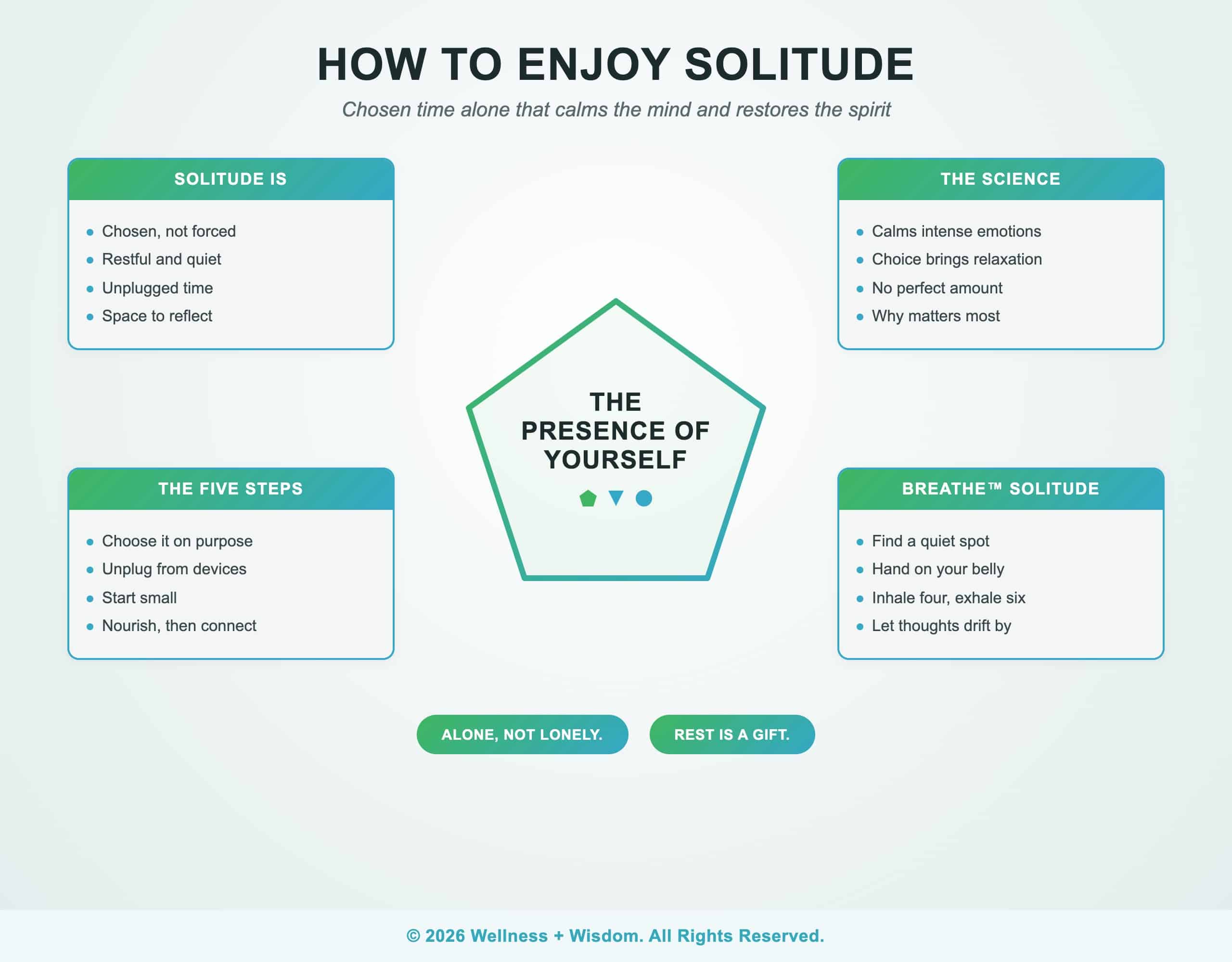
You learn how to enjoy solitude by choosing it intentionally, unplugging from devices, starting small, filling your time with nourishing activities, and balancing alone time with connection. These five steps help solitude become a restoring part of your life. Here is how I practice and teach them.
1. Choose It Intentionally
As the research shows, choice is everything. Instead of waiting for alone time to happen, schedule it. Block fifteen minutes on your calendar, take a solo walk, or wake up a little early for quiet coffee. When you choose solitude for rest and reflection, it feels like a gift rather than a void. Tell your family or roommates what you are doing so they can support it.
2. Unplug From Devices
Leave your phone in another room, or put it on airplane mode. Without notifications pulling your attention, your mind can settle into true solitude. At first, the quiet may feel strange. Give it a few minutes. Many people find that the urge to check their phone fades, replaced by calm and clarity. The ideas in how to reduce screen time can help.
3. Start Small
If solitude feels uncomfortable, begin with just five or ten minutes. Sit outside, take a short walk, or enjoy a cup of tea in silence. Gradually increase the time as you become more comfortable. There is no need to jump into a weekend retreat. Small, regular doses of solitude can be just as powerful.
4. Fill Solitude With Nourishing Activities
Solitude does not have to mean doing nothing. Read a book, journal, pray, paint, cook a meal slowly, garden, play an instrument, or walk in nature. Choose activities that feel restful and meaningful to you. Some people also love simply sitting quietly and letting their minds wander. The practices in how to start journaling are a beautiful way to use alone time.
5. Balance Alone Time With Connection
Solitude is most nourishing when it is balanced with meaningful connection. After time alone, reach out to someone you love. Share what you reflected on or discovered. Solitude and connection work together, each making the other richer. If you are not sure you are getting enough connection, the ideas in how to make friends as an adult may help.
Start with one or two of these steps this week. Solitude becomes easier and more enjoyable with practice. And if you would love a supportive community on your journey, the Liberated Life Tribe is a warm place to begin.
Here is a simple daily rhythm if you are wondering how to enjoy solitude in a busy life. In the morning, take ten quiet minutes before checking your phone, perhaps with coffee or tea. Midday, take a short walk alone without headphones. In the evening, spend fifteen minutes reading, journaling, or praying in a quiet space. Once a week, plan a longer block of solitude, like a solo hike, a few hours at a café with a book, or a quiet afternoon at home. These small rituals add up to a calmer, more grounded life.
Creating a solitude space can make alone time more inviting. Choose a cozy corner of your home with a comfortable chair, soft light, a blanket, and perhaps a plant or a window view. Keep a journal, a book, and a cup for tea nearby. When you have a dedicated spot, your body begins to associate it with rest, making it easier to settle in. Even a small space can become a sanctuary.
Solitude outside the home is just as valuable. A park bench, a quiet library, a walking trail, or an early morning café can all become places of restful alone time. Some people love taking themselves on solo dates: a movie, a museum visit, or a meal alone. These experiences can feel unusual at first, but many people discover a surprising sense of freedom and self trust in them. Learning how to enjoy solitude in public places can be especially empowering.
If you live with family or roommates, solitude may require a little creativity. Wake up fifteen minutes earlier than everyone else. Take the long way home from work. Sit in your car for five quiet minutes before walking into the house. Trade alone time with your partner so each of you gets a break. Communicating your need for solitude kindly helps the people you love support it. Even busy parents can find small pockets of quiet when they protect them intentionally.
Solitude Versus Loneliness
Solitude and loneliness are very different experiences. Solitude is chosen time alone that feels peaceful and restoring. Loneliness is the painful feeling of being disconnected from others, whether you are physically alone or surrounded by people. Solitude fills you. Loneliness drains you.
The key difference is choice and connection. When you choose solitude, knowing you have meaningful relationships to return to, alone time feels like rest. When you feel cut off from others without wanting to be, alone time can feel heavy and sad. The same hour alone can feel completely different depending on whether it was chosen and whether you feel connected in your life overall.
If you notice that time alone often feels lonely rather than restoring, that is important information. It may be a sign that you need more connection, not less solitude. Reach out to friends, join a community, or seek support. Both solitude and connection are essential human needs. If loneliness has been part of your story, the ideas in how to overcome loneliness are a gentle place to start.
It also helps to notice what you do with your alone time. Endless scrolling or worrying can make solitude feel empty. Nourishing activities like walking, reading, creating, or praying tend to make solitude feel full. Small shifts in how you spend alone time can transform how it feels.
How to Enjoy Solitude With BREATHE™
BREATHE™ offers a simple, powerful way to make solitude more restful, because your breath is one of the most direct ways to calm your neural system. When you pair alone time with slow, intentional breathing, the relaxing effects of solitude can deepen.
Inside BREATHE™, I teach a simple solitude practice. Find a quiet place and sit or lie down comfortably. Place one hand on your belly and one on your chest. Breathe in slowly through your nose for about four seconds, letting your belly rise. Exhale gently through your mouth for about six seconds. Repeat for five minutes. As you breathe, notice the quiet around you and within you. Let thoughts come and go without chasing them. Many people find that this practice turns a few minutes alone into a deep reset.
Breath can also help when solitude feels uncomfortable. If being alone brings up restlessness or anxious thoughts, a few slow breaths can help your body settle so you can stay with the experience. Over time, breathwork makes solitude feel safer and more peaceful. For more techniques, explore how to practice breathwork. To go deeper with identity level change, explore our L.I.F.E. Method™ programs.
Nature and solitude make wonderful partners too. A quiet walk in a park, by water, or among trees combines the calming effects of nature with the restoring power of alone time. Try leaving your headphones at home and simply listening to the sounds around you.
Many people find that solitude also makes space for prayer and reflection. Quiet time alone is a natural moment to give thanks, bring your worries to God, or simply rest in stillness. Whether you call it prayer, meditation, or reflection, these moments can turn ordinary alone time into something sacred. Learning how to enjoy solitude in this way often deepens both peace and purpose.
Celebrating Your Quiet Moments
Celebrating your quiet moments helps solitude become something you look forward to rather than avoid. When you notice and savor how good alone time feels, you naturally make more room for it.
After a period of solitude, take a moment to notice how you feel. Calmer? Clearer? More creative? Write it down. Over time, you will build a record of how solitude nourishes you, which can motivate you to protect that time. You might also notice what kinds of solitude feel best, like morning quiet, nature walks, or creative time, so you can do more of what works.
Celebrate your growth too. The first time you sat alone without reaching for your phone. The weekend you took a solo trip. The moment you realized you genuinely enjoyed your own company. These are meaningful milestones. There is a whole practice around noticing these moments in celebrating small wins, and learning to enjoy your own company is one of the best wins of all.
Balancing Solitude and Connection
Balancing solitude and connection means giving yourself enough time alone to rest and reflect, and enough time with others to feel loved and supported. As the research suggests, there is no single perfect balance for everyone. The right mix depends on your personality, season of life, and needs.
Introverts often need more solitude to recharge, while extroverts may need less. Parents of young children may find solitude rare and precious, while people living alone may need to be more intentional about connection. Pay attention to how you feel. If you feel drained, irritable, or scattered, you may need more solitude. If you feel lonely or disconnected, you may need more connection. Adjust as needed.
This is also where the Wellness Pentagon™ becomes helpful. Solitude supports every dimension of wellbeing: physical rest, mental clarity, emotional processing, financial reflection, and spiritual growth, including deepening your Connection to Creator and God through prayer and quiet reflection. Many spiritual traditions have long valued time alone for this reason. If you want to explore stillness more deeply, the ideas in how to find stillness in a busy world are a beautiful companion. You will find many guests sharing how they balance solitude and connection across our latest episodes.
For families, solitude can be a shared value too. Parents can take turns giving each other alone time. Children can learn to enjoy quiet play, reading, or creative time on their own. Teaching kids that time alone can be peaceful and fun gives them a lifelong tool for self care.
When Being Alone Feels Hard
If being alone feels hard right now, you are not alone, and it is completely understandable. For many people, solitude brings up restlessness, anxious thoughts, or difficult emotions. Learning how to enjoy solitude takes time, and it is okay to start very small.
When solitude feels hard, try pairing it with gentle structure. Instead of sitting in silence, take a walk, journal, or listen to calming music. Use slow breathing to settle your body. Keep sessions short at first, and gradually lengthen them as you feel more comfortable. Supportive tools like a guided journal or a breath training device can help, and you can find a few we trust in our wellness tools store.
It is also important to notice if time alone consistently feels lonely, sad, or overwhelming. If you are experiencing persistent loneliness, low mood, or anxiety, please reach out to a qualified health professional. There is real strength in asking for help. Solitude is meant to restore, not to isolate. If you want to make peace with quiet moments, the practices in how to sit with difficult emotions are a gentle next step.
Ready to go deeper? Join the Liberated Life Tribe and receive your 10 day Self Liberation Blueprint at liberatedlife.com. It is free, it is guided, and each day offers a gentle practice to help you reconnect with yourself and live with more peace and joy.
Frequently Asked Questions
What is the difference between solitude and loneliness?
Solitude is chosen time alone that feels peaceful and restoring. Loneliness is the painful feeling of disconnection from others. Research suggests that solitude tends to be beneficial when it is chosen, and less so when it is unwanted.
What are the benefits of solitude?
Research suggests that time alone can calm intense emotions, promote relaxation, and reduce stress, especially when it is chosen. Solitude also supports reflection, creativity, and self knowledge.
How much alone time do I need?
There is no single right amount. A diary study found no one size fits all balance between solitude and social time. Pay attention to how you feel and adjust, aiming for enough solitude to recharge and enough connection to feel supported.
How can I enjoy being alone?
Choose your alone time intentionally, unplug from devices, start with short periods, fill the time with nourishing activities like walking or journaling, and balance solitude with meaningful connection.
Is it normal to feel uncomfortable being alone?
Yes. Many people feel restless or anxious at first, especially if they are used to constant stimulation. Starting small, using slow breathing, and pairing solitude with gentle activities can make it easier over time.
Can solitude help with stress?
Yes. Studies found that chosen time alone can reduce high arousal emotions like anxiety and promote relaxation. Pairing solitude with slow breathing can deepen these calming effects.
Studies and External Resources
The science in this article rests on peer reviewed research. These are the sources referenced throughout.
- Nguyen TT, Ryan RM, Deci EL. (2018). Solitude as an Approach to Affective Self Regulation. Personality and Social Psychology Bulletin. PubMed: 29072531
- Weinstein N, et al. (2023). Balance between solitude and socializing: everyday solitude time both benefits and harms well being. Scientific Reports. PubMed: 38052821
- Thomas V, Azmitia M. (2019). Motivation matters: Development and validation of the Motivation for Solitude Scale, Short Form. Journal of Adolescence. PubMed: 30472399
About Josh Trent
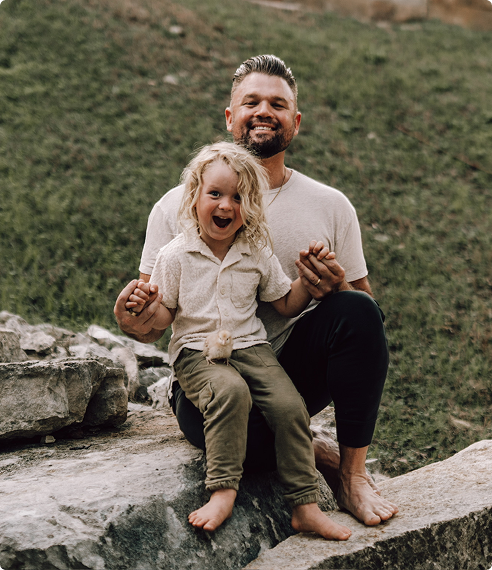
Josh Trent is an Identity Transformation Architect and the award winning host of the Wellness + Wisdom Podcast, with over 15 million downloads since 2015. He is the creator of the L.I.F.E. Method™ Identity Transformation System and steward of the Emotional Epigenetics™ and BREATHE: Breath + Wellness™ systems of self mastery, impacting over 1,000 students worldwide. Join the Liberated Life Tribe and receive your 10 day Self Liberation Blueprint at liberatedlife.com. Josh lives in Austin, Texas with his wife Carrie, daughter Nayah, and son Novah. Peace and power.
Disclosure: We may earn a commission from certain links on this site when you make a purchase, at no extra cost to you. These commissions help support Wellness + Wisdom and do not affect the products or resources we choose to recommend. Full disclosure .