
By Josh Trent | Wellness + Wisdom Podcast Host & Identity Transformation Architect
“Hard times will come. That is not the question. The question is who you choose to become through them. Learning to find meaning in hard times is learning that even your deepest pain can become a doorway to purpose.”
Josh Trent
Learning how to find meaning in hard times is honestly one of the most freeing shifts you can ever make, because suffering without meaning is what quietly breaks the human spirit. So many of us move through pain, loss, and hardship feeling lost and hopeless, wondering how we will ever make sense of what we are facing, carrying the weight alone. Learning to find meaning in hard times gently offers another path, teaching you that even your deepest struggles can become a doorway to purpose and growth. This freeing work lives at the heart of the L.I.F.E. Method™.
Here is the joy forward truth at the center of it all. Learning how to find meaning in hard times does not mean pretending your pain is not real, it means discovering the purpose, growth, and grace that can emerge even from your hardest seasons. When you find meaning in hard times, you transform suffering into something that shapes you rather than only breaks you, reconnecting with hope. When you learn to find meaning in hard times, you finally come home to a resilience and purpose that hardship cannot take from you. Let us explore exactly how.
Table of Contents
- What Finding Meaning in Hard Times Really Means
- Why Hard Times Can Feel So Empty
- The Hidden Cost of Suffering Without Meaning
- The Science of Meaning and Resilience
- How to Find Meaning in Hard Times
- Finding Meaning Versus Toxic Positivity
- Finding Meaning and the L.I.F.E. Method
- Celebrating Who You Are Becoming
- Finding Meaning Is a Lifelong Practice
- When Meaning Feels Impossible to Find
- Frequently Asked Questions
- Studies and External Resources
- About Josh Trent
What Finding Meaning in Hard Times Really Means
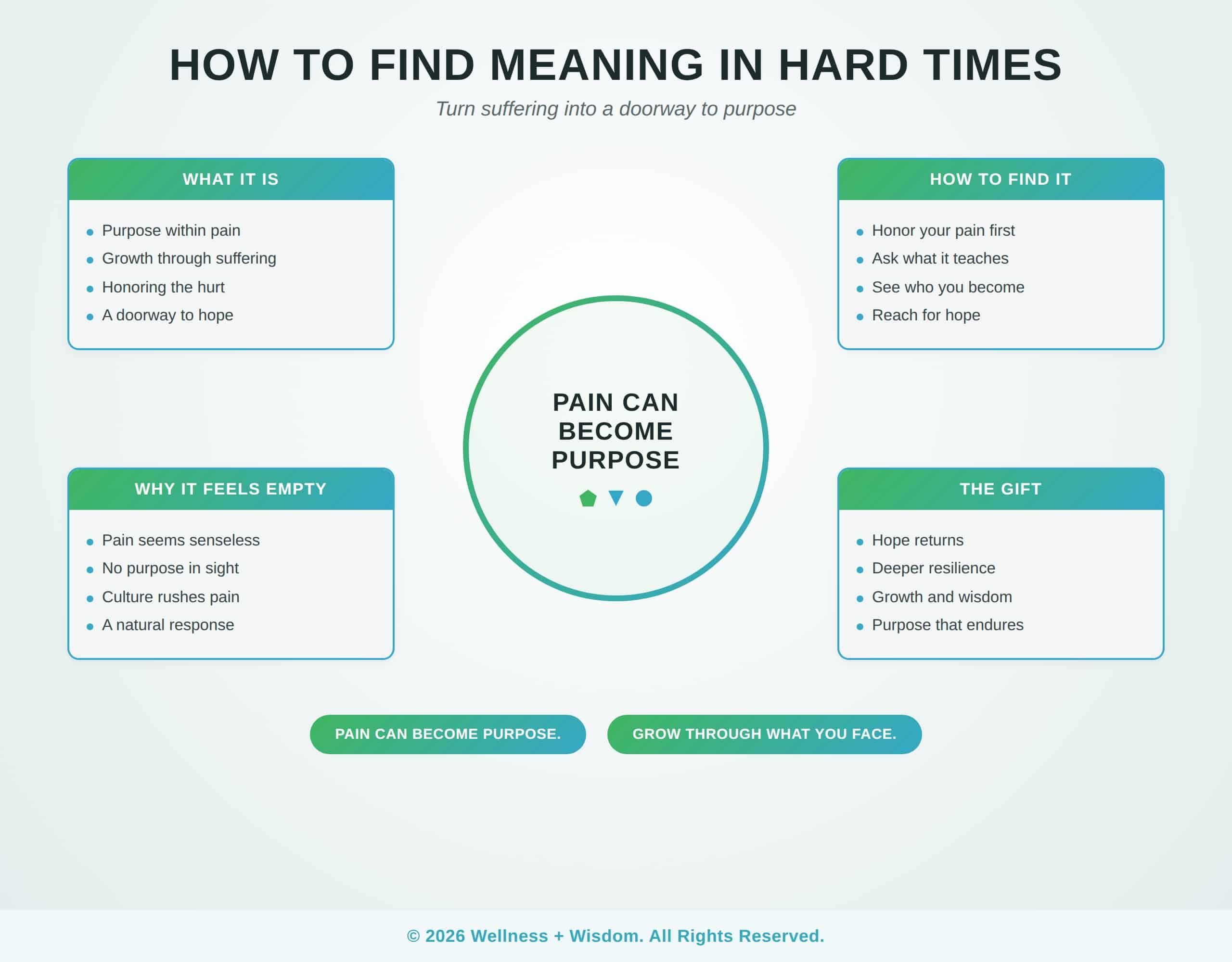
Finding meaning in hard times means discovering the purpose, growth, and grace that can emerge from suffering, rather than facing pain as something senseless and hopeless. It is choosing to let hardship shape who you become rather than only break you, honoring your pain while still reaching for purpose. Finding meaning in hard times is transforming suffering into a doorway to growth and hope.
This runs much deeper than simply staying positive, because finding meaning in hard times is about genuinely making sense of your suffering and letting it become part of your growth rather than only your wounding. Rather than facing pain as senseless or letting it define you, you gently learn to ask what this season is here to teach you and who you are becoming through it. It is truly a real shift from senseless suffering toward purposeful growth.
Finding meaning in hard times also gently restores a deep sense of hope and resilience, since suffering that feels meaningless tends to leave us despairing, lost, and quietly cut off from any sense of purpose. When you learn to find meaning in your struggles, you reconnect with hope and purpose, feeling more grounded, resilient, and able to keep going. Learning to find meaning in hard times in this way is a cornerstone of a resilient, purposeful life, a theme we return to often on the Wellness + Wisdom Podcast.
Why Hard Times Can Feel So Empty
Hard times can feel so empty because suffering without any sense of meaning is one of the heaviest burdens a person can carry, leaving us wondering why we are going through what we face. When pain feels senseless and we cannot see any purpose in it, we can slip into despair, losing hope and the will to keep going. This emptiness is a natural response to meaningless suffering, not a sign of weakness.
On top of all this, our culture often rushes us to move past pain or fix it quickly, rarely making space for the deeper work of finding meaning in what we face. So we can feel alone in our suffering, pressured to simply get over it, and disconnected from the purpose that could help us bear it. Understanding that this emptiness is a natural response to meaningless suffering, and that meaning can be found even here, replaces despair with gentle hope, which is where lasting healing begins, much like the gentle work of reparenting yourself.
Seeing clearly why hard times can feel so empty is genuinely freeing, because it means your despair is not a permanent truth but a natural response that can gently shift as meaning is found. The emptiness comes from suffering that has not yet been given meaning, and meaning is something you can gently discover even in the hardest seasons. You can honor the full reality of your pain while gently reaching for the purpose and growth that can emerge from it, which is deeply connected to healing our inherited limiting beliefs.
The Hidden Cost of Suffering Without Meaning
Recognizing the hidden cost of suffering without meaning helps motivate the shift toward finding it, because pain we cannot make sense of quietly takes far more from us than we realize. What feels like simply enduring often quietly leaves us despairing, hopeless, and disconnected from any purpose, all while the resilience and hope we long for stay just out of reach. Seeing this clearly makes finding meaning in hard times feel not just nice but genuinely essential.
Suffering without meaning quietly costs us our hope, since pain that seems senseless can slowly erode our will to keep going and our faith that things can get better. When we cannot find any purpose in our suffering, we can sink into despair, losing the hope that gives us strength to endure. This quiet loss of hope is one of the heaviest costs of suffering without meaning.
It also quietly costs us our growth, since suffering we cannot make sense of tends to leave us stuck and wounded rather than shaped and strengthened. When pain has no meaning, it can harden into bitterness or despair instead of becoming a source of wisdom and depth. Suffering without meaning can also cost us our connection, since despair often isolates us, cutting us off from the support and purpose that could help us heal.
Perhaps most importantly of all, suffering without meaning costs you the resilience and hope of a life that can grow through anything. Recognizing clearly that suffering without meaning is costing you the very hope and resilience you long for is genuinely motivating, because it helps you choose to seek meaning instead, supporting the kind of purposeful, resilient living that lets you truly thrive, which deepens your whole spiritual wellness.
The Science of Meaning and Resilience
The science of positive emotion offers real support for learning to find meaning in hard times. Barbara Fredrickson's research, published in American Psychologist, shows that positive emotions like hope and gratitude broaden our awareness and build lasting inner resources, even in the midst of adversity. When you gently reach for meaning and hope amid your suffering, you build the resilience that helps you not only endure hard times but grow through them, which draws on real emotional intelligence.
Making sense of pain in words helps too. Research by James Pennebaker, published in the Journal of Consulting and Clinical Psychology, found that putting our painful experiences and feelings into words supports both emotional and physical wellbeing. Allowing yourself to express and make sense of your suffering, rather than burying it, is part of finding the meaning that helps you heal, which supports genuine neural system regulation.
There is a grounding dimension too. Bruce McEwen described in the New England Journal of Medicine how chronic stress produces allostatic load, the cumulative wear on a body whose alarm rarely rests. Suffering without meaning keeps this load high, while finding purpose and hope helps calm your system and gives it the resilience it needs to endure and recover, which supports the gentle work of the Wellness Pentagon™.
How to Find Meaning in Hard Times
Learning how to find meaning in hard times is a gentle, gradual practice of honoring your pain while reaching for the purpose and growth within it, at a pace that honors your suffering. It grows with time and reflection, and every bit of meaning you find brings you closer to hope and resilience. Here are practices that help.
1. Honor Your Pain First
Gently allow yourself to fully feel and honor your suffering, since meaning is found by facing pain honestly, not by rushing past it. Honoring your pain first is the foundation of finding real meaning in it.
2. Ask What This Is Here to Teach You
Gently ask what this hard season might be here to teach you or awaken in you, since even suffering can carry lessons, depth, and growth. Asking what this is here to teach you opens the door to real meaning, which pairs beautifully with learning to sit with difficult emotions.
3. Look for Who You Are Becoming
Notice the strength, compassion, and depth that your hard times are cultivating in you, since suffering often shapes us into who we are meant to become. Looking for who you are becoming turns pain into growth, which supports learning to authentic identity.
4. Find Purpose in Serving Others
Consider how your suffering might one day help you serve or support others facing similar pain, since meaning often grows when our pain becomes a source of compassion. Finding purpose in serving others turns suffering into a gift, which supports learning to soften a hard heart.
5. Reach for Hope and Connection
Lean into hope, faith, and the support of others, since meaning and resilience grow when we do not face hard times entirely alone. Reaching for hope and connection reminds you that you can grow through it, which supports learning to find inner peace.
Begin with whatever practice feels most accessible to you and be patient and kind with yourself, since finding meaning in real suffering takes time and cannot be forced. Every bit of meaning brings you closer to hope. When you want community and support for this journey, the Liberated Life Tribe is here for you.
Finding Meaning Versus Toxic Positivity
One of the most important distinctions in this work is the difference between finding meaning and slipping into toxic positivity, because making sense of your pain is not the same as pretending it does not hurt. Finding meaning means honoring your suffering while reaching for purpose within it, while toxic positivity means denying the pain and forcing a smile, and understanding this one difference is key to genuine healing.
Toxic positivity means dismissing real pain with forced cheerfulness, telling yourself to just be grateful when you are genuinely struggling, which only buries the hurt. Finding meaning is something completely different, it means fully honoring that your pain is real while still gently reaching for the purpose and growth that can emerge from it. Where toxic positivity denies the suffering, finding meaning honors it and grows through it.
The key difference here is that finding meaning holds both the pain and the purpose at once, rather than denying either. You allow your suffering to be fully real and let yourself grieve and struggle, while still trusting that meaning and growth can emerge from it in time. This gentle understanding truly frees you to find meaning in a way that honors your pain rather than dismissing it, which is a beautiful part of your whole self growth journey.
Finding Meaning and the L.I.F.E. Method
Learning to find meaning in hard times is woven through the L.I.F.E. Method™, our system for identity transformation built on four pillars: Liberation, Integration, Frequency, and Embodiment. Finding meaning touches every single one of these pillars, transforming how you move through suffering at the deepest possible level.
Liberation gently frees you from the despair and the story that your suffering is senseless. Integration helps you weave even your hardest experiences into the larger story of who you are, meeting them with understanding rather than only pain. Frequency gently raises your inner state from despair and hopelessness toward purpose and hope, and Embodiment brings meaning out of your head and into how you actually live and grow through hardship.
This is exactly why we hold finding meaning as genuine transformation work rather than a simple mindset tip. When you truly find meaning in your suffering, you are not just coping, you are transforming your identity from someone shattered by hardship into someone deepened by it, resting in the purpose you find within your Connection to Creator and God. That is a profound and genuinely hopeful transformation, one that gently reshapes how you experience your whole entire life, which is the heart of learning to let go of the past.
Celebrating Who You Are Becoming
The joyful heart of all this work is celebrating who you are becoming, honoring every bit of strength, depth, and compassion your hard times are cultivating in you rather than dwelling only on the pain. When you begin to see your hardship as shaping you into someone stronger and wiser, finding meaning becomes a path of quiet, steady hope.
Celebrating who you are becoming means gently noticing and honoring the growth emerging from your struggles, the resilience you are building, the compassion you are deepening, the wisdom you are gaining. Each of these is genuinely worth celebrating, and honoring them reinforces your growing sense of purpose, which is a beautiful part of learning to celebrate yourself.
And here is the beautiful part. When you find meaning in hard times and grow through your suffering, you naturally become more grounded, compassionate, and alive, quietly inspiring the people around you to find meaning in their own struggles too. Your own resilience quietly gives the people around you permission to seek purpose in their pain as well, showing them that even hard times can become a doorway to growth. In this beautiful way, learning how to find meaning in hard times becomes a gift that ripples far beyond yourself, bringing more hope and depth to every relationship you touch, which is a spirit we cherish in learning to grieve what you lost.
Finding Meaning Is a Lifelong Practice
Learning how to find meaning in hard times is not a single act you complete just once, but rather a lifelong practice of seeking purpose across the changing seasons of your life. New hardships will always come, so finding meaning is far less a fixed destination and more an ongoing practice of honoring pain and reaching for purpose again and again. This is truly wonderful news of all, because it means meaning and hope remain available to you, no matter what you face.
This gentle understanding takes the pressure off getting it perfect. You will certainly have times when despair returns, moments when meaning feels far away, and seasons when hope feels much harder to hold, and all of that is completely human. What matters most here is the gentle returning, the steady practice of honoring your pain and reaching for purpose whenever you can.
Understanding finding meaning as a lifelong, ongoing practice also gently keeps it compassionate. Each time despair or hopelessness resurfaces, you have a fresh opportunity to honor your pain and gently reach for meaning again, and every bit of purpose you find deepens your resilience. Over time, finding meaning becomes far less something you have to force and more simply how you naturally move through the hard seasons of life.
So approach your own journey here with real patience and warmth toward yourself. There is no finish line at all here, only the ongoing, freeing practice of seeking meaning and celebrating the growth you find along the way. This steady seeking quietly supports every single dimension of your wellbeing and deepens your whole experience of being alive, growing richer with time, which is closely tied to learning to make peace with uncertainty.
When Meaning Feels Impossible to Find
If meaning feels impossible to find right now, you are in very good company here, and it is completely understandable, especially if your suffering is deep or the wound is still fresh. Learning to find meaning in hard times does not mean forcing purpose onto your pain before you are ready, it means gently honoring your suffering and letting meaning emerge in its own time, at a pace that truly honors you.
When meaning feels impossible, it genuinely helps to start with the smallest steps, simply honoring your pain, holding a flicker of hope that meaning may come, or leaning on one person who supports you. You do not have to make sense of everything all at once at all, and sometimes meaning emerges only much later, once the sharpest pain has softened, which is completely okay. Even just holding one small flicker of hope in the darkness is a real and meaningful beginning.
It is also genuinely worth remembering that deep suffering, especially grief, trauma, or a heaviness that will not lift, is best carried gently and with support, and a qualified therapist or counselor can offer a safe space to heal and find meaning. There is real and genuine strength in seeking help, and a skilled professional can offer truly effective, compassionate support through your hardest times. Wherever you happen to be, be patient and kind with yourself, honor your own pace, and trust that meaning is truly something you can genuinely discover, one gentle step at a time.
Frequently Asked Questions
What does it mean to find meaning in hard times?
Finding meaning in hard times means discovering the purpose, growth, and grace that can emerge from suffering, rather than facing pain as something senseless and hopeless. It is choosing to let hardship shape who you become rather than only break you, honoring your pain while still reaching for purpose.
Why can hard times feel so empty?
Because suffering without any sense of meaning is one of the heaviest burdens a person can carry, and our culture often rushes us past pain rather than helping us make sense of it. Understanding that this emptiness is a natural response, and that meaning can be found even here, opens the way to gentle hope.
How do I find meaning in hard times?
Honor your pain first, ask what this is here to teach you, look for who you are becoming, find purpose in serving others, and reach for hope and connection. Start with whatever feels most accessible and be patient, since finding meaning in real suffering takes time and cannot be forced.
What is the difference between finding meaning and toxic positivity?
Toxic positivity means dismissing real pain with forced cheerfulness, which buries the hurt. Finding meaning honors that your pain is real while still reaching for the purpose and growth within it. Where toxic positivity denies the suffering, finding meaning holds both the pain and the purpose at once.
Is there science behind meaning and resilience?
Yes. Research shows hope and gratitude broaden awareness and build resilience even in adversity, expressing pain in words supports wellbeing, and finding purpose helps calm the stress response. Finding meaning in hard times genuinely supports your hope, resilience, and healing.
What if meaning feels impossible to find?
That is understandable, especially if your suffering is deep or the wound is fresh. You do not have to make sense of everything at once, and meaning sometimes emerges only later. Start by holding a flicker of hope. Deep suffering, especially grief or trauma, is best carried gently with the support of a qualified therapist.
Studies and External Resources
The science in this article rests on peer reviewed research. These are the sources referenced throughout.
- Fredrickson BL. (2001). The role of positive emotions in positive psychology. The broaden-and-build theory of positive emotions. American Psychologist. PubMed: 11315248
- Pennebaker JW, et al. (1988). Disclosure of traumas and immune function: health implications for psychotherapy. Journal of Consulting and Clinical Psychology. PubMed: 3372832
- McEwen BS. (1998). Protective and damaging effects of stress mediators. New England Journal of Medicine. PubMed: 9428819
About Josh Trent
Josh Trent is an Identity Transformation Architect and the award winning host of the Wellness + Wisdom Podcast, with over 15 million downloads since 2015. He is the creator of the L.I.F.E. Method™ Identity Transformation System and steward of the Emotional Epigenetics™ and BREATHE: Breath + Wellness™ systems of self mastery, impacting over 1,000 students worldwide. Join the Liberated Life Tribe and receive your 10 day Self Liberation Blueprint at liberatedlife.com. Josh lives in Austin, Texas with his wife Carrie, daughter Nayah, and son Novah. Peace and power.
Disclosure: We may earn a commission from certain links on this site when you make a purchase, at no extra cost to you. These commissions help support Wellness + Wisdom and do not affect the products or resources we choose to recommend. Full disclosure .