
By Josh Trent | Wellness + Wisdom Podcast Host & Identity Transformation Architect
“Slowing down is not falling behind. It is finally catching up to your own life. When you stop racing past the moment, you discover that the life you were rushing toward was here all along.”
Josh Trent
Learning how to slow down is one of the most nourishing gifts you can give yourself, because a slower, more present pace restores your energy, your health, and your capacity for joy. So many of us race through our days on autopilot, rushing from one task to the next, always busy yet somehow never quite arriving anywhere, and quietly missing the very life we are hurrying through. Learning to slow down gently reverses all of that, teaching you to move at a more human pace, to be genuinely present, and to savor your life rather than sprinting endlessly past it. This nourishing shift lives at the heart of the L.I.F.E. Method™.
Here is the joy forward truth at the center of it all. Slowing down is truly not falling behind, it is coming home to the present moment where your real life is actually happening right now. When you release the compulsion to hurry, you rediscover presence, ease, and the quiet joys that busyness so often hides, and you give your body and mind the deep rest they need to truly thrive. When you learn how to slow down, you finally catch up to your own beautiful life, the one that is unfolding right now. Let us explore exactly how.
Table of Contents
- What It Means to Slow Down
- Rest Is a Basic Human Need
- Why We Are Always in a Hurry
- The Science of Slowing Down
- How to Slow Down
- Slowing Down Is Not Laziness
- Slowing Down and the Wellness Pentagon
- Celebrating the Beauty of a Slower Life
- When Slowing Down Feels Impossible
- Slowing Down Is a Lifelong Practice
- Frequently Asked Questions
- Studies and External Resources
- About Josh Trent
What It Means to Slow Down
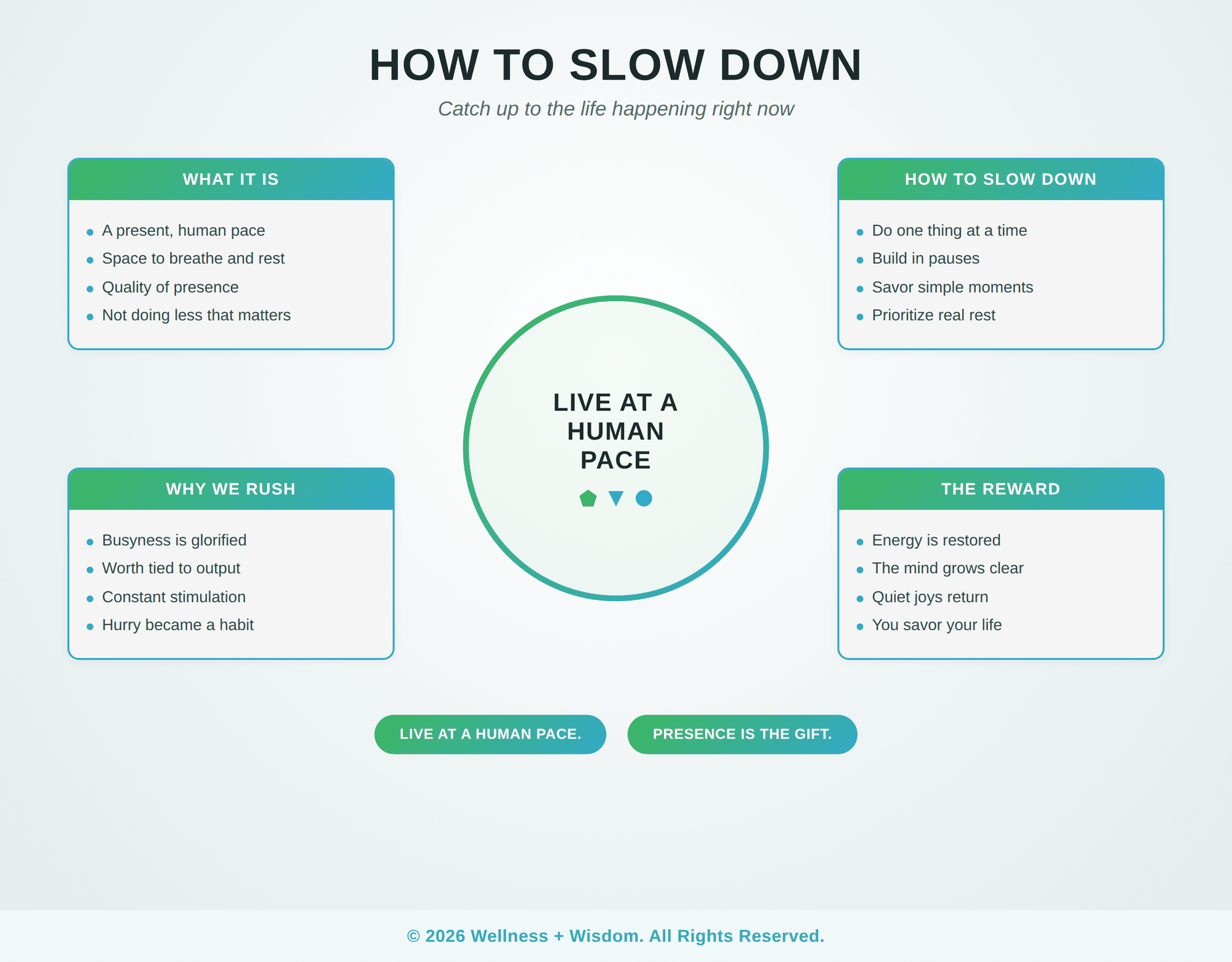
To slow down means to intentionally move through life at a more relaxed, present pace, giving yourself space to breathe, rest, and truly experience each moment rather than rushing past it. It is a conscious, deliberate choice to step off the treadmill of constant hurry and to live with far more presence and ease. Slowing down is about quality of presence, not just speed.
This is not about becoming lazy or unproductive, it is about moving at a pace that is sustainable and human rather than frantic and depleting. When you slow down, you are not doing less that truly matters, you are simply doing it with far more presence, care, and enjoyment. It is the difference between racing through your life half present and actually living it fully.
Slowing down also means creating space for rest, stillness, and the simple pleasures that a hurried life crowds out. It is a gentle return to a more natural rhythm, one that honors your real need for pauses, breath, and quiet rather than pushing relentlessly forward. Learning to live at this more human pace is a profound act of self care, a theme we return to often on the Wellness + Wisdom Podcast.
Rest Is a Basic Human Need
A key truth in learning how to slow down is recognizing that rest is a basic human need, not a reward you must earn through endless productivity. Just as your body clearly needs food, water, and sleep, it also needs genuine rest and pauses in order to function well and to truly thrive. When you honor this basic need, you are never being self indulgent, you are simply respecting how you are actually built as a human being.
So much of our deep exhaustion comes from treating rest as optional, something we will finally get to once everything else is done. Yet everything is never truly done, so rest keeps getting postponed, and we run ourselves steadily into depletion. Recognizing rest as a genuine human need, rather than a luxury, changes everything, because it finally gives you permission to pause without guilt.
Nature itself beautifully reflects this rhythm of activity and rest, from the turning of day into night to the steady changing of the seasons. Everything alive moves in natural cycles of exertion and recovery, and we human beings are truly no different. When we try to run at full speed without any pause, we work against our own nature, but when we honor the natural rhythm of doing and resting, we genuinely flourish.
Embracing rest as a basic need is deeply freeing, because it releases the guilt that so often accompanies slowing down. You do not have to justify your need for rest or earn the right to pause, since these are simply part of being human. Honoring your own need for rest is truly one of the most caring and wise things you can do for yourself, and it nourishes your whole spiritual wellness.
Why We Are Always in a Hurry
We are always in a hurry because we live in a culture that glorifies busyness, productivity, and constant achievement, treating rest as laziness and speed as success. From an early age, many of us absorbed the quiet message that our worth is tied to how much we accomplish, so we fill every moment and feel guilty whenever we pause. This conditioning makes slowing down feel almost wrong.
On top of this cultural pressure, our devices and endless demands keep us in a state of constant stimulation and reactivity, always responding, always connected, rarely still. We rush not only because we have much to do, but because hurry itself has become a deep habit, a default speed we barely even question anymore. Understanding that this compulsive busyness was learned, rather than the truth of how you must live, replaces self judgment with compassion, which is where real change begins, much like the gentle work of reparenting yourself.
Seeing why we are always in a hurry is genuinely freeing, because it means your constant rushing is not an unchangeable fact of life. The glorification of busyness and the habit of hurry were learned, and like any learned pattern, they can be gently unlearned. You can honor the part of you that once learned to always rush while gently teaching yourself a new, more spacious way of living, which is deeply connected to neural system regulation.
The Science of Slowing Down
The science of stress and rest offers powerful support for slowing down, because a life of constant hurry takes a real toll on the body. Bruce McEwen described in the New England Journal of Medicine how chronic stress produces allostatic load, the cumulative wear on a body whose alarm never fully rests. Constant rushing keeps us stuck in that stressed state, while slowing down finally gives our systems the recovery they genuinely need.
Our resistance to illness is affected too. The classic research by Sheldon Cohen and colleagues, published in the New England Journal of Medicine, showed that our psychological state and stress levels influence our vulnerability to illness, revealing how deeply pace and pressure affect the body. A slower, less stressed life supports not only our peace of mind but also our physical resilience and health over the long term.
There is an uplifting dimension too. Barbara Fredrickson's research, published in American Psychologist, shows that positive emotions like calm and contentment broaden our awareness and build lasting resources, from resilience to wellbeing. When we slow down enough to actually feel ease and enjoyment, we do not just feel better in the moment, we build genuine, lasting inner resources over time. Slowing down, in this real sense, is an investment in your whole self, supporting the kind of neural system regulation that lets you truly thrive.
How to Slow Down
Learning how to slow down is a gentle, gradual practice of releasing the compulsion to hurry and returning to a more present, human pace. It grows more natural with steady practice, and every moment of slowing restores a little more ease and presence. Here are practices that help.
1. Do One Thing at a Time
Rather than juggling many things at once, give your full attention to just one thing at a time, which naturally slows your pace and deepens your presence. Single tasking brings a surprising sense of calm and finally lets you actually enjoy what you are doing.
2. Build in Pauses
Weave small pauses into your day, gentle moments to breathe, stretch, or simply be, rather than racing from one task straight into the next. These small intentional pauses interrupt the momentum of hurry and give you real space to reset, which pairs beautifully with breathwork.
3. Savor Simple Moments
Slow down just enough to truly savor the simple pleasures of daily life, a warm drink, a beautiful evening sky, a good conversation. Savoring these ordinary moments is honestly one of the sweetest rewards of a slower pace, which is a beautiful part of learning to cultivate everyday joy.
4. Say No to Overcommitment
Protect your precious time and energy by saying no to what does not truly matter, so your days are not overfilled to begin with. A less crowded schedule is one of the surest foundations for a slower, more spacious life.
5. Prioritize Rest and Sleep
Honor your genuine need for rest and quality sleep rather than constantly sacrificing them to busyness, since rest is truly what restores you. Making rest a real priority in your life, not just an afterthought, is essential to living at a sustainable, human pace.
Begin with whatever practice feels most accessible to you and be patient and kind with yourself, since slowing down after a whole lifetime of hurry genuinely takes time. Every single moment of slowing restores a little more ease and presence to your life. When you want community and support for this journey, the Liberated Life Tribe is here for you.
Slowing Down Is Not Laziness
One of the most important truths about slowing down is that it is not laziness, and rest is not the same as wasting time. Far from making you less effective, slowing down and resting well actually restore the energy, clarity, and creativity that constant hurry drains away.
Many of us fear that if we slow down, we will fall behind or become unproductive, so we keep pushing even when we are exhausted. Yet the honest truth is that a depleted, frazzled mind is far less effective than a rested, present one, and constant hurry so often leads to mistakes, burnout, and quietly diminished joy. Slowing down is never the enemy of a good life, it is very often the very thing that makes a good life truly possible.
Rest and slowing down are actually productive in the deepest sense, because they restore you and allow you to bring your best self to what matters. A field left fallow for a season returns more fruitful, and exactly the same is true for a human being who honors their real need for rest and pauses. When you truly slow down, you are never being lazy, you are caring for the very wellbeing that everything else in your life quietly depends on, which is closely tied to genuine healthy boundaries.
Slowing Down and the Wellness Pentagon
Slowing down nourishes every dimension of your wellbeing, which is why it connects so beautifully to the Wellness Pentagon™, our whole person framework spanning the physical, mental, emotional, spiritual, and financial dimensions of a thriving life. A slower pace is not a separate practice but a current that flows through them all, restoring the whole.
Physically, slowing down gives your body the rest and recovery it genuinely needs to stay healthy and resilient over time. Mentally, it quiets the racing mind and restores real clarity and focus, while emotionally it creates space to actually feel and process your experiences rather than rushing right past them. Spiritually, a slower pace opens room for presence, reflection, and connection to something greater, and even in the financial dimension, slowing down helps you make thoughtful choices rather than hurried, reactive ones. Slowing down nourishes the entire pentagon at once.
This is why we hold slowing down as such an essential practice rather than a luxury or an indulgence. Living at a more human pace is not separate from your wellbeing, it is one of the most powerful ways to support all of it together. When you slow down, you are caring for your whole self, restoring your energy and presence across every dimension of your life, which is the very heart of learning to find inner peace.
Celebrating the Beauty of a Slower Life
The joyful heart of slowing down is discovering the beauty of a slower life, the presence, ease, and quiet delight that emerge when you stop rushing and start truly living. When you truly slow down, life does not become smaller at all, it becomes richer, more textured, and far more enjoyable.
Celebrating a slower life means truly savoring the moments that hurry usually erases, the taste of your food, the warmth of the sun on your skin, the laughter of the people you love. These simple joys are always quietly available, but they require a slower pace to be truly noticed and fully enjoyed. When you finally stop racing, you rediscover that life is full of quiet beauty that busyness had been hiding from you all along, which is a beautiful part of learning to practice everyday gratitude.
And here is the beautiful part. When you slow down and savor your life, you become more present and peaceful, quietly inspiring everyone around you to do the same. Your own unhurried presence quietly gives others permission to slow down too, showing them that a richer, more human way of living is genuinely possible. In this way, learning how to slow down becomes a gift that ripples far beyond yourself, bringing more ease and presence to every relationship and space you enter, which is a spirit we cherish in learning to celebrate yourself.
When Slowing Down Feels Impossible
If slowing down feels impossible right now, you are in good company, and it is completely understandable, especially amid genuine demands like work, caregiving, or financial pressure. Learning to slow down does not require a perfect, empty schedule at all, it simply means finding small pockets of slowness and presence wherever you can, even within a genuinely full life.
When life is genuinely busy, slowing down can begin with the smallest moments, a few conscious breaths, a slow sip of tea, a brief pause between tasks. You do not have to overhaul your entire life to begin at all, you simply weave small moments of slowness into the day you already have, and gently let them grow over time. Even brief pauses of real presence can restore you and gently remind you that you are so much more than your endless to do list, and honoring them takes real emotional courage.
It is also worth remembering that if you feel constantly overwhelmed, exhausted, or unable to rest no matter what you try, it may be worth reaching out for support. There is real and genuine wisdom in talking with trusted people or a qualified professional about the pressures you are carrying, and doing so can help you find a far more sustainable way of living. Wherever you are, be patient and kind with yourself, honor your own pace, and trust that even small steps toward slowing down can restore your energy and joy, one gentle pause at a time.
Slowing Down Is a Lifelong Practice
Learning how to slow down is not a single change you make once, but a lifelong practice of returning to a more present pace again and again across the changing seasons of your life. In a world that constantly pulls you toward hurry, slowing down is something you gently choose over and over. This is wonderful news, because it means you can always return to a slower pace no matter how caught up in busyness you have become.
This understanding takes the pressure off getting it perfect. You will certainly have busy seasons when hurry takes over, days when you race through everything, and moments when slowing down feels genuinely far away, and all of that is completely human. What matters is the gentle returning, the steady practice of coming back to presence and ease whenever you notice you have sped up.
Understanding slowing down as an ongoing practice also keeps it compassionate. Each new day offers fresh opportunities to pause, breathe, and return to a more human pace, and every single return restores a little more of your energy and presence. Over time, slowing down becomes far less something you have to force and more simply how you naturally move through your whole life.
So approach your own journey here with real patience and warmth toward yourself. There is no finish line, only the ongoing, nourishing practice of returning to a slower, more present pace, and celebrating the richer life that emerges. This steady presence supports every dimension of your wellbeing and deepens your whole self growth, growing richer with time.
Frequently Asked Questions
What does it mean to slow down?
To slow down means to intentionally move through life at a more relaxed, present pace, giving yourself space to breathe, rest, and truly experience each moment rather than rushing past it. It is a conscious choice to step off the treadmill of constant hurry. Slowing down is about quality of presence, not just speed, and it makes life richer.
Why am I always in such a hurry?
Because we live in a culture that glorifies busyness and ties worth to productivity, so we fill every moment and feel guilty when we pause. Devices and endless demands keep us in constant reactivity, and hurry becomes a habit. Understanding that this compulsive busyness was learned, not required, opens the way to a more spacious pace.
How do I start slowing down?
Do one thing at a time instead of juggling many, build small pauses into your day, savor simple moments, say no to overcommitment so your days are not overfilled, and prioritize real rest and sleep. Start with whatever feels most accessible and be patient, since slowing down after a lifetime of hurry takes time and gentle practice.
Isn't slowing down just being lazy?
No. Slowing down is not laziness, and rest is not wasting time. A depleted, frazzled mind is far less effective than a rested, present one, and constant hurry often leads to mistakes and burnout. Rest and slowing down actually restore your energy, clarity, and creativity, making them productive in the deepest sense.
Is there science behind slowing down?
Yes. Research shows chronic stress from constant hurry creates allostatic load that wears on the body, and our stress levels influence our vulnerability to illness. Fredrickson's work shows calm and positive emotion build lasting resources like resilience. Slowing down supports both your peace of mind and your physical health over time.
What if slowing down feels impossible?
That is understandable amid real demands like work and caregiving. You do not need a perfect, empty schedule. Begin with the smallest moments, a few conscious breaths or a brief pause between tasks, and let them grow. If you feel constantly overwhelmed or unable to rest, reaching out to trusted people or a professional can help.
Studies and External Resources
The science in this article rests on peer reviewed research. These are the sources referenced throughout.
- McEwen BS. (1998). Protective and damaging effects of stress mediators. New England Journal of Medicine. PubMed: 9428819
- Cohen S, et al. (1991). Psychological stress and susceptibility to the common cold. New England Journal of Medicine. PubMed: 1713648
- Fredrickson BL. (2001). The role of positive emotions in positive psychology. The broaden-and-build theory of positive emotions. American Psychologist. PubMed: 11315248
About Josh Trent
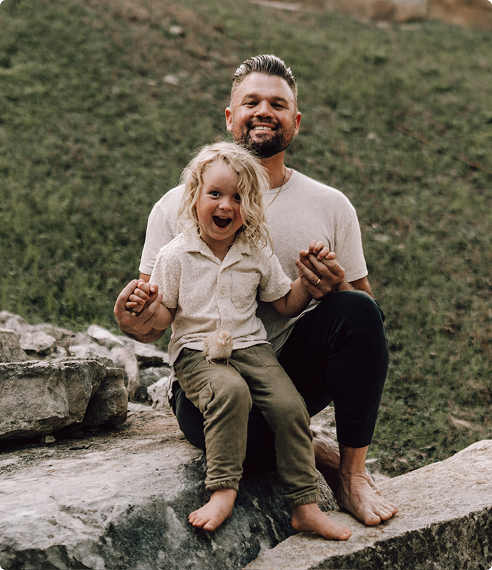
Josh Trent is an Identity Transformation Architect and the award winning host of the Wellness + Wisdom Podcast, with over 15 million downloads since 2015. He is the creator of the L.I.F.E. Method™ Identity Transformation System and steward of the Emotional Epigenetics™ and BREATHE: Breath + Wellness™ systems of self mastery, impacting over 1,000 students worldwide. Join the Liberated Life Tribe and receive your 10 day Self Liberation Blueprint at liberatedlife.com. Josh lives in Austin, Texas with his wife Carrie, daughter Nayah, and son Novah. Peace and power.
Disclosure: We may earn a commission from certain links on this site when you make a purchase, at no extra cost to you. These commissions help support Wellness + Wisdom and do not affect the products or resources we choose to recommend. Full disclosure .