
By Josh Trent | Wellness + Wisdom Podcast Host & Identity Transformation Architect
“You are not avoiding the task. You are avoiding a feeling. Learning how to stop procrastinating is learning to meet that feeling with kindness, and then take one small step anyway.”
Josh Trent
Learning how to stop procrastinating is one of the most liberating shifts you can make, because so much of the energy we lose each day goes into avoiding the very things that matter most to us. Almost everyone knows the feeling. The important project sits waiting while we clean the kitchen, answer easy emails, or scroll for just five more minutes. Then guilt arrives, which makes starting even harder. The good news is that procrastination is not a character flaw or a sign of laziness. It is mostly an emotional pattern, and emotional patterns can be gently rewired. That is the heart of Emotional Epigenetics™.
Here is the joy forward truth at the center of it all. When you understand what procrastination is really protecting you from, you can stop fighting yourself and start partnering with yourself. You trade pressure for curiosity, shame for compassion, and giant goals for tiny, doable starts. When you learn how to stop procrastinating this way, getting things done starts to feel lighter, and you reclaim hours of creative energy for the work and life you love. Let us explore exactly how.
Table of Contents
- What Procrastination Really Is
- Why We Put Things Off
- The Gift of Following Through
- The Science of Procrastination
- How to Stop Procrastinating
- Self Compassion Versus Self Pressure
- How to Stop Procrastinating With Emotional Epigenetics™
- Celebrating Every Start
- Momentum Is a Lifelong Practice
- When You Still Feel Stuck
- Frequently Asked Questions
- Studies and External Resources
- About Josh Trent
What Procrastination Really Is
Procrastination is the voluntary delay of something you intend to do, even though you expect the delay may leave you worse off. In simple terms, you want to do it, you plan to do it, and yet you find yourself not doing it. That gap between intention and action is what makes procrastination so frustrating.
It helps to separate procrastination from healthy waiting. Sometimes delaying a decision is wise, because you need more information or more rest. Procrastination is different. It is the delay that comes from avoidance rather than strategy. You are not waiting for the right moment. You are steering away from a task because something about it feels uncomfortable.
That discomfort is the key. Most of the time, the task itself is not the problem. The problem is the feeling the task brings up, whether that is boredom, confusion, fear of failure, fear of judgment, or simple overwhelm. When you see procrastination as a way of managing feelings rather than managing time, everything about how you approach it changes. This is a theme we explore often on the Wellness + Wisdom Podcast, because the way we handle our emotions shapes almost every outcome in our lives.
Why We Put Things Off
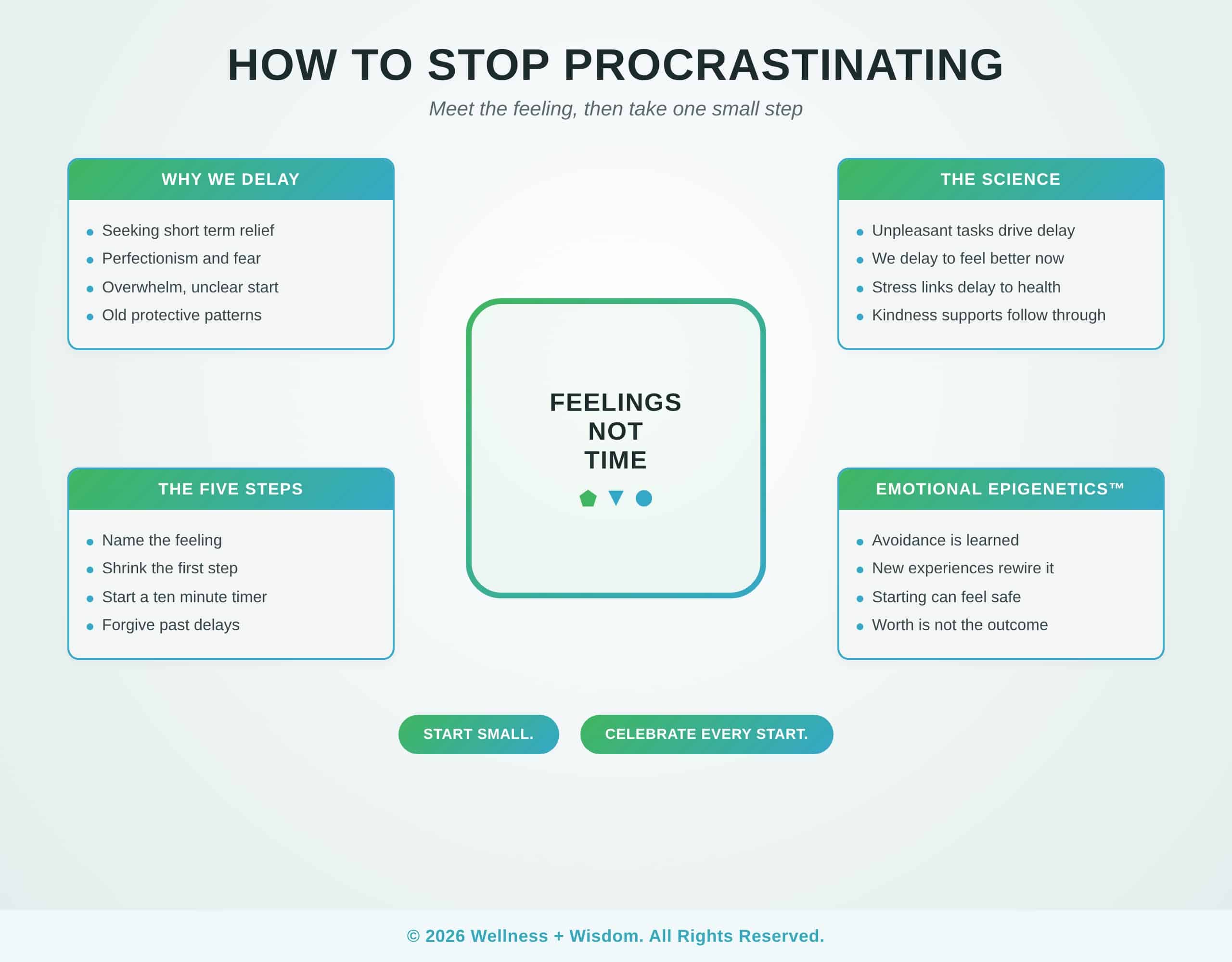
We put things off because our brains are wired to seek short term relief from uncomfortable feelings, even when it costs us something later. When a task feels hard, boring, or emotionally loaded, avoiding it gives an immediate sense of relief. That relief feels good in the moment, so the brain learns to repeat it.
Several common feelings sit underneath procrastination. Perfectionism tells us that if we cannot do something flawlessly, it is safer not to start. Fear of failure whispers that if we never fully try, we never fully fail. Overwhelm makes a big project feel like a mountain with no visible path. Uncertainty leaves us unsure of the first step. These are deeply human responses, and many of them are explored in how to stop fearing failure and how to let go of perfectionism.
There is often an older layer too. If you grew up in a home where mistakes were met with criticism, or where love felt conditional on achievement, your neural system may have learned that difficult tasks carry emotional danger. Procrastination then becomes a protective strategy, a way to avoid the sting of potential judgment. Seeing this clearly replaces shame with understanding. You are not lazy. You are protecting a younger part of you that once needed protecting. That part can be gently reassured, which is the deeper work of understanding the epigenetic roots of self sabotage.
The Gift of Following Through
Following through on what matters gives you more energy, more self trust, less background stress, and a deep sense of being aligned with your own values. When you act on your intentions, you stop carrying the heavy weight of unfinished tasks around in your mind.
Think about how much mental space an avoided task occupies. It hums in the background, interrupting your rest, coloring your mood, and quietly draining your energy. The moment you start, that hum begins to fade. Often the task turns out to be far less difficult than the dread you built around it. That relief is real, and it is far more lasting than the brief relief of avoidance.
Following through also builds something precious: self trust. Every time you keep a promise to yourself, you strengthen the belief that you can rely on you. That belief spreads into every area of life, giving you the courage to take on bigger dreams. And here is the part I love most. When you are no longer spending energy avoiding, you have more energy for joy. Weekends feel freer. Evenings feel lighter. You get to fully enjoy your rest because you are no longer hiding from your work. If your purpose feels unclear and that makes starting harder, the practices in how to find your purpose can help you reconnect with why the work matters.
The Science of Procrastination
The science of procrastination shows that it is closely tied to task aversiveness and emotional regulation, that people procrastinate more when they believe avoidance will improve their mood, and that chronic procrastination is linked to higher stress and poorer wellbeing over time. Procrastination is an emotional pattern with real effects, which also means it responds to emotional solutions.
Start with the big picture. Psychologist Piers Steel published a major meta analysis in Psychological Bulletin that pulled together hundreds of findings on procrastination. He found that procrastination was most strongly linked to how unpleasant a task feels, along with impulsiveness, distractibility, and low confidence in one's ability to succeed. His review also noted estimates that the large majority of college students procrastinate and that a meaningful share of adults experience it as a chronic pattern. You are far from alone.
Next, consider the role of mood. In a series of experiments published in the Journal of Personality and Social Psychology, Dianne Tice, Ellen Bratslavsky, and Roy Baumeister found that people in a bad mood were more likely to put off practicing for an upcoming test, but only when they believed that doing something else could improve their mood. When participants were told their mood could not change, the procrastination effect disappeared. In other words, we often procrastinate to feel better right now.
Finally, consider the longer arc. A longitudinal study led by Fuschia Sirois in the British Journal of Health Psychology found that procrastination was linked with poorer health over time, partly through higher stress and fewer healthy behaviors. And a large cohort study of more than 3,500 university students in Sweden, led by Fred Johansson and published in JAMA Network Open, found that higher procrastination was associated with somewhat higher later levels of stress, anxiety, depressive symptoms, poor sleep, and loneliness. The encouraging flip side is clear: learning to move through avoidance with kindness supports not only your productivity but your whole wellbeing.
How to Stop Procrastinating
You learn how to stop procrastinating by naming the feeling under the delay, shrinking the first step, starting with a short timer, designing your environment for focus, and forgiving yourself for past delays. These five steps address the emotional root of procrastination rather than relying on willpower alone. Here is how I practice and teach them.
1. Name the Feeling Under the Delay
When you notice yourself avoiding a task, pause and ask, “What am I feeling about this?” Maybe it is boredom, confusion, fear, or overwhelm. Simply naming the feeling, “I feel anxious that this will not be good enough,” helps calm the emotional charge and gives you something real to work with. Feelings tend to soften when they are acknowledged, which is the beautiful insight behind the 90 second emotion rule.
2. Shrink the First Step
Big tasks feel like mountains. Break the very first step down until it feels almost too small to resist. Not “write the report,” but “open the document and write one sentence.” Not “clean the garage,” but “fill one bag.” The first step is usually the hardest, and once you are moving, momentum often carries you further than you expected.
3. Start With a Short Timer
Set a timer for ten or fifteen minutes and give yourself permission to stop when it ends. Knowing there is a clear finish line makes starting far less intimidating. Many people find that once the timer rings, they want to keep going. If not, you still made progress, and you can set another timer later. This approach turns starting into a small experiment rather than a heavy commitment.
4. Design Your Environment for Focus
Make the task easy to begin and distractions harder to reach. Put your phone in another room. Close extra browser tabs. Set out what you need the night before. When the path of least resistance leads toward your work, starting requires far less effort. This is the same environmental design that helps you build healthy habits that last.
5. Forgive Yourself for Past Delays
Let go of the guilt about the times you procrastinated before. Guilt and self criticism make tasks feel even more unpleasant, which feeds the cycle of avoidance. Forgiving yourself clears the emotional slate so you can begin fresh. This is one of the most surprising and powerful steps, and it is beautifully explored in how to forgive yourself.
Start with whichever step feels most natural, and be gentle with yourself along the way. You do not need to change everything at once. One small start today is enough. And if you would love to practice with a community that celebrates every step, the Liberated Life Tribe is a warm place to grow.
Self Compassion Versus Self Pressure
Self compassion helps you move past procrastination, while self pressure tends to deepen it. This surprises many people, because we often believe that being hard on ourselves is what gets us moving. In reality, harsh self talk usually makes tasks feel more threatening, which makes avoidance more tempting.
Think about how self pressure sounds. “Why can't you just do it? What is wrong with you? You always do this.” These words add a second layer of pain on top of the original discomfort. Now the task is not only boring or scary. It is also a referendum on your worth. No wonder your brain wants to escape. If you notice this harsh voice often, the practices in how to quiet your inner critic can make a real difference.
Self compassion sounds different. “This feels hard right now, and that makes sense. Lots of people struggle with tasks like this. What is one small thing I can do to begin?” This voice acknowledges the difficulty without judgment and gently points toward action. It lowers the emotional stakes, which makes starting feel safer. Over time, self compassion builds resilience, so setbacks feel like moments to learn from rather than proof of failure. If you are ready to go deeper, explore how to practice self compassion every day.
How to Stop Procrastinating With Emotional Epigenetics™
Emotional Epigenetics™ shows that procrastination often grows from emotional patterns learned in childhood and carried forward in your neural system, and that you can consciously rewrite those patterns through new experiences of safety and success. Your habits of avoidance are not fixed traits. They are learned responses that can change.
Many of us absorbed beliefs about achievement long before we could question them. Maybe love felt tied to grades or performance. Maybe mistakes brought harsh consequences. Maybe nobody modeled how to break big tasks into small pieces. Your body remembers those emotional climates, and it reacts to difficult tasks today as if the old stakes still apply. This is closely connected to the work of rewriting inherited limiting beliefs.
The beautiful truth is that every time you start a task with kindness instead of fear, you give your neural system a new experience. You show it that beginning is safe, that imperfect progress is welcome, and that your worth does not hang on the outcome. Repeated over time, these experiences reshape your emotional patterns. A few slow breaths before you begin can make this shift even easier, because a calm body makes starting feel safe, which is why I love pairing this work with box breathing. To go deeper with identity level change, explore our L.I.F.E. Method™ programs.
Celebrating Every Start
Celebrating every start, no matter how small, is one of the most effective ways to break the procrastination cycle. Your brain learns through reward, so when you appreciate the act of beginning, you make it more likely you will begin again next time.
Most of us only celebrate when a project is finished, which means we spend weeks or months with no reward at all for the hard work of showing up. Try flipping that. Celebrate the moment you open the document. Celebrate the first ten minutes. Celebrate sending the email you have been avoiding. A smile, a quiet “yes,” or a check mark is enough. These small moments of recognition teach your neural system that starting feels good.
Over time, this practice changes your relationship with work. Tasks stop feeling like threats and start feeling like opportunities for small wins. You build momentum not through pressure, but through joy. There is a whole practice around this in celebrating small wins, and it is one of my favorite tools for creating lasting change.
Momentum Is a Lifelong Practice
Building momentum is a lifelong practice, because every new season brings new challenges that can stir up old patterns of avoidance. A new job, a big creative project, or a difficult conversation can all bring procrastination back for a visit. That is not failure. It is simply your cue to bring your tools back to the front.
Over time, you will notice patterns in what tends to trigger your avoidance. Maybe it is tasks with unclear first steps, or work that feels highly visible, or anything involving money or conflict. Knowing your patterns lets you prepare. You can break those tasks down earlier, ask for help sooner, or schedule them for the time of day when you have the most energy.
A simple weekly reflection can make this practice even more powerful. At the end of each week, take five minutes to look back. Which tasks did you start easily? Which ones did you avoid? What were you feeling when you avoided them? You are not grading yourself. You are gathering information with the curiosity of a scientist studying something fascinating. Over a few weeks, clear patterns will emerge, and with them, clear solutions. Perhaps you notice that you avoid tasks after lunch when your energy dips, so you move important work to the morning. Perhaps you notice that unclear requests trigger delay, so you start asking clarifying questions right away. Each insight makes the next week a little lighter.
This is where the Wellness Pentagon™ becomes helpful. Procrastination often gets worse when other parts of life are depleted. Poor sleep, stress, disconnection, or a lack of meaning all make tasks feel heavier. When you care for your physical, mental, emotional, spiritual, and financial wellbeing, including your Connection to Creator and God, you create a stronger foundation for following through. You will find many conversations about motivation, purpose, and emotional freedom across our latest episodes.
When You Still Feel Stuck
If you still feel stuck, you are in very good company, and it is completely understandable. Learning how to stop procrastinating does not mean you will never delay again. It means you will gently build new patterns, a little at a time, at a pace that honors where you are.
When you feel truly stuck, make the step even smaller. Write one word. Spend two minutes. Ask a friend to sit with you while you start, a practice sometimes called body doubling. Changing your location, like moving to a cafe or library, can also help break the spell of avoidance. Simple tools like a visual timer, a quality planner, or a breath training device can support you too, and you can find a few we trust in our wellness tools store.
It is also worth knowing that persistent procrastination can sometimes be connected to challenges like attention differences, anxiety, or low mood. If avoidance is significantly affecting your work, relationships, or wellbeing, a qualified therapist or health professional can offer compassionate, effective support. There is real strength in asking for help. Wherever you are, be patient and kind with yourself, and trust that learning how to stop procrastinating is something you can absolutely grow, one small start at a time. If a calmer body would help you begin, the practices in neural system regulation are a gentle next step.
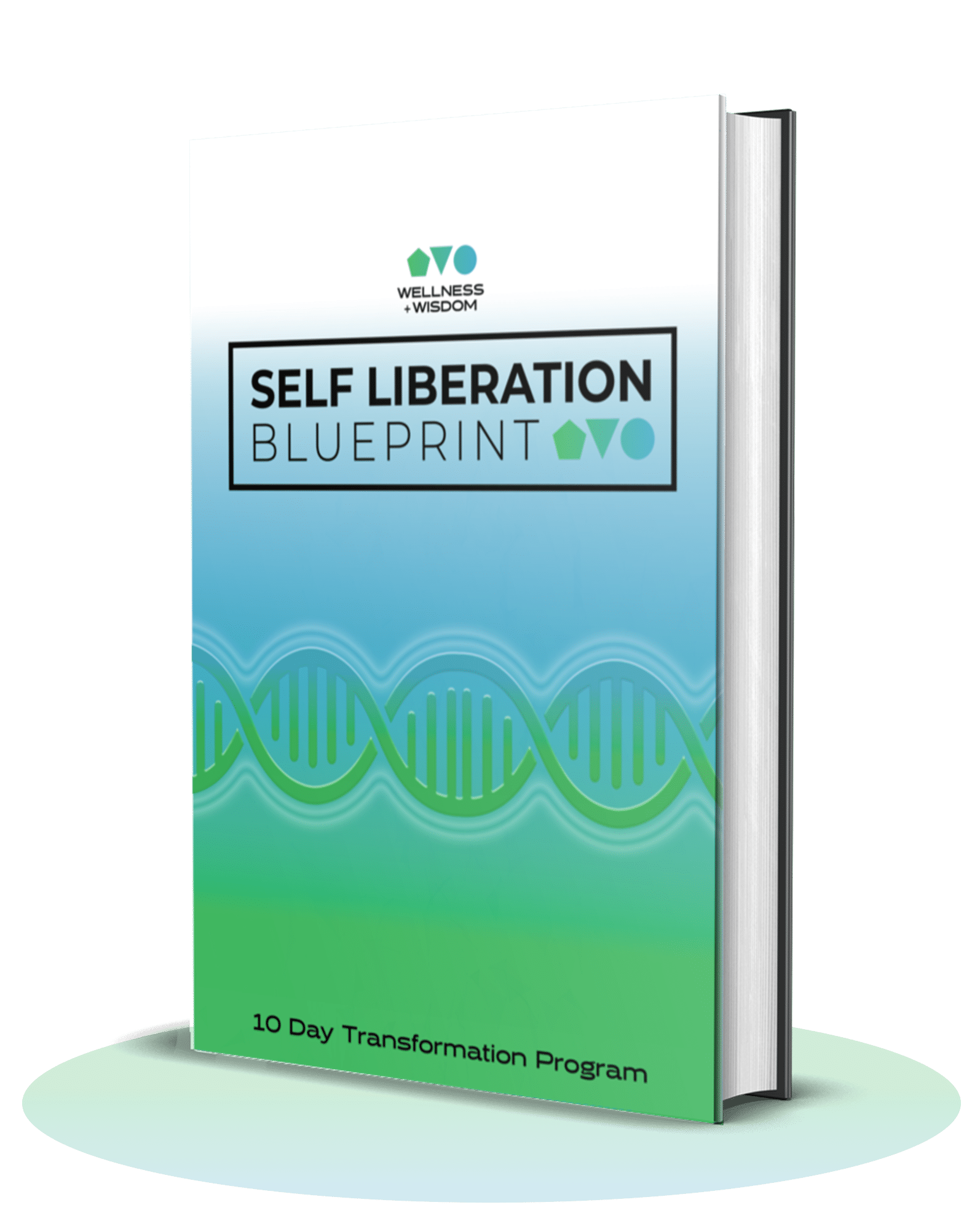
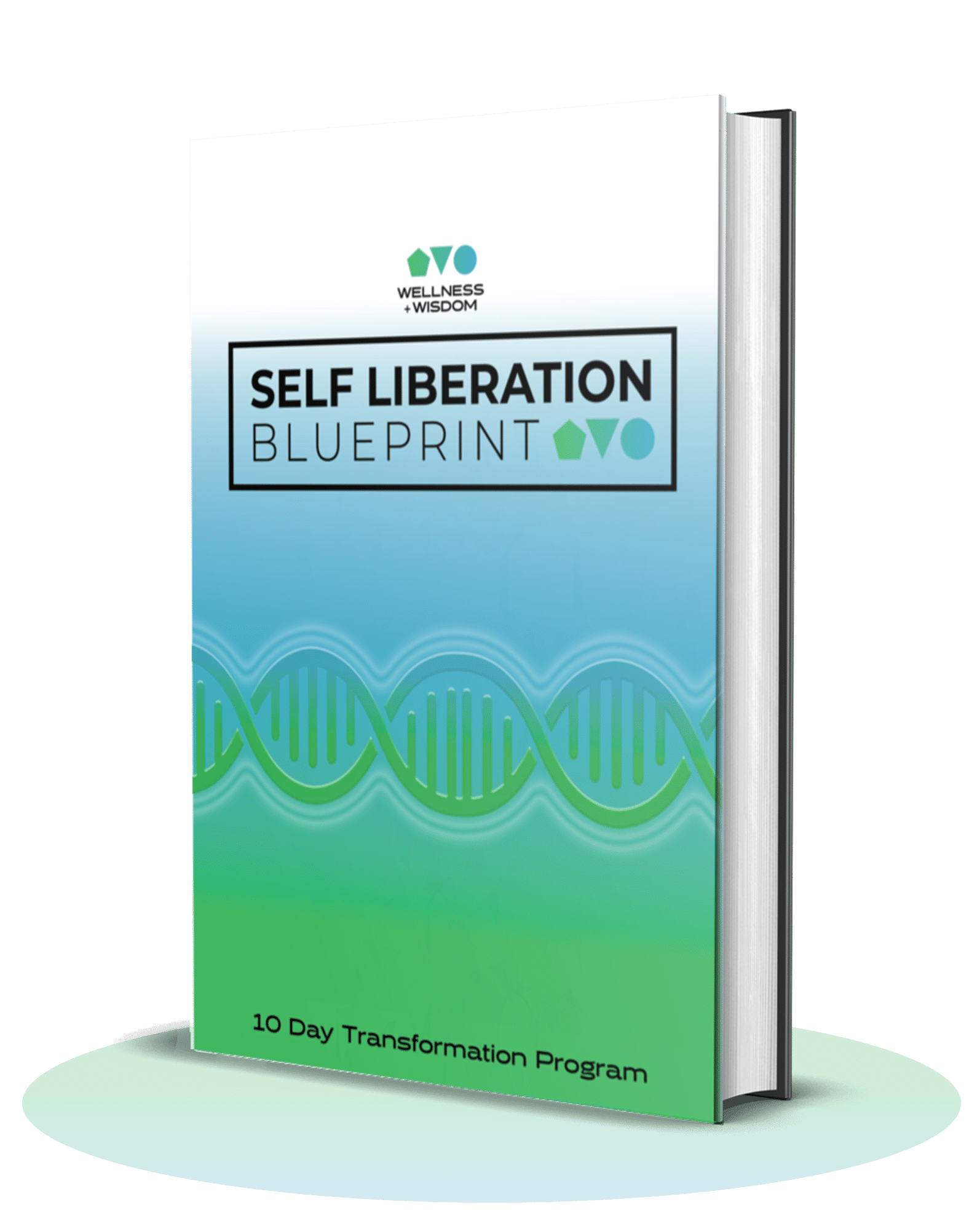
Ready to go deeper? Join the Liberated Life Tribe and receive your 10 day Self Liberation Blueprint at liberatedlife.com. It is free, it is guided, and each day offers one small, doable step toward the life you want to create.
Frequently Asked Questions
Why do I procrastinate even when I want to do something?
Procrastination is mostly about managing uncomfortable feelings, not managing time. When a task brings up boredom, fear, confusion, or overwhelm, avoiding it gives short term relief. Research shows people procrastinate more when they believe avoidance will improve their mood, even when they truly want to get the task done.
Is procrastination a sign of laziness?
No. Procrastination is usually an emotional response rather than a lack of effort or care. Many people who procrastinate care deeply about their work, which is part of why the task feels emotionally loaded. Understanding the feeling underneath the delay is far more helpful than labeling yourself as lazy.
How do I stop procrastinating right now?
Name the feeling you are avoiding, shrink the task down to the smallest possible first step, and set a timer for ten minutes. Put your phone in another room and give yourself permission to stop when the timer ends. Starting is usually the hardest part, and momentum often follows.
Does self compassion really help with procrastination?
Yes. Harsh self criticism makes tasks feel more threatening, which makes avoidance more tempting. Speaking to yourself with kindness lowers the emotional stakes and makes starting feel safer. Forgiving yourself for past delays also clears guilt that can otherwise keep the cycle going.
Can procrastination affect my health?
Research suggests it can. Studies have linked chronic procrastination with higher stress, fewer healthy behaviors, poorer sleep, and lower wellbeing over time. The encouraging news is that learning to move through avoidance with self compassion supports both your productivity and your overall health.
When should I get help for procrastination?
If procrastination significantly affects your work, relationships, or wellbeing, or if it is connected to anxiety, low mood, or attention challenges, a qualified therapist or health professional can help. Seeking support is a sign of strength, and effective, compassionate tools are available.
Studies and External Resources
The science in this article rests on peer reviewed research. These are the sources referenced throughout.
- Steel P. (2007). The nature of procrastination: a meta analytic and theoretical review of quintessential self regulatory failure. Psychological Bulletin. PubMed: 17201571
- Tice DM, Bratslavsky E, Baumeister RF. (2001). Emotional distress regulation takes precedence over impulse control: if you feel bad, do it! Journal of Personality and Social Psychology. PubMed: 11195891
- Sirois FM, et al. (2023). Procrastination and health: A longitudinal test of the roles of stress and health behaviours. British Journal of Health Psychology. PubMed: 36919887
- Johansson F, et al. (2023). Associations Between Procrastination and Subsequent Health Outcomes Among University Students in Sweden. JAMA Network Open. PubMed: 36598789
About Josh Trent
Josh Trent is an Identity Transformation Architect and the award winning host of the Wellness + Wisdom Podcast, with over 15 million downloads since 2015. He is the creator of the L.I.F.E. Method™ Identity Transformation System and steward of the Emotional Epigenetics™ and BREATHE: Breath + Wellness™ systems of self mastery, impacting over 1,000 students worldwide. Join the Liberated Life Tribe and receive your 10 day Self Liberation Blueprint at liberatedlife.com. Josh lives in Austin, Texas with his wife Carrie, daughter Nayah, and son Novah. Peace and power.
Disclosure: We may earn a commission from certain links on this site when you make a purchase, at no extra cost to you. These commissions help support Wellness + Wisdom and do not affect the products or resources we choose to recommend. Full disclosure .