By Josh Trent | Wellness + Wisdom Podcast Host & Identity Transformation Architect
“Everything in you is already vibrating. Sound does not add something foreign to your body. It reminds your body of a rhythm it forgot it knew.”
Josh Trent
Sound frequency healing sits at the fascinating meeting point of ancient wisdom and modern science, and it deserves an honest, grounded look rather than either blind hype or quick dismissal. For thousands of years, human beings across every culture have used chant, drum, song, and sacred tone to shift their inner state and mark their most important moments. Today, real research is beginning to show why sound moves us so deeply, right down to the level of our physiology and even our gene expression. This is a topic close to the heart of Emotional Epigenetics™, and one worth exploring with both wonder and clear eyes.
Here is my joy forward promise, and also my honest one. Sound is one of the most accessible and delightful tools you have for shifting your state, calming your body, and coming home to yourself. The genuine science of how music and sound affect us is real and beautiful. At the same time, I will be honest with you about where the evidence is strong and where certain popular claims run ahead of what has actually been proven. You deserve both the magic and the truth, and the good news is that the real story is more than enough. When you stop needing sound to be miraculous, you become free to enjoy what it genuinely is, which is one of the oldest and most reliable ways human beings have ever found to feel better in their own bodies.
Table of Contents
- What Sound Frequency Healing Actually Means
- The Real Science of How Sound Affects the Body
- Why Sound Reaches Us So Deeply
- How Music Can Change Gene Expression
- Sound Frequency Healing and Emotional Epigenetics
- Sound, the Neural System, and the Vagus Nerve
- Ancient Traditions of Healing Sound
- What the Evidence Does and Does Not Show
- How to Use Sound for Your Own Wellbeing
- Frequently Asked Questions
- Studies and External Resources
- About Josh Trent
What Sound Frequency Healing Actually Means
Sound frequency healing refers to the intentional use of sound, tone, and vibration to support wellbeing, relaxation, and a shift in one's physical and emotional state. It includes practices like listening to certain kinds of music, chanting, toning with your own voice, and sitting with instruments such as singing bowls, gongs, tuning forks, and drums. The core idea is simple and ancient, that sound is not just something we hear but something we feel in the body.
This makes intuitive sense the moment you pay attention to your own experience. A certain song can bring you to tears or lift your whole mood in seconds. The deep resonance of a gong or a drum can be felt in your chest and belly, not just your ears. A mother's hum can soothe a crying infant faster than almost anything. Sound reaches past the thinking mind and speaks directly to the body and the emotions, which is exactly why every spiritual tradition on earth has used it. This is not a modern discovery but a very old human knowing, one that shows up in temples, ceremonies, and lullabies alike.
At its best, sound frequency healing is a bridge between science and soul, the very blend we care about most. It honors the measurable, physical effects of sound on the body while also respecting the mystery and beauty of why music moves the human spirit. As you will see, the real research gives us plenty to be genuinely excited about, and it connects directly to the deeper work of neural system regulation that runs through everything we teach.
The Real Science of How Sound Affects the Body
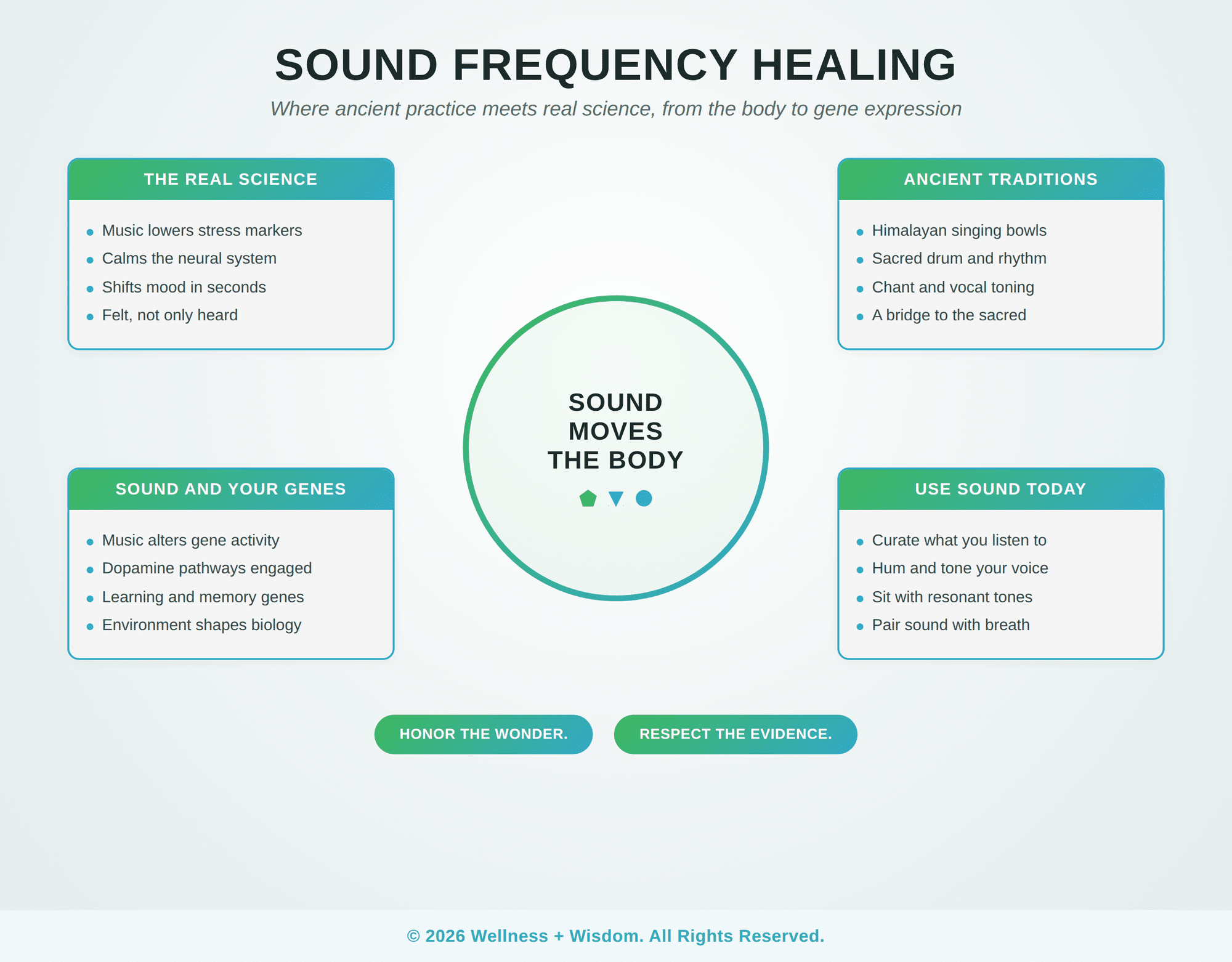
The most solid and well established science of sound frequency healing is about how music and sound affect your physiology, and this evidence is strong. Listening to calming music has been shown in many studies to reduce markers of stress, lower perceived anxiety, and support a shift toward a more relaxed state. Sound acts powerfully on the neural system, helping to move the body out of a stress dominated state and toward rest and recovery.
Part of this works through the stress response we discuss so often. When you are chronically stressed, your body carries what the researcher Bruce McEwen, writing in the New England Journal of Medicine, called allostatic load, the cumulative wear that builds when the stress system stays switched on. Calming sound and music can help downshift that activation, offering the body a genuine chance to recover. In this sense, sound is a real tool for regulation, not just a pleasant background.
There is also the deep connection between mind and body that the field of psychoneuroimmunology has mapped. Foundational work by Sheldon Cohen and colleagues, also published in the New England Journal of Medicine, showed how psychological states measurably influence the body's physical resilience. Because sound so directly shapes our emotional and psychological state, it becomes one more lever on this mind body system. When music calms your mind, it is also speaking to your biology. Explore this bridge further in our work on breath and regulation.
Why Sound Reaches Us So Deeply
One reason sound affects us so powerfully is that we do not only hear it, we physically feel it. Sound is vibration traveling through the air, and your body, which is largely made of water and soft tissue, is an excellent conductor of that vibration. When a deep tone sounds nearby, the waves literally move through your chest, your bones, and your fluids. You are not a passive listener. You are a resonant instrument that the sound plays.
There is also a phenomenon called entrainment, where rhythms naturally tend to synchronize. Your heart rate and breathing can begin to fall into step with the tempo of the music around you, which is part of why a slow, steady piece can physically settle you while a driving beat can energize you. Your body is constantly, and mostly unconsciously, tuning itself to the sonic environment it is in.
Then there is the emotional directness of sound. Music seems to bypass the thinking, analyzing mind and speak straight to the emotional centers of the brain. This is why a melody can evoke a feeling or a memory so instantly and so completely, often before you have any words for it. Sound reaches the parts of us that live beneath language, which is exactly where so much of our stress, and our capacity for peace, actually resides.
Put these together and it becomes clear why sound is such a potent tool. It works on the body through vibration, on the physiology through entrainment, and on the emotions through direct access to feeling. No wonder every culture discovered its power. This felt, whole body quality is also why sound pairs so beautifully with the somatic work at the center of breathwork and neural system regulation.
How Music Can Change Gene Expression
Here is where the science of sound frequency healing becomes genuinely remarkable, and where it connects most directly to gene expression. A study by Chakravarthi Kanduri and colleagues, published in the journal PeerJ, examined what happened in the body when people listened to music. Using genome wide analysis of participants' blood, the researchers found that listening to classical music was associated with changes in the activity of a number of genes.
What is striking is which genes were affected. The study reported changes in genes involved in dopamine signaling and secretion, which relate to pleasure and reward, alongside effects on genes linked to learning and memory. Notably, some of the down regulated genes were ones associated with neurodegeneration. In other words, the simple act of listening to music appeared to leave a measurable fingerprint on gene activity, at least in people with musical experience.
This is a serious, peer reviewed finding, and it gives real scientific grounding to the intuition that music reaches us at the deepest levels. It does not mean any random sound rewrites your DNA, and the researchers themselves were careful about the scope of their findings. But it does show that the experience of music can influence the way our genes express themselves, which is a beautiful and legitimate example of how our environment and experience shape our biology. This is precisely the kind of connection that Emotional Epigenetics™ explores, and it echoes what research on meditation and gene expression has also begun to reveal.
Sound Frequency Healing and Emotional Epigenetics
Sound frequency healing fits naturally within the framework of Emotional Epigenetics™, which holds that your emotional patterns, your beliefs, and your environment converge to shape how your genes express themselves. Sound is a powerful environmental and emotional input. It shifts your feeling state, calms or energizes your neural system, and, as the research suggests, can even influence gene activity. That places it squarely within the inputs that shape your biology.
Think of it this way. If chronic stress, fear, and disconnection are inputs that can push gene expression in an unhelpful direction, then experiences of beauty, calm, joy, and connection are inputs that can push it the other way. Sound is one of the most reliable and enjoyable ways to create those positive inputs on demand. A few minutes with music that moves you, or the resonance of a singing bowl, is a way of consciously tending your inner environment.
This is why we never treat practices like sound, breath, and stillness as fluffy extras. They are levers on the same biological system that stress and trauma act upon, just pointed toward healing rather than harm. When you use sound intentionally, you are participating in your own biology, gently guiding your system back toward balance. This is the heart of the L.I.F.E. Method™ approach to transformation.
Sound, the Neural System, and the Vagus Nerve
One of the most practical and well grounded ways sound supports healing is through its effect on the neural system, and especially the vagus nerve. The vagus nerve is a key part of the calming, restorative branch of your neural system, and stimulating it helps shift your body out of stress and into rest and repair. It turns out that certain kinds of sound making are a direct and pleasant way to do exactly that.
When you hum, chant, or tone with your own voice, two helpful things happen at once. First, you naturally extend your exhale, and a long, slow exhale is one of the most reliable ways to activate the calming response. Second, the vibration of your own voice resonates through your throat, chest, and skull, which many people find deeply soothing. Together, these effects make simple vocal toning a genuinely effective self regulation practice, available anytime and requiring nothing but your own breath.
Sound can also support co regulation, the way our bodies help each other find calm. Group singing, chanting, and drumming have been part of human community for as long as we have records, and there is something measurably settling about making sound together. When a group breathes and vocalizes in rhythm, their bodies tend to synchronize, creating a shared state of calm and connection that is hard to reach any other way.
This is why sound is far more than entertainment. It is a legitimate tool for guiding your neural system toward safety, whether you use it alone through humming and music or in community through song. It offers the same regulation we teach through breath, in a form that also happens to be joyful. Few practices ask so little of you and give back so much, which is part of why sound has never fallen out of use across the whole span of human history. Deepen this in our work on stillness and inner silence.
Ancient Traditions of Healing Sound
Long before anyone could measure gene expression, human cultures intuitively understood the power of sound. Nearly every spiritual and healing tradition on earth has placed sound at the center of its practices, which is itself a kind of accumulated human wisdom worth honoring. The consistency across cultures is remarkable, and it is one of the strongest hints that these traditions were responding to something real in human physiology, not merely inventing custom.
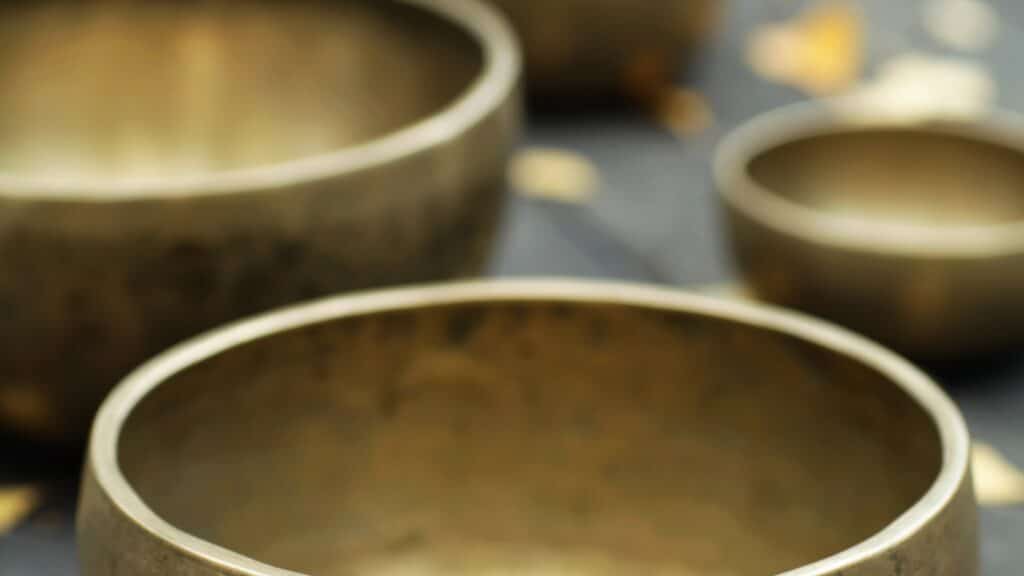
Tibetan and Himalayan traditions have used singing bowls and chanting for centuries. Indigenous cultures across the world have used the drum as a sacred tool for ceremony, healing, and connection to spirit. Gregorian chant, Vedic mantra, Sufi devotional song, and countless vocal traditions have used the human voice to induce states of reverence and transcendence. Across all of these, sound is treated as a bridge between the ordinary and the sacred, a way to move the body, quiet the mind, and open the heart toward Connection to Creator and God.
What moves me about this is the humility it invites. These traditions arrived at the power of sound through direct experience, long before laboratories confirmed any of it. Now modern research is beginning to catch up to what our ancestors knew in their bones. When we approach sound frequency healing today, we are not inventing something new. We are rejoining a very old human conversation, one that our contemplative practices and the Wellness + Wisdom Podcast continue in a modern voice.
What the Evidence Does and Does Not Show
Because I care about truth as much as about wonder, it is important to be clear and honest about the boundaries of the evidence, so you can approach sound frequency healing wisely. Here is the straightforward picture. The effects of music and sound on mood, stress, and relaxation are well supported. The finding that listening to music can influence gene expression is real and peer reviewed. These are solid ground to stand on.
At the same time, some popular claims run well ahead of the science, and you deserve to know that. You may have heard that specific single frequencies, often given very precise numbers, can miraculously repair DNA, cure diseases, or produce dramatic healing on their own. Those specific claims are not established by rigorous scientific evidence, and it is wise to hold them lightly rather than as proven fact. The genuine, research supported benefits of sound come mostly through its effects on your emotional state, your neural system, and your stress physiology, which is powerful enough without needing to overstate it.
This honest framing actually makes the practice stronger, not weaker. You do not have to believe any unproven claim to receive the real gifts of sound. You simply have to notice how a piece of music, a chant, or a resonant tone shifts your body and your mood, and let that felt experience guide you. Approaching sound with both openness and discernment is exactly the kind of grounded spirituality we champion, the same way we approach every practice in the Wellness Pentagon™.
How to Use Sound for Your Own Wellbeing
The best part of sound frequency healing is that you do not need special equipment or beliefs to begin. Here are simple, grounded ways to bring the real benefits of sound into your life today.
1. Curate Your Sound Environment
Become intentional about the sound you take in. Notice how different music affects your state, and consciously choose sound that supports how you want to feel. Calming instrumental music for rest, uplifting rhythm for energy. Your sound environment is shaping your nervous state whether you choose it or not, so choose it on purpose.
2. Use Your Own Voice
Your voice is the most accessible sound instrument you own. Humming, chanting a simple tone, or singing creates vibration you can feel in your own chest and skull, and the extended exhale of toning also gently stimulates the vagus nerve. A few minutes of humming can shift your neural system toward calm surprisingly quickly.
3. Sit With Resonant Instruments
If you have access to a singing bowl, tuning fork, or drum, spend a few minutes simply feeling the sound in your body. You do not need to believe anything specific. Just let the vibration wash through you and notice what softens. There is no right way to do this and nothing to achieve, only something to feel. Many people find these tones drop them into stillness faster than silence alone.
4. Pair Sound With Breath
Sound and breath are natural partners. Combining calming sound with slow, conscious breathing amplifies the relaxation response of both. This pairing is a cornerstone of the BREATHE™ program, because together they speak to the body in a language it deeply understands.
5. Let Sound Support Stillness and Prayer
Use sound as a doorway into meditation, reflection, or prayer. A resonant tone at the start of a practice can help quiet the busy mind and open a sense of the sacred. Sound has always been a way of crossing from the ordinary into deeper presence and Connection to Creator and God, a threshold you can step across any time you choose.
Start wherever feels most natural and let your own experience be your teacher. The point is not to chase any particular effect but to develop a living relationship with sound as a tool for coming home to yourself. When you want to go deeper with community and guidance, the Liberated Life Tribe and our latest episodes are here for you.
Frequently Asked Questions
What is sound frequency healing?
Sound frequency healing is the intentional use of sound, tone, and vibration to support relaxation, wellbeing, and a shift in one's physical and emotional state. It includes music, chanting, toning with the voice, and instruments like singing bowls, gongs, and drums. The core idea is that sound is not only heard but felt in the body, where it can influence mood, stress, and the neural system.
Can sound really affect gene expression?
Yes, according to real research. A peer reviewed study by Kanduri and colleagues in PeerJ found that listening to classical music was associated with changes in the activity of genes involved in dopamine signaling, learning, and memory. This does not mean sound rewrites your DNA, but it shows that the experience of music can measurably influence how genes express themselves.
Do specific frequencies like miracle tones actually heal the body?
This is where honesty matters. Claims that specific single frequencies can repair DNA or cure disease on their own are not established by rigorous scientific evidence, so it is wise to hold them lightly. The genuine, research supported benefits of sound come mainly through its effects on your emotional state, stress physiology, and neural system, which is powerful without needing to overstate it.
How does sound frequency healing connect to Emotional Epigenetics?
Emotional Epigenetics™ holds that emotional patterns, beliefs, and environment shape gene expression. Sound is a powerful environmental and emotional input that shifts your feeling state and, as research suggests, can influence gene activity. Using sound intentionally is a way of consciously tending the inner environment that helps shape your biology toward calm and balance.
What is the easiest way to start using sound?
Begin with what you already have. Curate the music you listen to based on how it makes you feel, and use your own voice by humming or toning, which creates vibration you can feel and gently supports the neural system. Pairing calming sound with slow breathing is a simple, powerful place to start, no special equipment or beliefs required.
Is there any science behind singing bowls and chanting?
The strongest evidence supports sound's effects on relaxation, stress reduction, and emotional state, which singing bowls and chanting can certainly produce for many people. Ancient traditions arrived at these practices through direct experience, and modern research increasingly confirms sound's genuine effects on the body and mind, even as claims about specific miracle frequencies remain unproven.
Studies and External Resources
The science in this article rests on peer reviewed research. These are the sources referenced throughout.
- Kanduri C, et al. (2015). The effect of listening to music on human transcriptome. PeerJ, 3:e830. PubMed: 25789207
- McEwen BS. (1998). Protective and damaging effects of stress mediators. New England Journal of Medicine. PubMed: 9428819
- Cohen S, Tyrrell DA, Smith AP. (1991). Psychological stress and susceptibility to the common cold. New England Journal of Medicine. PubMed: 1713648
About Josh Trent
Josh Trent is an Identity Transformation Architect and the award winning host of the Wellness + Wisdom Podcast, with over 15 million downloads since 2015. He is the creator of the L.I.F.E. Method™ Identity Transformation System and steward of the Emotional Epigenetics™ and BREATHE: Breath + Wellness™ systems of self mastery, impacting over 1,000 students worldwide. Join the Liberated Life Tribe and receive your 10 day Self Liberation Blueprint at liberatedlife.com. Josh lives in Austin, Texas with his wife Carrie, daughter Nayah, and son Novah.
Disclosure: We may earn a commission from certain links on this site when you make a purchase, at no extra cost to you. These commissions help support Wellness + Wisdom and do not affect the products or resources we choose to recommend. Full disclosure .